
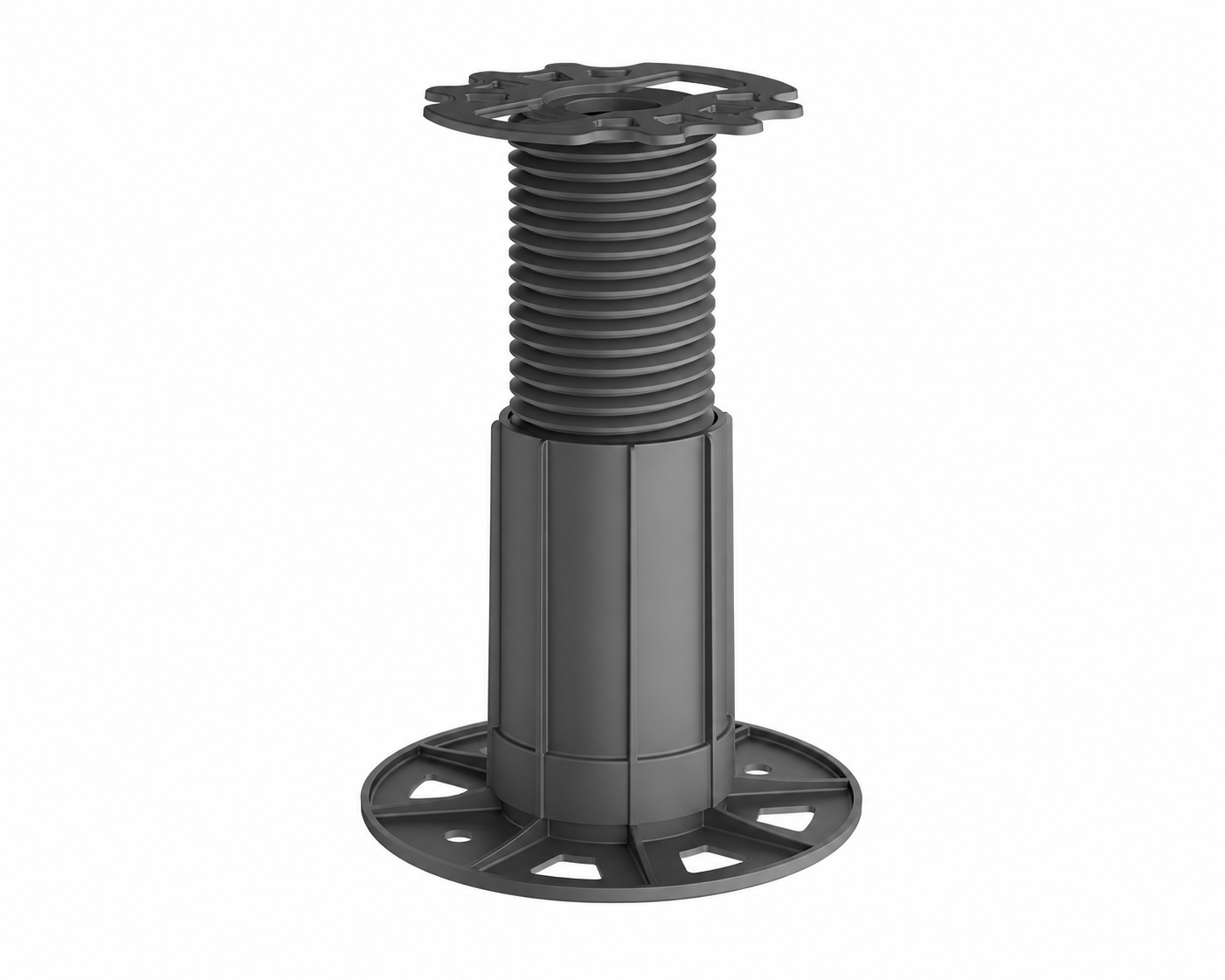
PuraFix™ Adjustable Pedestal – 110-210 mm
€9.10
In stock
| Quantity | Discount (%) | Price |
|---|---|---|
| 1 - 49 | — | €9.10 |
| 50 - 119 | 4% | €8.74 |
| 120+ | 8% | €8.37 |
Your security and privacy are at the heart of everything we do. Every purchase you make is protected by industry‑leading safeguards designed to keep your personal and payment information safe.
Secure Payments
Pay with complete confidence using our trusted, fully protected payment methods. Your card details remain secure, uncompromised, and handled with strict care.
All sensitive data is encrypted from end to end, and we never sell or share your card information, ever.
Payment Methods
We accept credit and debit cards from most major credit issuers. Your card can be saved for future purchases and you can remove or edit the card information at any time. For questions regarding your transactions on our site, please consult your card-issuing bank.
We deliver across all four zones defined below.
Quantity savings
Enjoy automatic discounts as soon as your basket qualifies—no codes, no hassle.
Buy 25–49 units
Get 3% off your entire qualifying product order.
Buy 50+ units
Get 5% off your entire qualifying product order.
How it works
Your discount is applied automatically at checkout based on the total quantity of eligible items in your basket. The more you buy, the more you save—simple, transparent, and designed to reward our customers.
Product specification
- Material
- Composite
- Fire Rating
- N/A
Adjustable Decking Pedestal — Cradle-System 110 – 210mm
Build a dead-level deck or floor over a base that’s anything but — no packing, no shimming, no screwing down into the substrate. The Cradle-System is a height-adjustable plastic pedestal that carries your bearing timber on a threaded ring, so you simply twist each cradle up or down to take the dips and falls out of your sub-base. It’s independently load-tested to DIN EN 1991-1 at an accredited laboratory, and it’s stocked in our warehouse for delivery across Ireland.
Why the Cradle-System?
The cradle is moulded from polypropylene-copolymer (PP-C) rather than timber or metal, and that choice does a lot of quiet work. The plastic shrugs off weathering, UV exposure, insects and rot, so the part of your structure sitting closest to the damp ground is the part that will never become the weak link — no rusting feet, no rotting packers underneath your joists.
The detail worth knowing is how little it actually moves. Each cradle is rated for a recommended working load of 0.8 kN against a characteristic capacity of 1.26 kN, and at that working load the adjustable foot settles by just 1.3 mm. In practice that means a floor that feels genuinely solid underfoot rather than a springy raised deck — provided you keep to the load spacing below.
Installation guidance
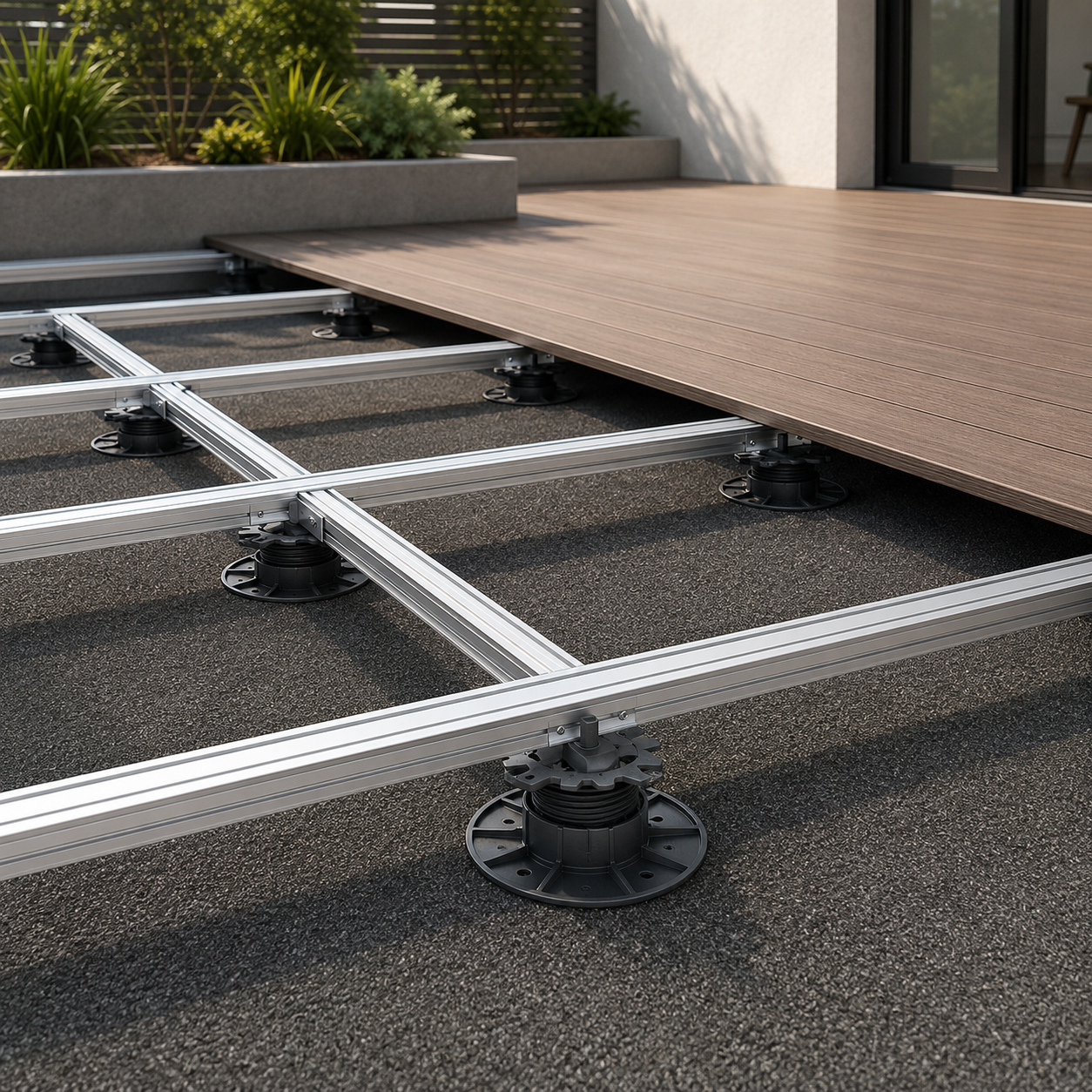
If you’ve ever fought to level a frame on an uneven slab, this is the part that gets easy. The timber sits floating on the cradles — laid, not screwed — and a built-in anti-twist support holds each bearer square while you work. The threaded ring gives you infinitely variable height anywhere between 10 and 45 mm, so you dial out the slope instead of chasing it with offcuts.
The cradle takes bearing timber of either 40 or 60 mm width, so it suits most standard joists and battens. Plan on a minimum of six cradles per square metre and follow the bearing-distance table for your load — closer spacing for heavier traffic, wider for a light domestic floor. Get the layout right first and the rest goes down quickly.
Finishing & maintenance
You have two good options here, and there’s no wrong answer. The standard route is the cradle on its own — set it, level it, lay your timber, and you’re done. The upgrade route adds the optional 60 x 60 mm EPDM pad to the underside of each cradle, which dampens impact sound and stops any click or tap transferring into the space below — the route most of our customers choose over a living room, a balcony, or anywhere acoustics matter.
If you’re adding pads, ask us and we’ll match them to your order alongside the bearing timber. One honest caution: clean the cradles with nothing stronger than mild soapy water, as solvents and harsh degreasers can attack the plastic over time — and that gentle wash is all the upkeep either route ever needs.
See the full decking pedestals range, part of our decking substructures.