

Length
Width
Thickness
Colour Tone
Profile
Material
Fire Rating
Range
Species
Wood Type
Warranty
Moisture Content
Cladding
Cladding for the outside walls of houses, extensions, garden rooms and sheds, in natural timber or low-maintenance composite. Choose timber cladding in nine ranges, from cedar, larch and oak to charred larch and Thermowood, or composite boards in slatted and tongue and groove profiles, then add the battens, trims and stainless steel screws to fix them. Stocked in our warehouse and delivered across Ireland.
Sort by


Showing 1-12 of 116 results
Cladding in Ireland: timber or composite
Cladding is a layer of boards fixed over the outside walls of a building. It keeps the rain off the wall behind, lets that wall breathe through a ventilated cavity, and gives the building its finished look. It is the quickest way to turn a plain block extension, a new garden room or a tired rendered gable into something that looks designed, and it suits new builds and renovations alike.
We stock the two kinds of external cladding that make sense in an Irish climate: natural timber cladding, in nine ranges from cedar and larch to oak and charred larch, and low-maintenance composite cladding in slatted and tongue and groove boards. Alongside them sit everything you need to put them up: battens, stainless steel screws, trims and accessories. This page helps you choose between them, then sends you to the right range.
Types of cladding
Start with the material. Timber gives you real grain that changes with the seasons and can be refinished for decades. Composite gives you a fixed colour and a surface that only needs a wash. Both go up the same way, over battens, so the decision is about look and upkeep rather than the build.
Timber cladding
Our timber cladding covers softwoods, hardwoods and modified woods, in profiles from 18 mm tongue and groove and shiplap to triple slatted and rhombus boards, with the length chosen on each product page. Choose the species first:
- Cedar cladding: western red cedar, naturally durable with no chemical treatment and light enough to carry single-handed, with cedar shingles too.
- Larch cladding: Larch, the toughest of the common European softwoods, warm reddish brown with a lively grain.
- Douglas fir cladding: one of the most stable softwoods, in the widest choice of profiles, from feather edge to rhombus, some in black.
- Oak cladding: European oak with the longest track record outdoors, honey brown with an open grain.
- Iroko cladding: an African hardwood, often called African teak, with natural oils that resist rot and insects, in shiplap and tongue and groove.
- Thermowood cladding: timber made durable by heat, not chemicals, brown all the way through and very stable.
- Ecowood cladding: our own kiln-dried softwood range, in T&G, shadow gap, half lap, triple slatted and feather edge boards.
- MicroShades cladding: treated softwood that arrives factory finished, so there is no staining or oiling on site.
- Charred timber cladding: Larch burnt to a hard, textured face by the Shou Sugi Ban technique, in six tones from black to light amber.
Composite cladding
Composite cladding is a wood plastic composite (WPC): wood fibre bound with plastic, shaped and coloured to look like timber, with no oiling, staining or painting. Our three current ranges each have their own job:
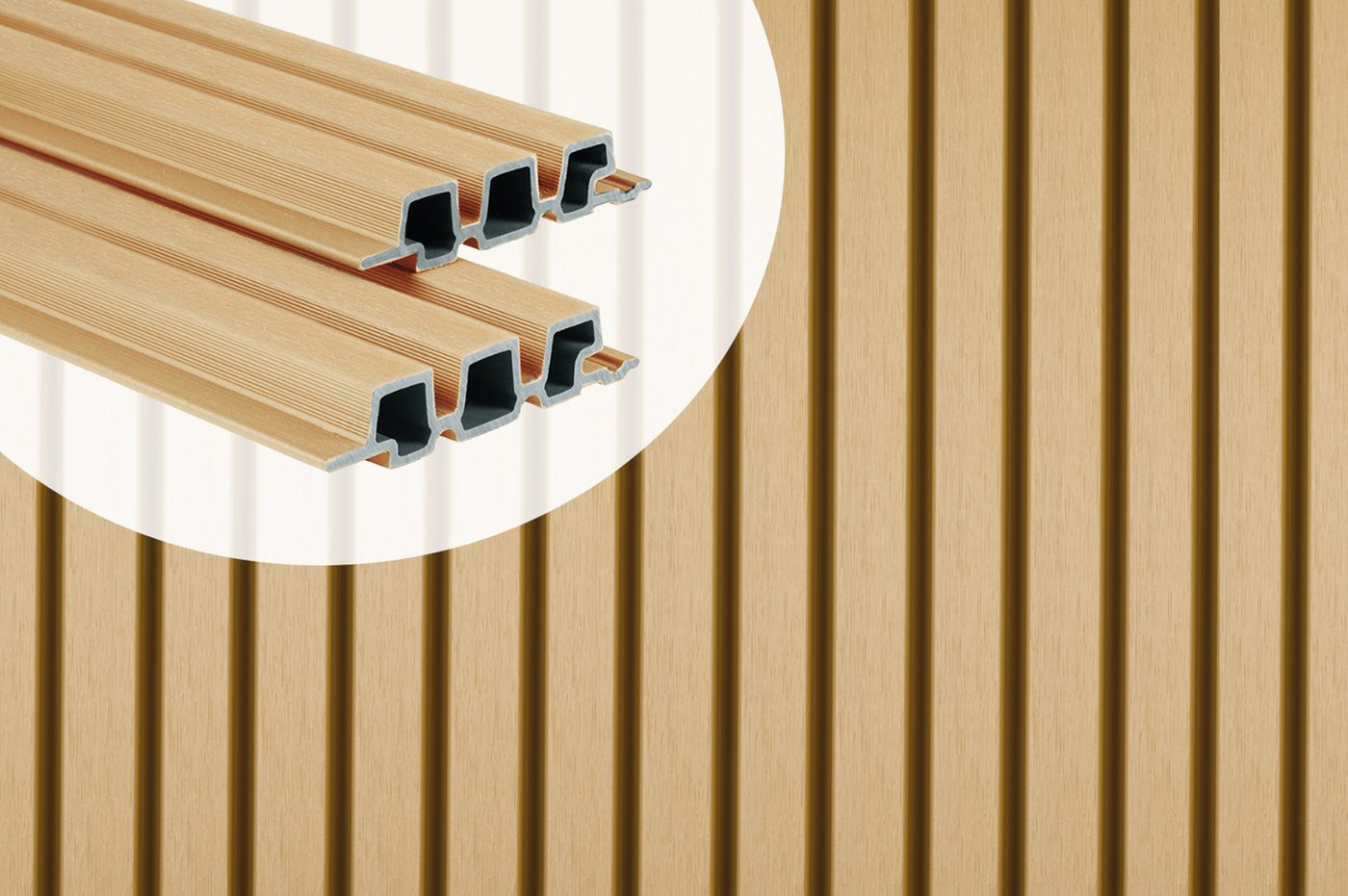
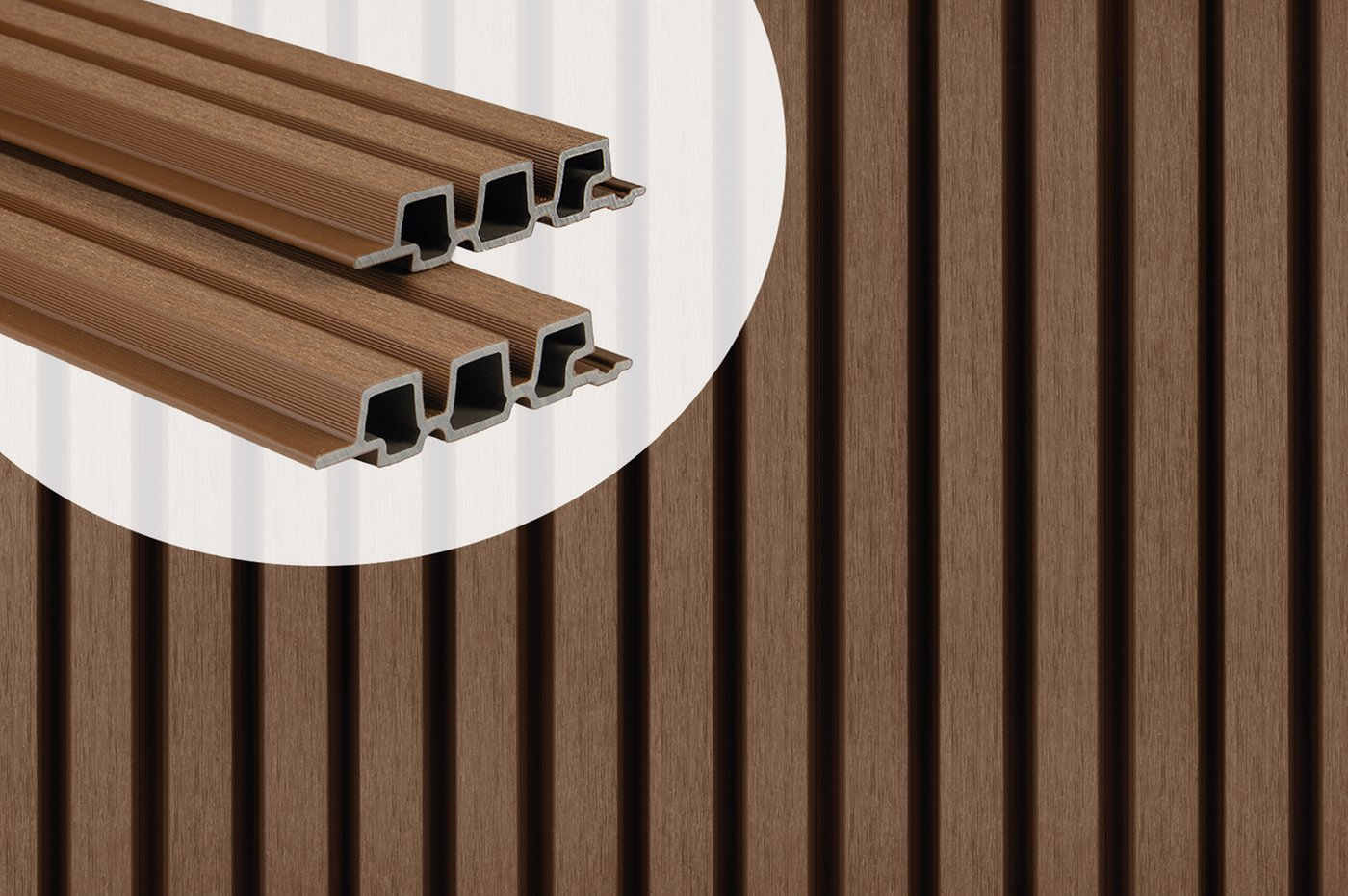
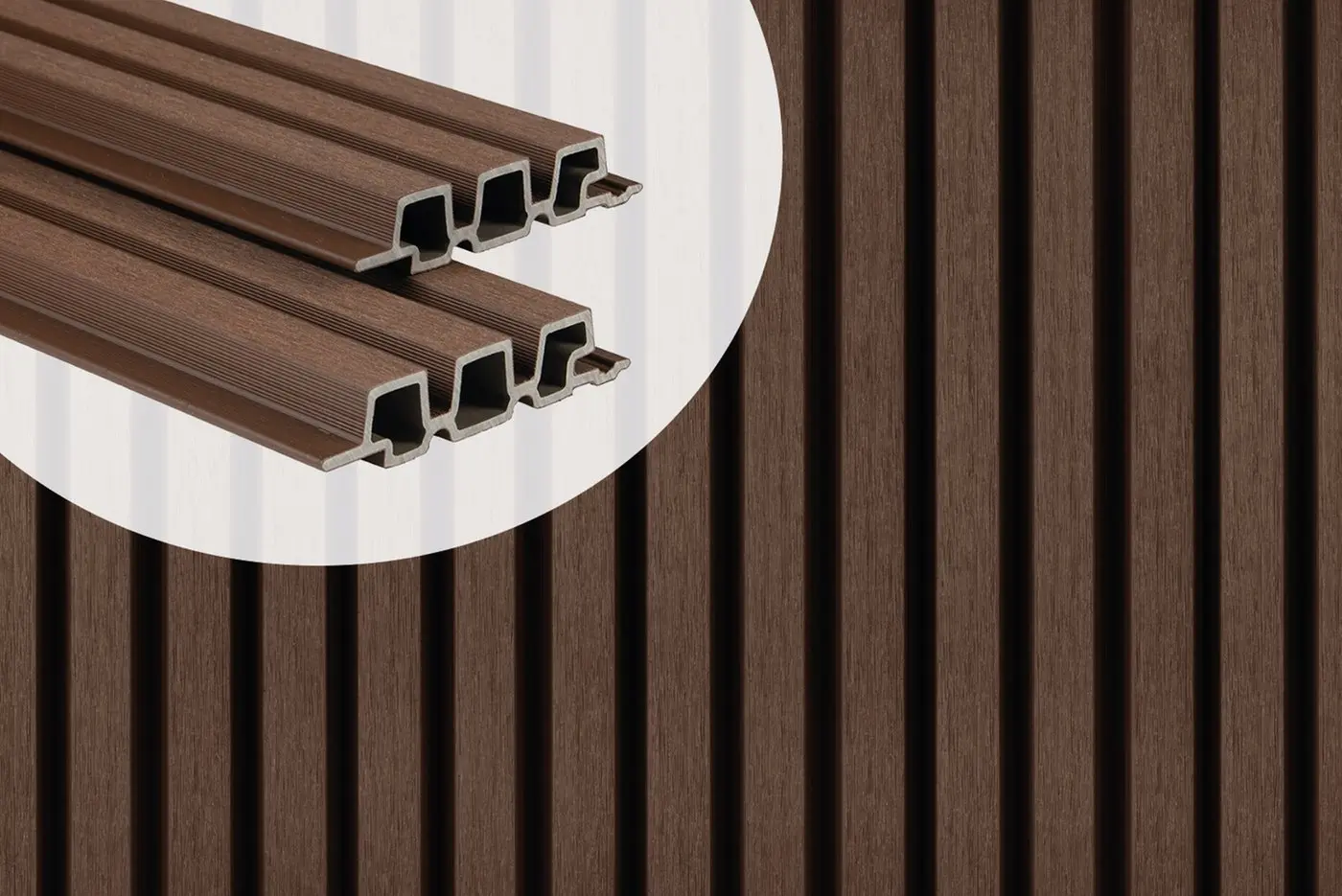
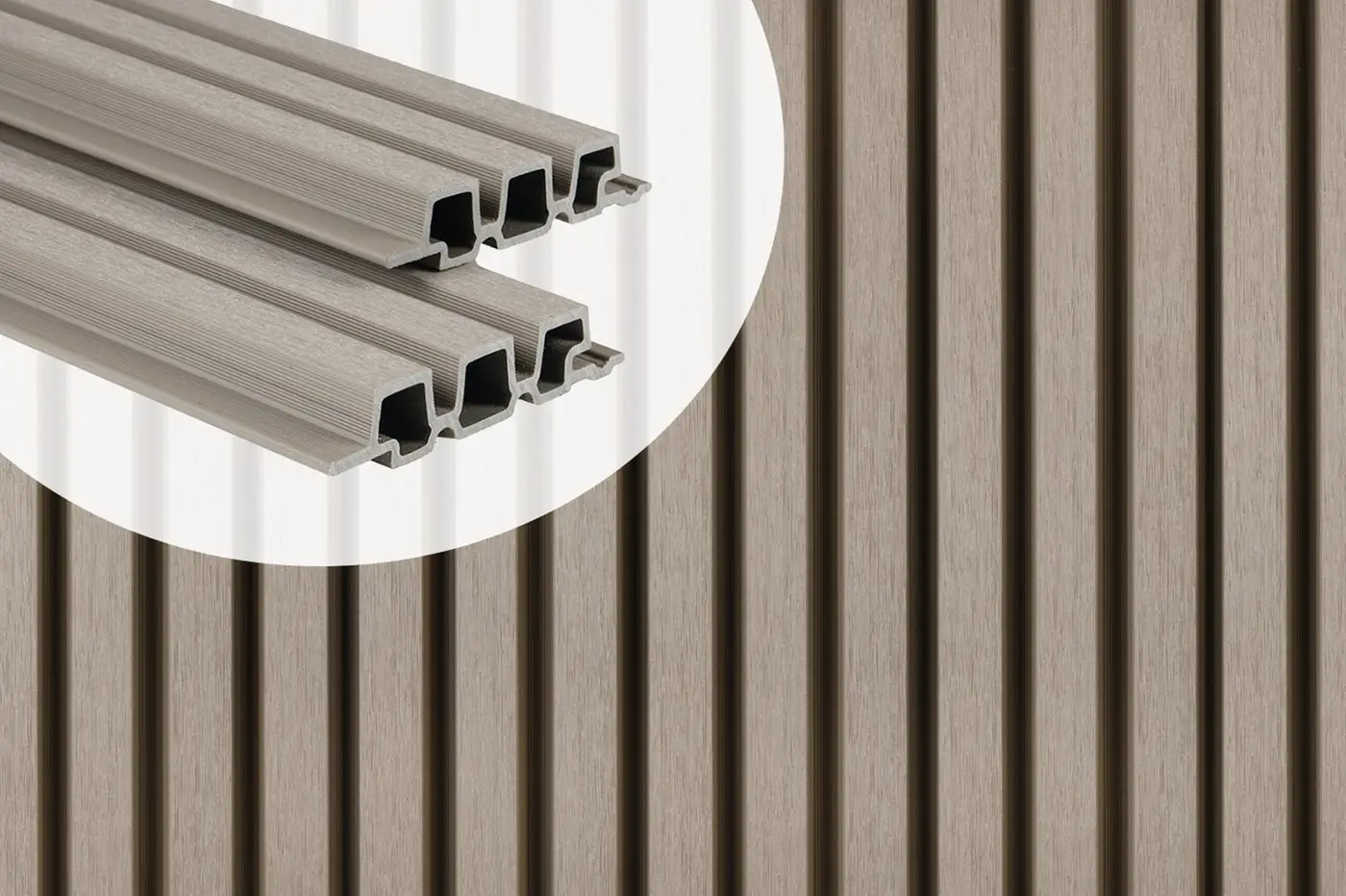
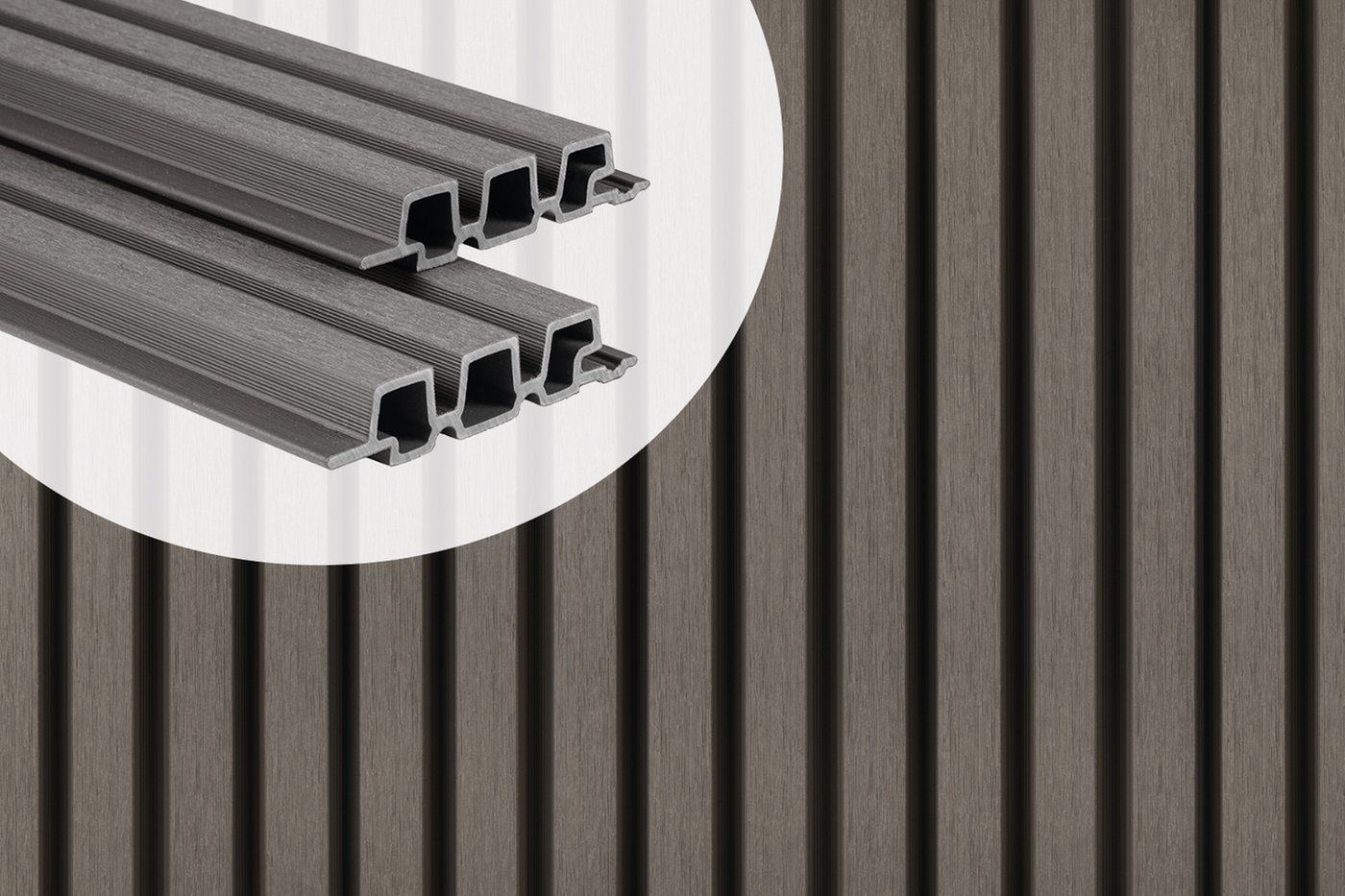
- PuraTech: capped, slatted boards, 170×33 mm, for walls where the cladding is the feature. Euroclass E (PuraTech 30) or D-s1,d0 (PuraTech 55).
- PuraShell: capped, flat tongue and groove boards in five colours, the all-rounder for garden rooms and extensions.
- PuraClassic: flat tongue and groove boards in Charcoal, classified Euroclass B, the highest fire class in our composite range.
Timber vs composite cladding
Both make a durable, good-looking wall. The difference is in how they age and what they ask of you over the years:
- Look: timber has real grain and natural variation from board to board; composite has an even, consistent colour across the whole wall.
- Ageing: timber mellows over time. Cedar and larch don’t need treating to last, but left bare they weather to silver grey, so most people oil them to keep the colour. Composite keeps the colour it came in.
- Upkeep: oiled timber needs a fresh coat every few years from our oils and stains; composite needs a wash once or twice a year.
- Refinishing: timber can be sanded, re-oiled or stained a new colour later; composite can’t, so choose its colour with care.
- Fire class: where a building needs a stated class, PuraClassic composite is classified Euroclass B.
Many projects use both, with a timber feature wall and composite on the harder-working elevations, or the other way round.
Cladding profiles explained
The profile is the shape of the board’s edge, and it decides the pattern of lines on the finished wall. Most ranges offer more than one:
- Tongue and groove (T&G): boards lock edge to edge for a flat, tight face with hidden fixings. Offered in cedar, larch, oak, iroko, Douglas fir, Ecowood, MicroShades and the PuraShell and PuraClassic composite ranges.
- Shiplap: each board overlaps the one below, casting a soft horizontal shadow line. Offered in Douglas fir, iroko and MicroShades.
- Slatted: separate or profiled slats with deep shadow gaps, for a contemporary look. Offered as triple slatted boards in Douglas fir, Ecowood, Thermo Ayous and Thermo Spruce, and as PuraTech in composite.
- Feather edge: tapered boards that overlap, a traditional and economical look for sheds and garden buildings. Offered in Douglas fir and Ecowood.
- Rhombus and half lap: angled or rebated boards for modern facades. Offered in Douglas fir, Ecowood and oak.
External wall cladding: battens, screws and trims
Cladding is never fixed straight onto a wall. Whatever boards you choose, you will need a few things behind and around them, and each board’s page suggests the matching extras:
- Battens: cladding battens are fixed to the wall to carry the boards and leave a ventilated cavity, an air gap that lets moisture escape.
- Screws: cladding screws in stainless steel. Tannins in species such as cedar and oak react with galvanised or mild steel and leave dark streaks, so stainless is the safe choice for every board.
- Trims: cladding trims finish external corners, window reveals and cut ends on composite walls, in colours matched to each range.
- Everything else: the full set of trims and fixings is in our cladding accessories.
How much does cladding cost?
Every board’s current price is in the grid above. What drives the price of external wall cladding is the material and species, the profile, the board size and the length. Softwoods such as Douglas fir and Ecowood are where most budget-led projects start; hardwoods such as oak and iroko, modified woods and capped composite sit higher, and repay it in durability or lower upkeep.
Because boards differ in width, compare options by what it costs to cover one square metre (m²) of wall, not by the price of a single board. Each product page shows how much one board covers. Enter your wall area in the calculator on the product page and it works out how many boards you need, and the cart adds the matching extras automatically.
Cladding for garden rooms and extensions
Garden rooms and extensions are where most of our cladding goes. For a garden room, the choice usually comes down to a warm timber such as cedar or larch that you oil to keep its colour, or a capped composite such as PuraShell that only needs a wash. For an extension, match the existing house: a dark charred or composite board sits well against render and glass, while oak or larch warms up a brick or stone building.
Looking after your cladding
Timber cladding lasts for decades with the right care. Wash it down each spring, and if you want to hold its colour, re-oil it every few years before the surface turns grey. Charred timber and factory-finished MicroShades need less attention, and composite cladding only needs warm soapy water and a soft brush once or twice a year.
Cladding in Dublin and across Ireland
All of our timber and composite cladding, battens, screws and trims is held in our Dublin warehouse. See the ranges at our Dublin showroom, collect your order there, or have it delivered anywhere in Ireland.
Frequently Asked Questions About Cladding
What is cladding?
Cladding is a layer of boards fixed to the outside of a building to protect the walls and give them a finished look. We stock two types for homes, extensions and garden buildings: natural timber cladding and low-maintenance composite cladding.
Should I choose timber or composite cladding?
Timber gives you real wood that weathers and ages over time. It doesn’t need treating to last, but left bare it turns silver grey, so most people oil it to hold its colour. Composite is made for low maintenance, with no painting, staining or rot, and keeps the colour it came in. Many projects use both on different walls.
How much does cladding cost per m2?
Cladding is sold by the board, and board sizes vary, so compare options by what it costs to cover one square metre rather than by the price of one board. Each product page shows how much one board covers, so you can work that out for any range. Softwoods such as Douglas fir and Ecowood are where most budget-led projects start; hardwoods, modified woods and capped composite sit higher and repay it in durability or lower upkeep.
What screws should I use for cladding?
Use stainless steel. Our timber cladding should be fixed with stainless steel screws or ringshank nails, because the tannins in species such as Cedar and Oak react with galvanised or mild steel and leave dark streaks. Composite T&G boards are also fixed with stainless screws into the batten.
What else do I need to install cladding?
Cladding is fixed to battens, which leave a ventilated cavity behind the boards. You will also need stainless fixings and trims or corner pieces to finish edges, corners and openings. If you want timber cladding to keep its colour, add a UV-protective oil from our cladding maintenance range.
Can cladding be used on garden rooms and extensions?
Yes. Our cladding is used on homes, extensions and garden buildings across Ireland. PuraShell composite, for example, is designed for new builds, garden rooms, extensions and renovations, and timber species such as Cedar and Larch suit facades and feature walls alike.
Can I see cladding before I buy?
Yes. You can see our timber and composite cladding ranges at our Dublin showroom in Cloghran, then collect your order there or buy online for delivery across Ireland. Each product page also shows the board sizes, finishes and coverage.