
Length
Width
Thickness
Colour Tone
Profile
Material
Fire Rating
Range
Species
Wood Type
Warranty
Moisture Content
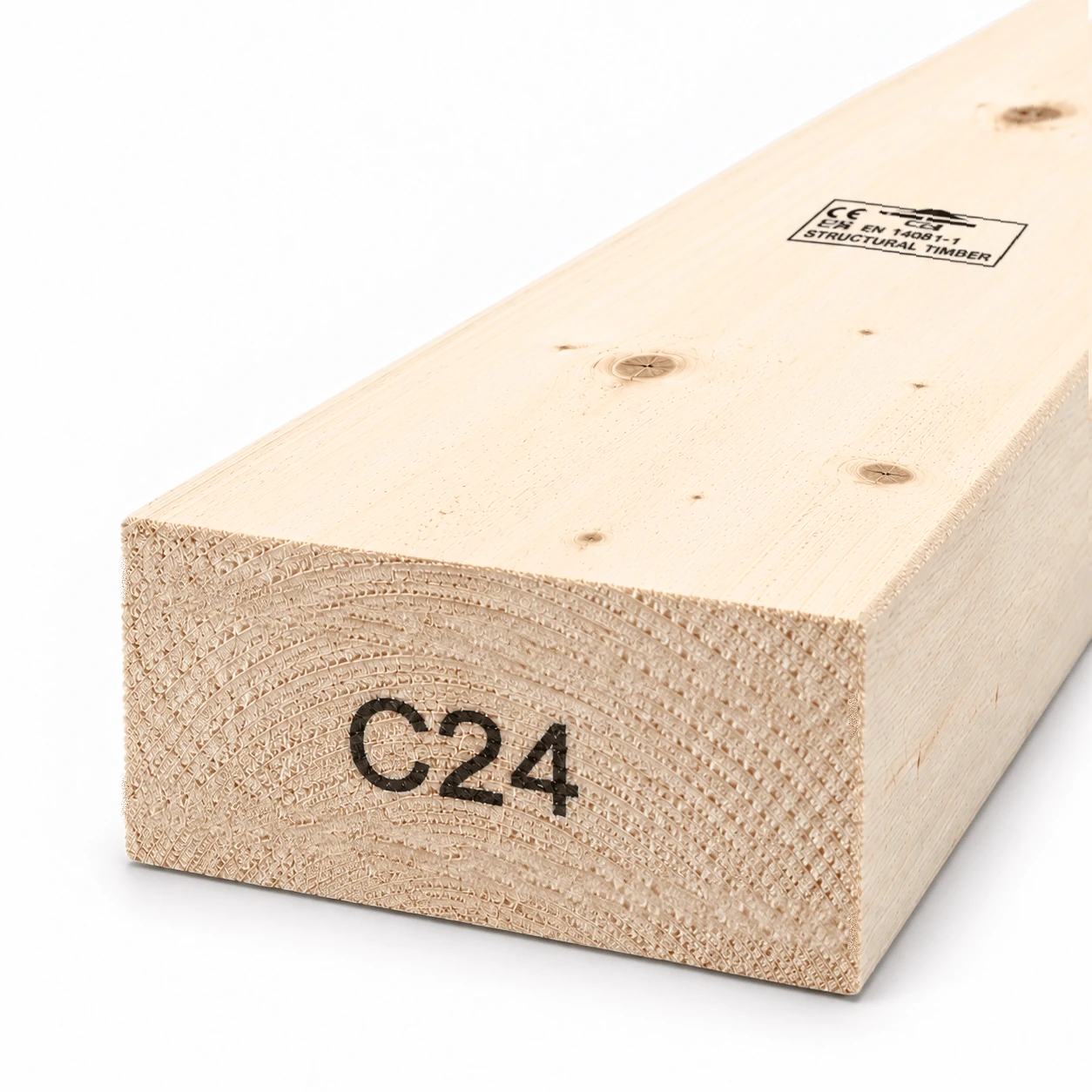
C24 Treated Timber
C24 treated timber is structural carcassing that has been pressure treated with preservative, so it can go where untreated softwood would not last. Sole plates sitting on a slab, garden room and shed framing, pergolas, carports, decking substructure and anything in contact with masonry or the ground. It carries the same C24 strength grading as our C24 sawn range, so the span tables and section sizes are identical. The difference is where you can put it. Held in North Dublin and delivered across Ireland.
Sort by
One product found
Is C24 timber treated?
No. C24 is a strength grade, not a treatment. It tells you what the timber can carry and says nothing about whether it will survive getting wet. Standard C24 carcassing is kiln dried and untreated, and it belongs in dry internal work. If the timber has to go somewhere damp, exposed, or in contact with masonry or the ground, you need C24 that has been pressure treated as well, which is what this range is.
The two get confused because a merchant will often say C24 and mean whichever of them they happen to stock. Check the description rather than the grade. Our untreated stock is on the C24 sawn page, and everything on this page is treated.
How to tell whether a piece is treated
Colour is the first sign. Preservative tints the timber, so treated stock reads green or brown against the pale creamy colour of untreated whitewood. The grade stamp will not settle it for you, because it carries the strength class, species, moisture content and grading agency but nothing about treatment.
The reliable check is a cut end. Preservative goes in from the outside, so a fresh cut on treated timber shows a tinted band around the outside with paler wood at the core, while untreated timber is the same colour the whole way through. Freshly treated timber is also visibly damp and noticeably heavier than the same section dry.
What treated timber is
Treated timber is structural softwood that has had preservative forced into it under pressure, rather than brushed onto the surface. The timber goes into a sealed vessel, the air is drawn out, preservative is pushed in under pressure, and the excess is drawn back off. That gets the preservative into the body of the timber instead of leaving it as a film on the outside, which is the whole difference between treatment that lasts and a coat of something that weathers off in two summers.
What it protects against is fungal decay and insect attack, the two things that end the life of softwood in a damp position. What it does not do is change the strength of the timber, stop it getting wet, or stop it moving. A treated joist and an untreated joist of the same section carry the same load.
When you need treated, and when you do not
The question is not how exposed the timber looks. It is whether it will ever be damp for long enough to let decay start.
Use treated for anything outdoors, anything in or on the ground, sole plates and sill plates sitting on a slab or on blockwork, framing in garden rooms, sheds and garages, decking substructure, pergolas and carports, and any timber built into masonry. Damp travels out of concrete and blockwork into timber sitting against it, which is why a sole plate rots while the studs above it are perfect.
Use untreated C24 sawn for internal structural work inside the building envelope: floor and ceiling joists, rafters, studs and wall plates in a heated, dry building. Treating those adds cost and wets the timber for no benefit.
Where a member runs from inside to outside, treat the whole length as external. Decay starts at the wet end and works inwards, so a half treated member fails just the same.
Same grade, same spans
Everything here is strength graded to C24 under EN 338, exactly as the sawn range is, and carries the same grade stamp with the strength class, species, moisture condition, standard and grading agency. Treatment happens after grading and does not change the structural properties, so a 6×2 treated joist spans what a 6×2 untreated joist spans.
That matters when you are working from a drawing. If the engineer specified C24 and the position calls for treatment, you are not making a trade off between the two. You get both.
It arrives wet, and that is normal
Preservative goes in as a water based solution, so freshly treated timber comes out of the vessel with a high moisture content. It will be visibly damp, noticeably heavier than the same section dry, and it will dry out on site over the following weeks.
Two things follow from that. It is heavier to handle than you expect, so allow for it when you are working out what is a one person lift. And it will shrink a little as it dries, so fix it where you can rather than leaving it stacked, and expect some movement in the first few weeks on anything left loose.
Stack it off the ground on bearers with air moving through the bundle. Treated timber left in a sealed stack on wet ground stays wet, and wet timber pressed face to face stains and discolours.
Every cut face is untreated
This is the single thing that undoes treated timber on site. Preservative penetrates from the outside in, so the moment you cut a length, notch a housing or drill a hole, you have exposed timber the treatment never reached.
Brush every cut end and every drilled hole with an end grain preservative before it goes in, and be particularly careful about cut ends that will sit in a post shoe, against masonry, or anywhere water can stand. A treated post cut to length and dropped straight into the ground rots from the cut end up, and it rots on the schedule of untreated timber.
Fixings for treated timber
Modern wood preservatives are copper based, and copper corrodes ordinary zinc plated steel. A zinc plated screw in treated timber can lose its head in a couple of years, and you will find out when something moves.
Use hot dipped galvanised as the minimum, and stainless steel for anything external, anything structural, and anything you would not want to take apart to replace a fixing. The same applies to joist hangers, straps, post bases and angle brackets: the bracket has to match the timber it is fixed into. We stock the right fixings, so ask if you are not sure which grade a job needs.
Buying C24 treated timber in Ireland
We hold treated C24 in our North Dublin warehouse for collection or delivery across Ireland. If you need a section or a length that is not listed, or you are not sure whether a position calls for treated or untreated, ring us and we will work it out with you.