
Length
Width
Thickness
Colour Tone
Profile
Material
Fire Rating
Range
Species
Wood Type
Warranty
Moisture Content
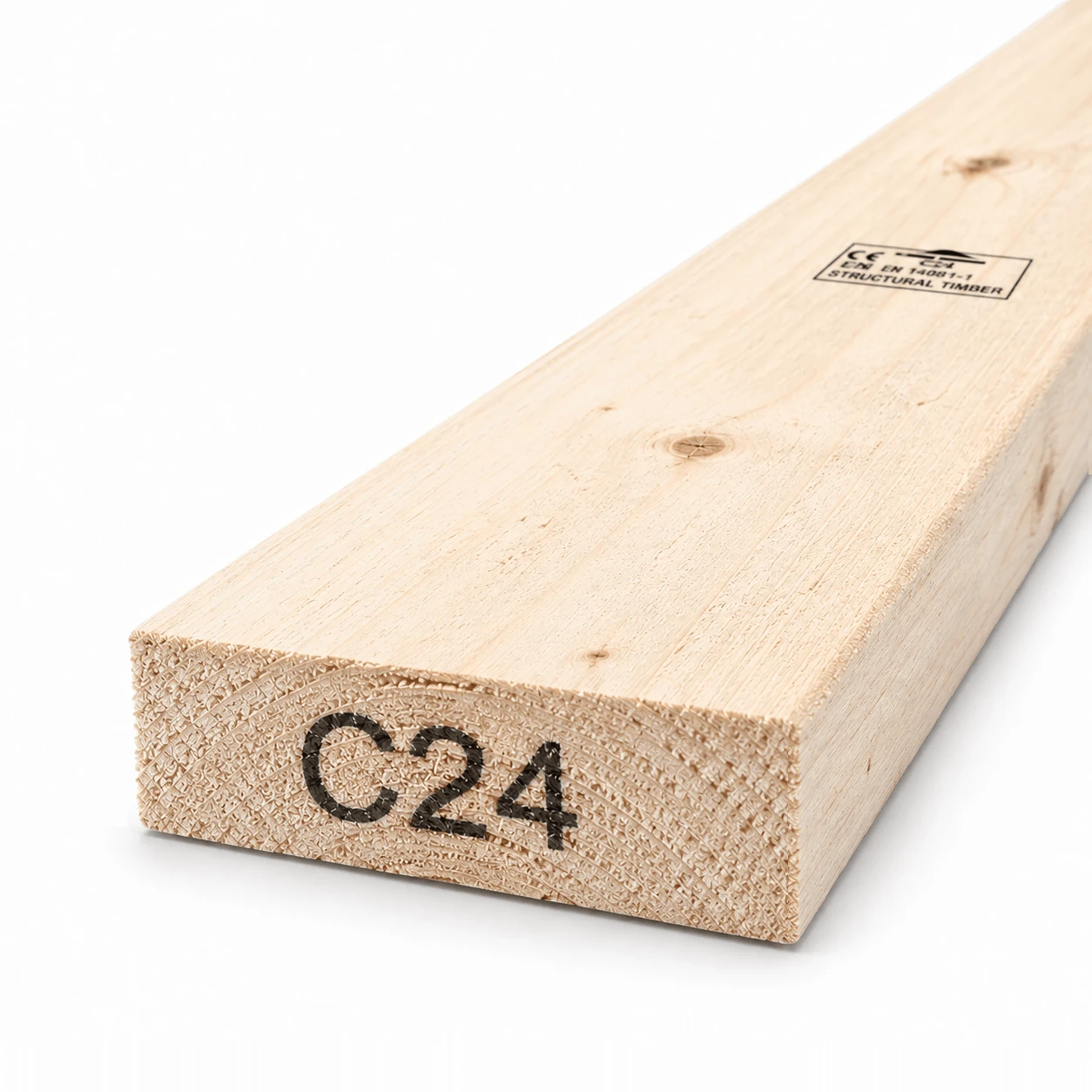
C24 Timber
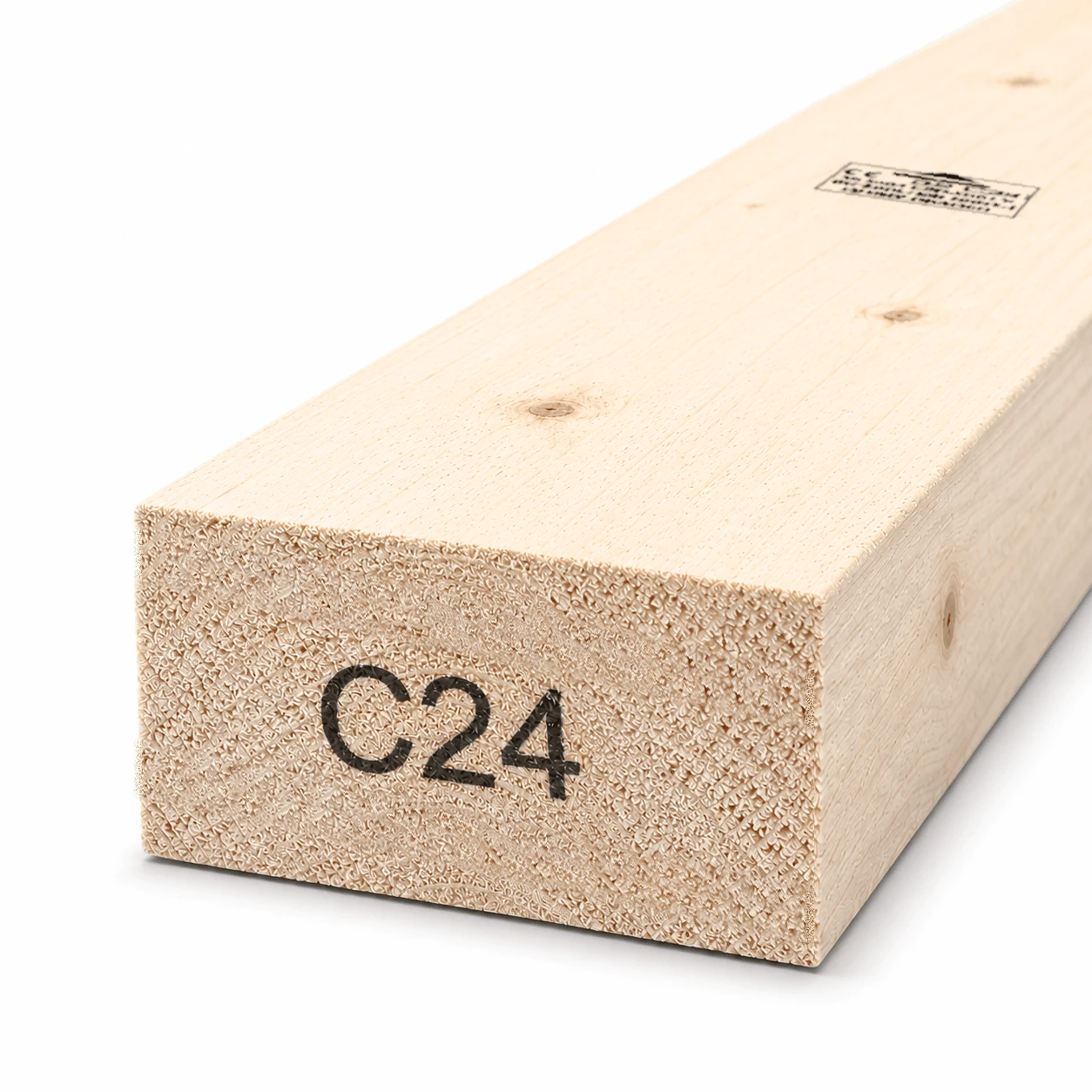
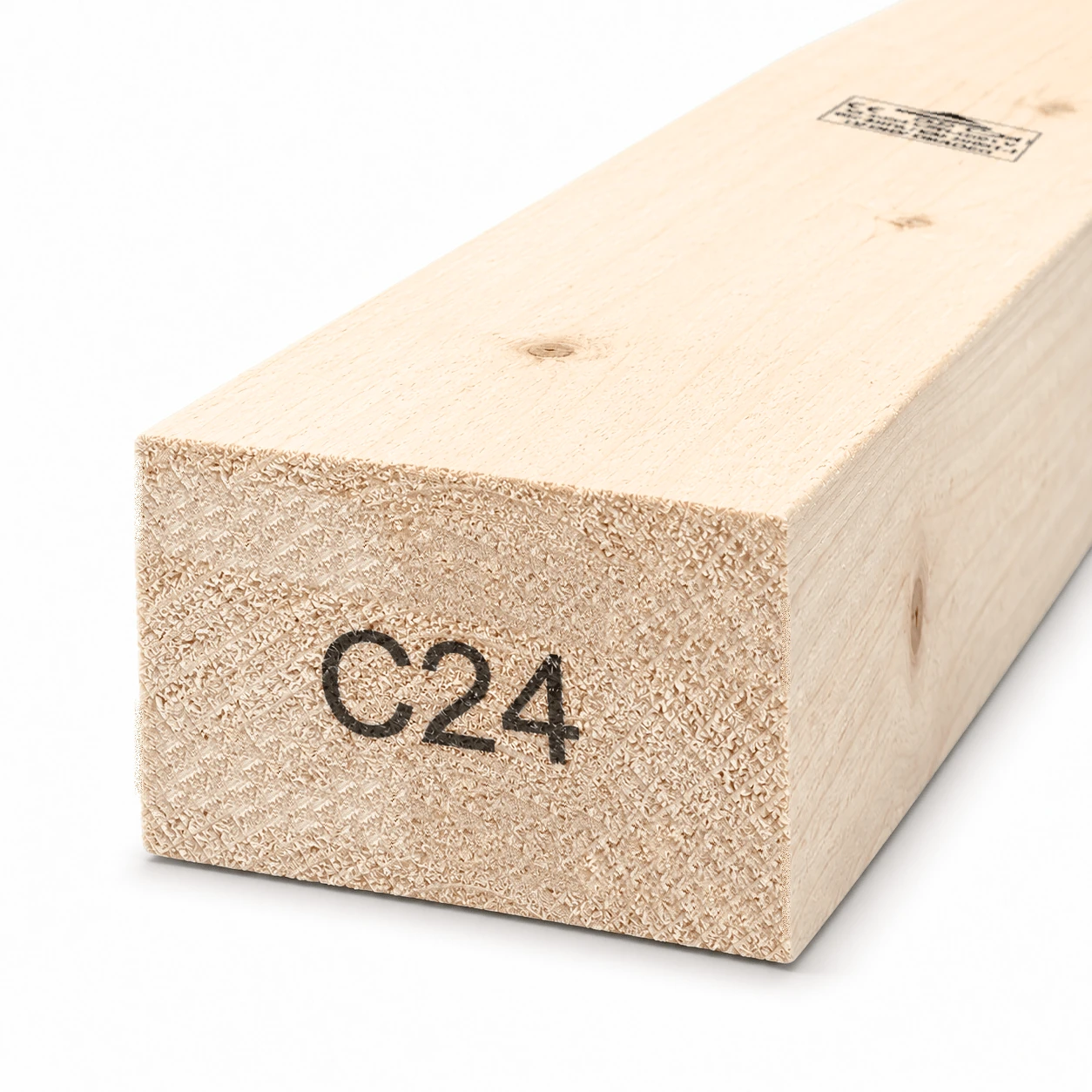
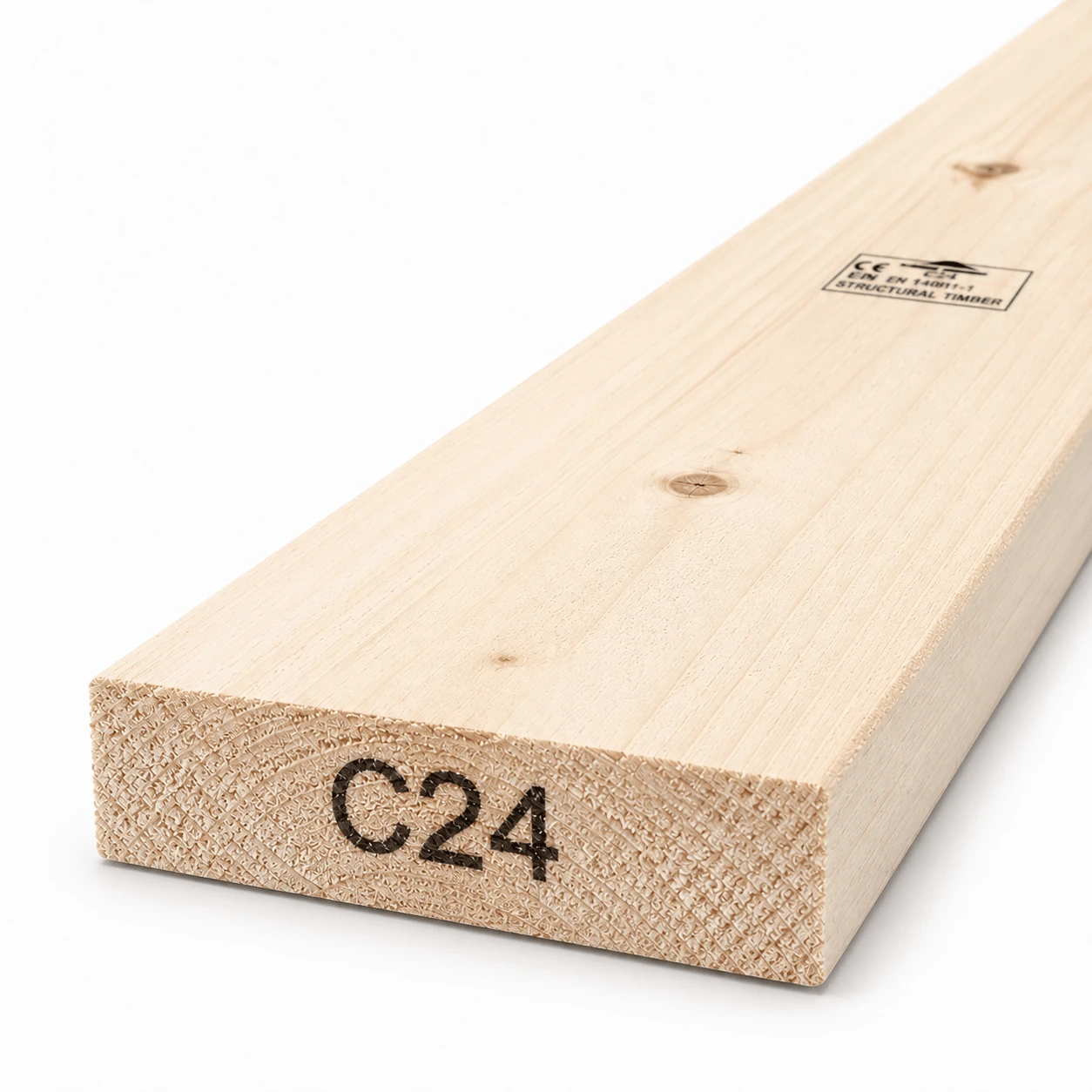
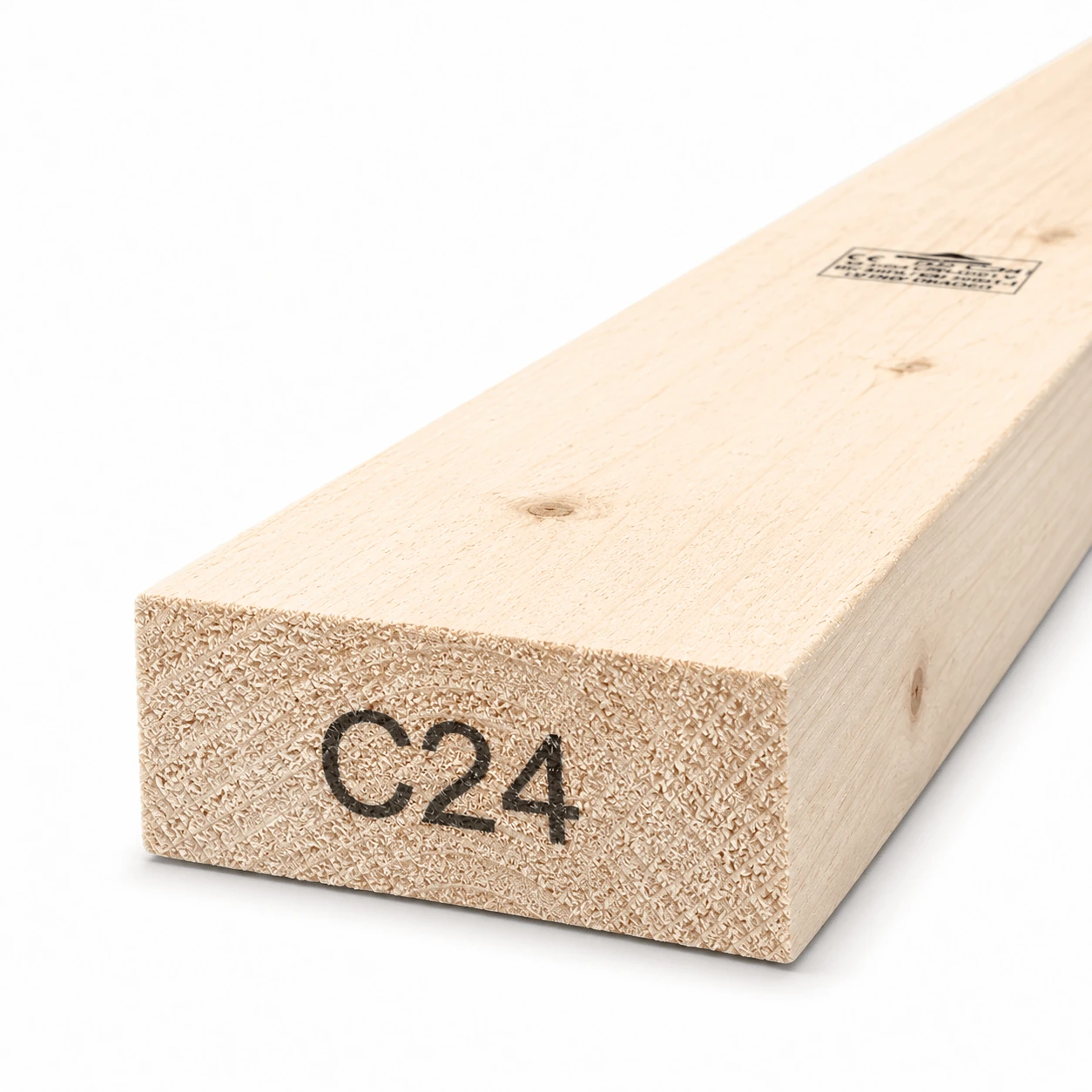
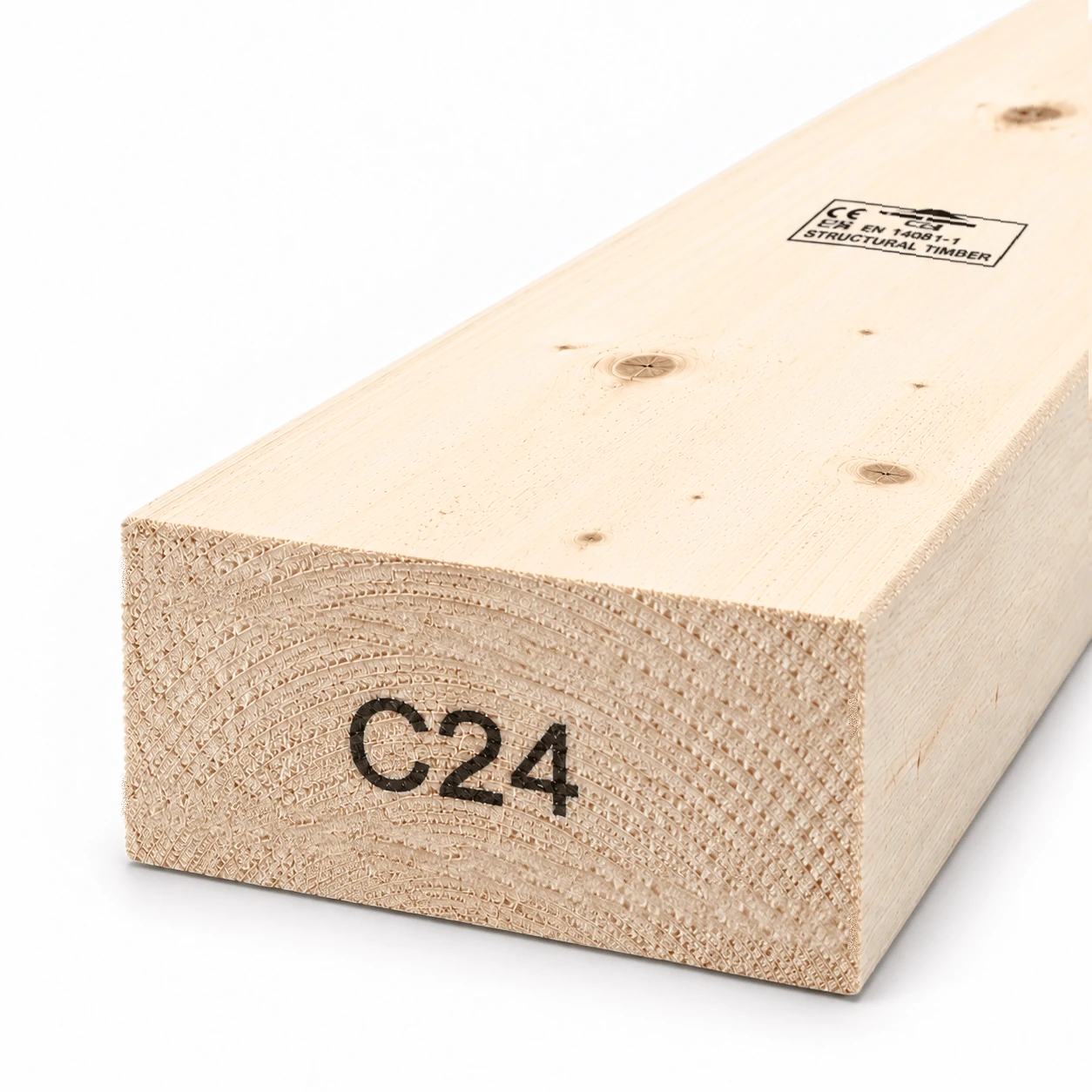
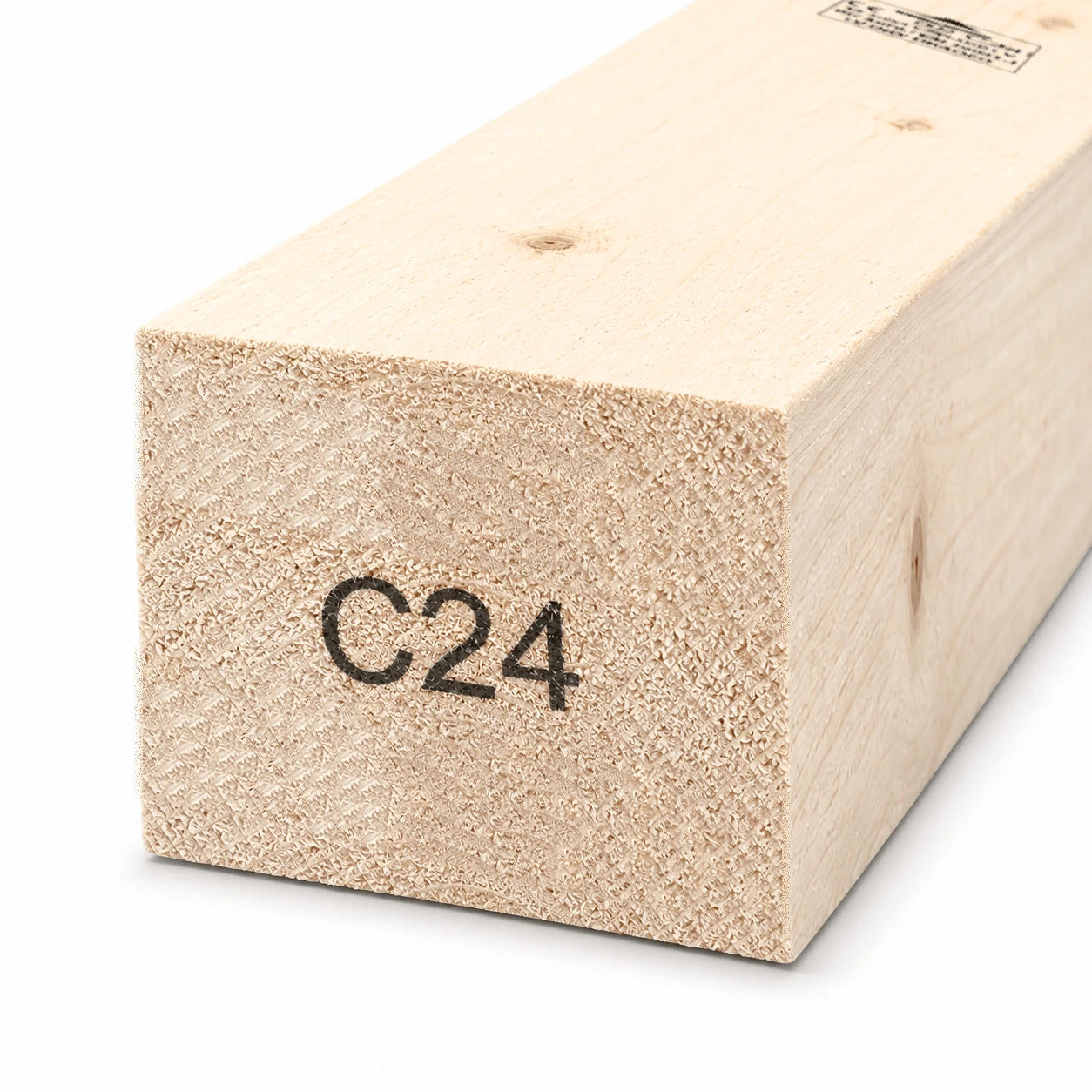
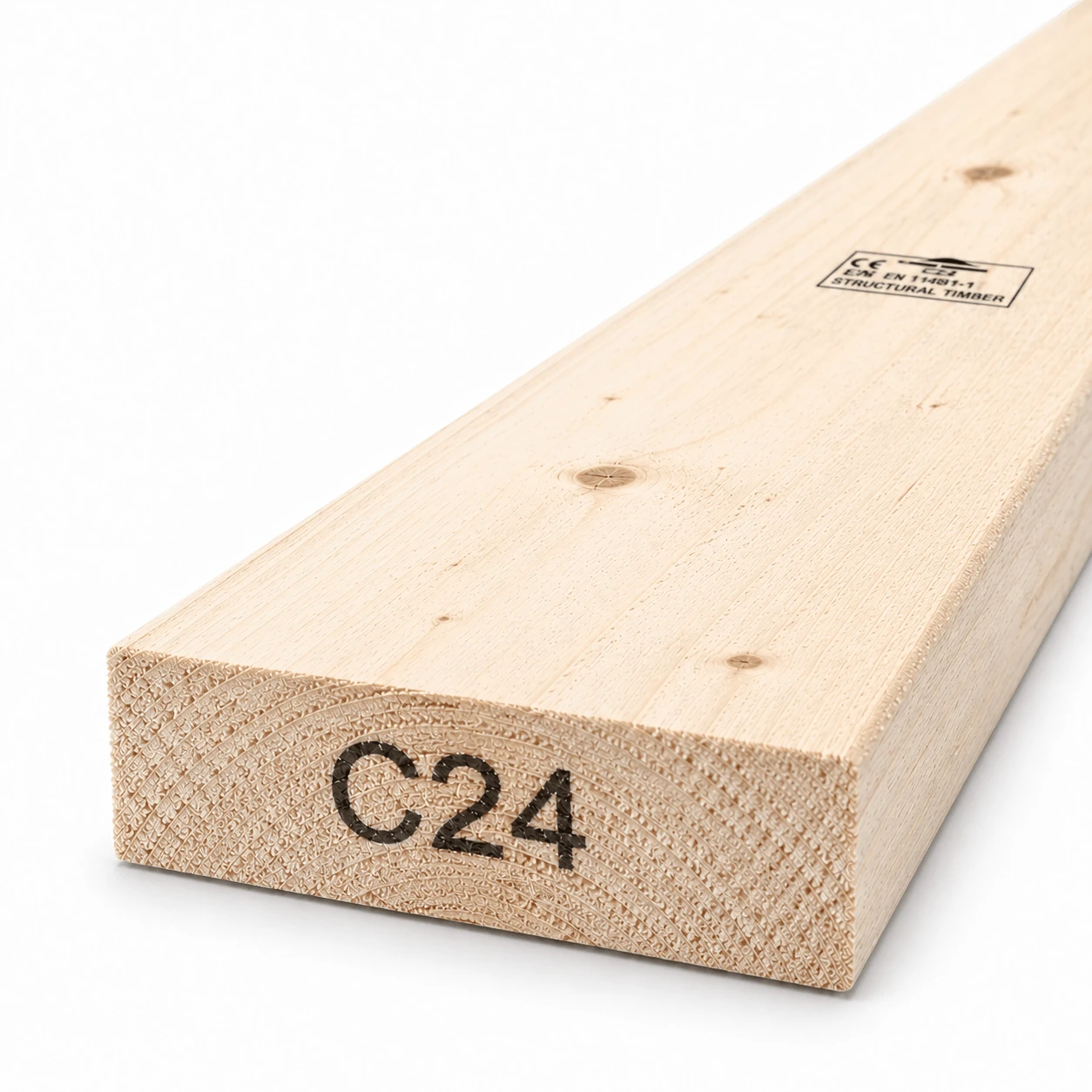
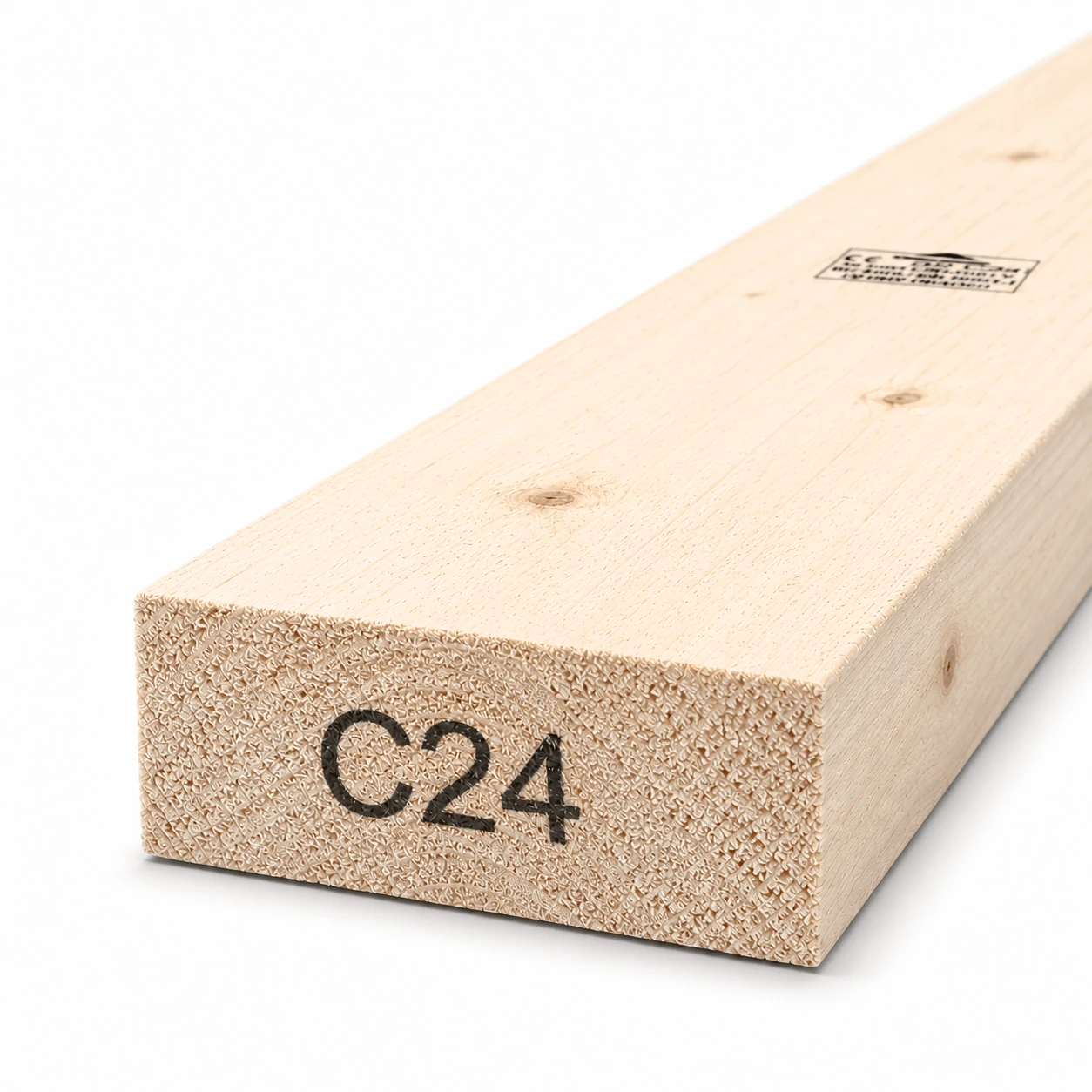
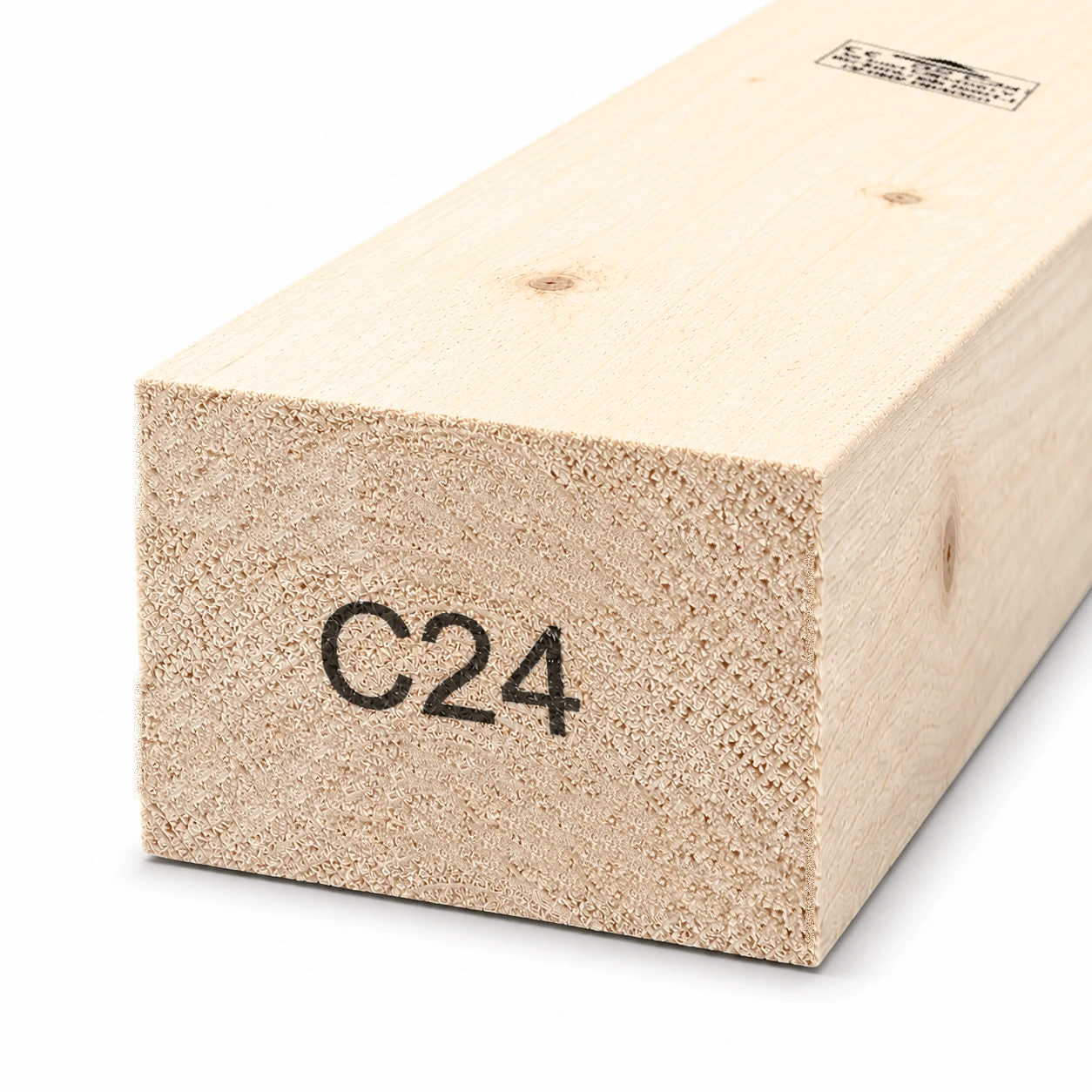
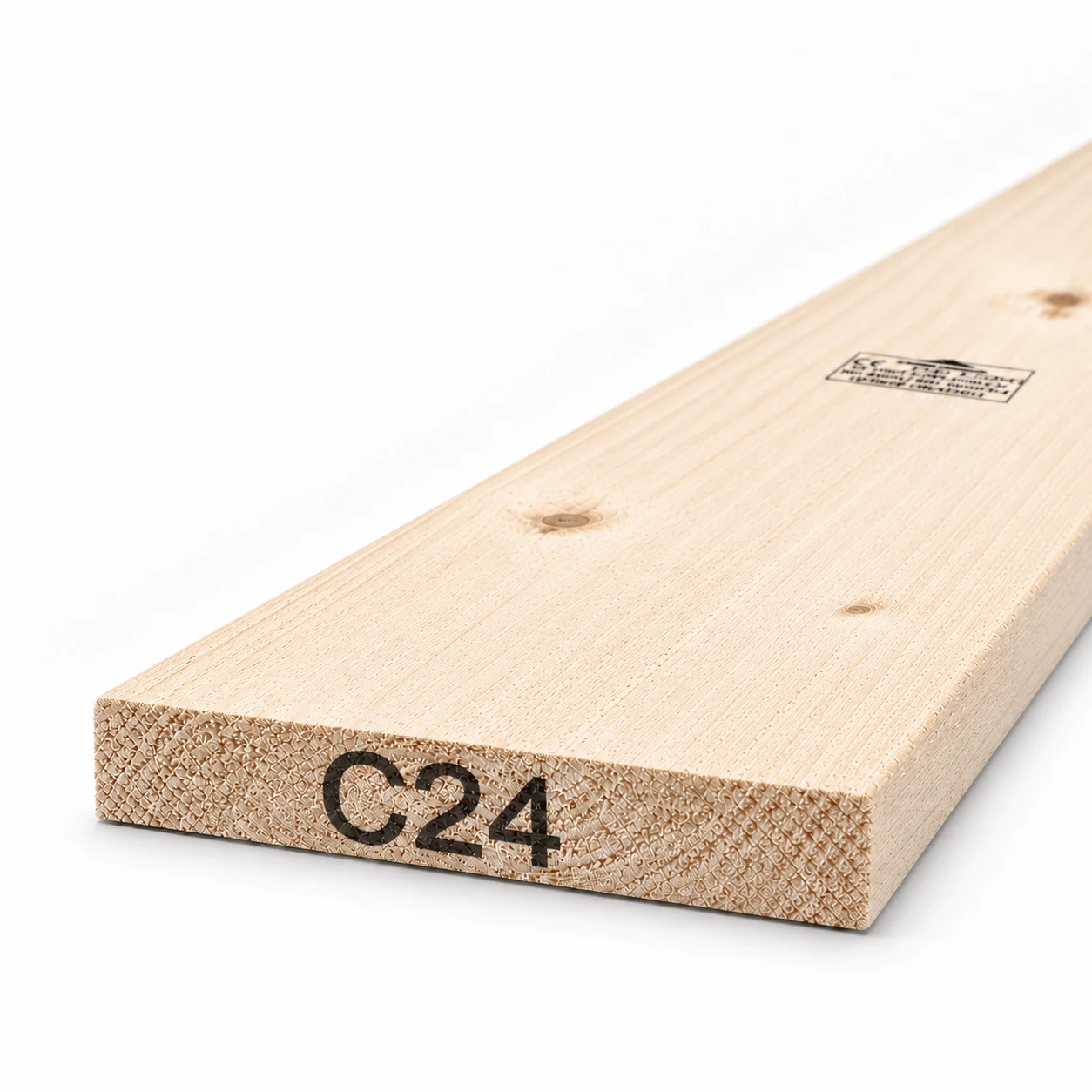
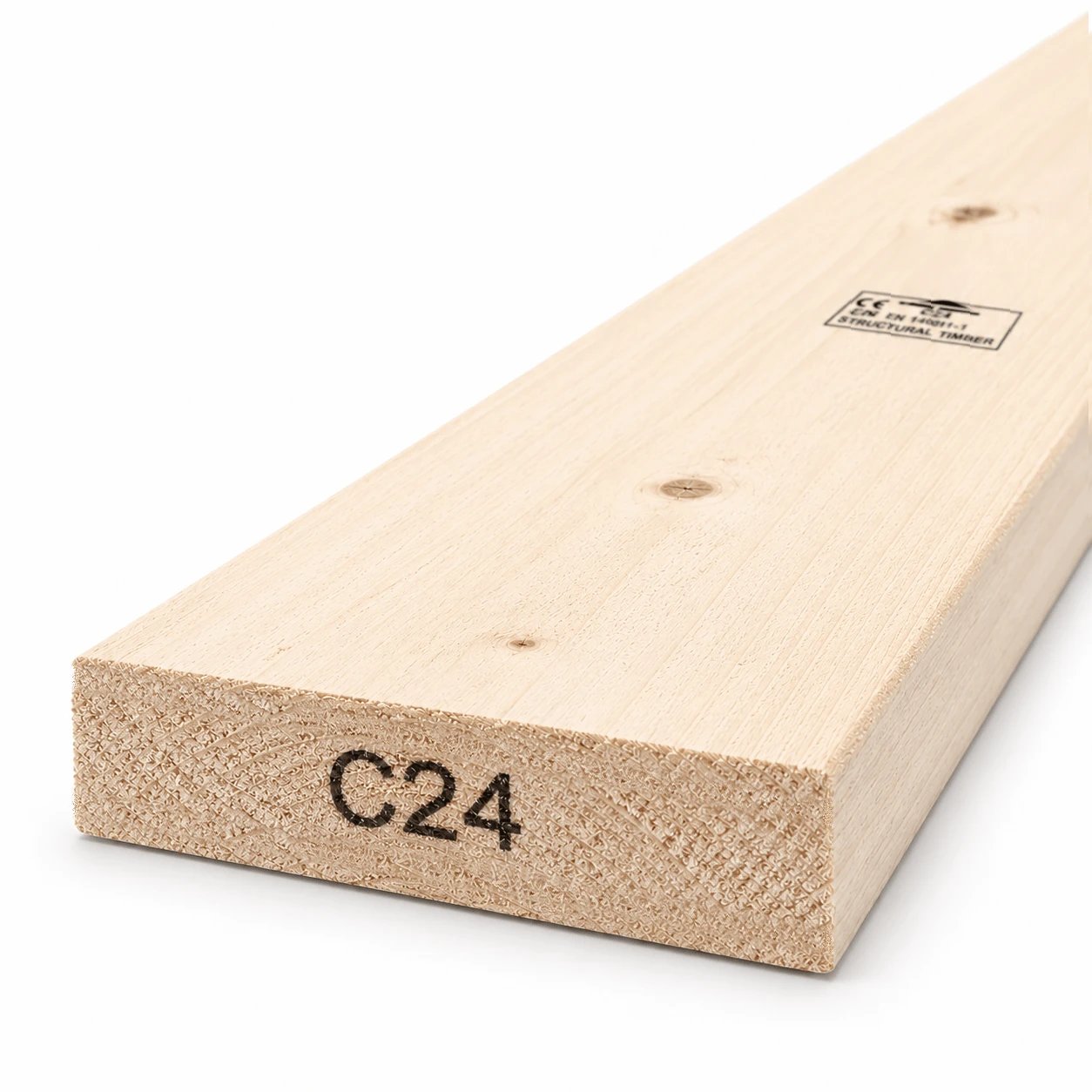
C24 timber is kiln dried whitewood strength graded to C24, the class Irish structural work is specified in. Use it for floor joists, ceiling joists, rafters, stud partitions and wall plates anywhere inside the building envelope that stays dry. Every piece is graded and stamped, so it satisfies a drawing written for C24 or for the lower C16 class. Sections run from 4×1 boards through the 4×2 to 9×2 joist range up to 9×3 beams. For anywhere damp or outdoors, use C24 treated instead. Held in North Dublin and delivered across Ireland.
Sort by
Showing 1-12 of 22 results
What C24 timber is
C24 timber is structural softwood, almost always whitewood, that has been kiln dried and then strength graded to the C24 class in EN 338. The C is for coniferous and the 24 is the characteristic bending strength in newtons per square millimetre. It is the everyday structural timber of Irish house building, and if a drawing says joists without saying anything else, C24 is usually what is meant.
Grading is done by machine or by eye against a written standard, and it looks at the things that make a piece weaker than its size suggests: knots and where they sit, slope of grain, fissures, wane and density. A piece that fails C24 is not scrap, it is graded down. That is the whole point of the system: you are buying a guaranteed minimum performance rather than a nice looking piece of wood.
Every length carries a stamp with the strength class, the species, the moisture condition, the standard and the grading agency. On inspected work that stamp is your evidence, so keep it in a visible position where you can.
C24 against C16
C16 is the same species graded to a lower strength class. C24 is roughly 50 per cent stronger in bending and noticeably stiffer, which in practice means it spans further at the same section, or does the same span in a shallower joist. On a floor, stiffness is usually what decides the size rather than outright strength, because a floor that passes on strength can still feel bouncy.
We carry C24 only. On domestic work the difference in price between the grades is small against the cost of a floor that has to come up, and specifying C24 covers a drawing written for either. If a drawing calls for C16, C24 satisfies it. A drawing calling for C24 is not satisfied by C16, so check the drawing before you order.
Sizes: what 4×2, 6×2, 7×2 and 9×2 actually are
Timber is ordered in inches and sold in millimetres, so here is the translation. Width first, thickness second.
The 2 inch structural range. 4×2 is 100×44, 6×2 is 150×44, 7×2 is 175×44, 9×2 is 225×44. This is the joist and rafter range and it covers most of a domestic build. 4×2 does stud partitions and light roof work, 6×2 and 7×2 do most floor and ceiling joists, and 9×2 does longer spans and heavier floors.
The 3 inch range. 4×3 is 100×75, 6×3 is 150×75, 9×3 is 225×75. Heavier sections for beams, trimmers around stair and chimney openings, and anything taking a point load from above.
The 1 inch boards. 4×1 is 100×22, 6×1 is 150×22, 7×1 is 175×22, 9×1 is 225×22. Not structural on their own. These are noggins, firrings, soffits, sarking and general site boarding.
There is also a 1.5 inch range at 35 mm thickness, 3×1.5 at 75×35 up to 6×1.5 at 150×35, which is the usual choice for light framing and battening where a 2 inch section is more than the job needs.
Density, weight and what you can lift
C24 whitewood runs at roughly 470 kg per cubic metre at the moisture content it is supplied in. That is the number to use when you are working out what a bundle weighs or whether a length is a one person lift.
A 4.8 metre 9×2 is about 0.0475 cubic metres, so around 22 kg. The same length in 9×3 is nearer 38 kg, which is a two person carry up a ladder whatever anyone says at the time. A 4.8 metre 4×2 is about 10 kg and you will carry three at once without thinking about it.
Density also decides how the timber takes a fixing. Whitewood at this density holds a screw well in the face but splits readily near an end, so pilot anything within about 60 mm of the end of a piece, especially in the thinner sections.
Moisture content and movement
Kiln dried means the moisture content has been brought down to roughly 18 to 22 per cent, which is close to where timber settles in a heated building. That is the difference between a floor that stays quiet and one that starts creaking through its first winter as the timber shrinks away from its fixings.
It only holds if the timber stays dry between delivery and fixing. Stack it off the ground on bearers, cover the top but leave the ends open so air moves through the bundle, and never leave it flat on a wet slab under polythene. If the building is already dry, give the timber a few days inside before you fix it.
C24 sawn is untreated. It belongs inside the building envelope, in positions that will stay dry for the life of the building. Sole plates on a slab, anything in contact with masonry, and anything outdoors need C24 treated instead.
Notching, drilling and fixing
A joist is strongest at its top and bottom edges, so that is where not to cut. Keep notches in the top edge within the first quarter of the span and no deeper than an eighth of the joist depth. Keep drilled holes on the neutral axis at mid depth, no bigger than a quarter of the depth, and spaced at least three diameters apart. Never put a notch and a hole at the same point along the joist. If the services will not fit inside those limits, the answer is a deeper joist rather than a bigger notch.
For fixings, ordinary zinc plated screws and nails are fine in dry internal C24 because there is no preservative chemistry to react with. Pilot near ends to stop splitting, and use proper structural screws or nails where a connection is doing structural work rather than just holding something in place.
Buying C24 timber in Ireland
We hold C24 in our North Dublin warehouse for collection or delivery across Ireland, in the sections and lengths listed on this page. If you need a length that is not shown, or you are sizing joists from a span table and want to talk it through before you order, ring us.