
Length
Width
Thickness
Colour Tone
Profile
Material
Fire Rating
Range
Species
Wood Type
Warranty
Moisture Content
Puraboard Solid Composite Decking
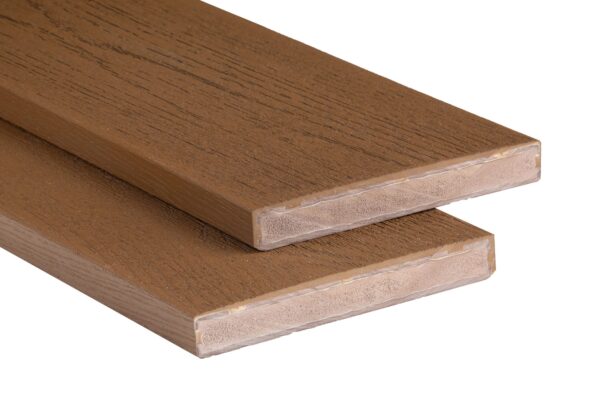
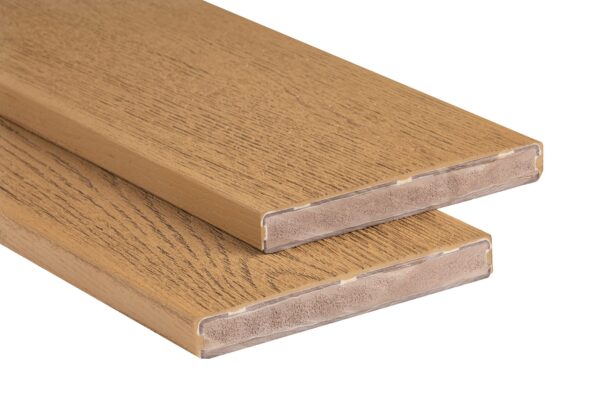
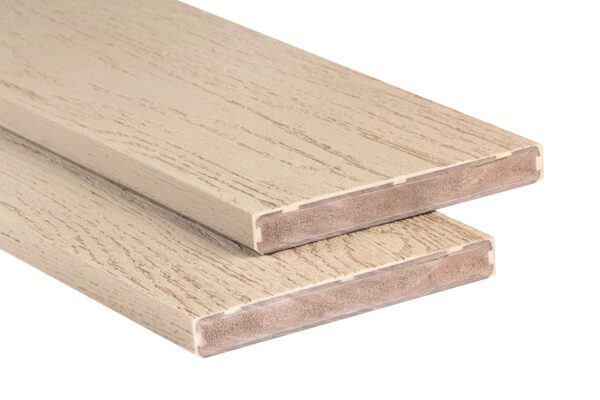
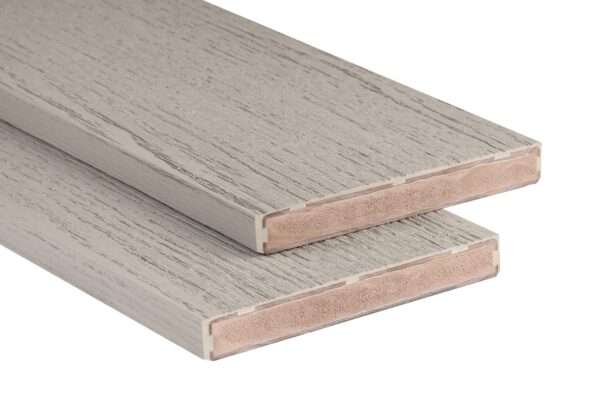
Puraboard solid composite decking is our top of the range deck board, a solid polyurethane board with no wood in it, for decks, steps and dining areas where you want the look of timber with nothing to rot. Every board is 175×22 mm with a deeply embossed grain, in five colours: Chestnut, Golden Teak, Sandstone, Cashmere and Ebony Black. Stocked in our warehouse and delivered across Ireland.
Sort by
Showing 1-5 of 5 results
Solid Composite Decking Boards
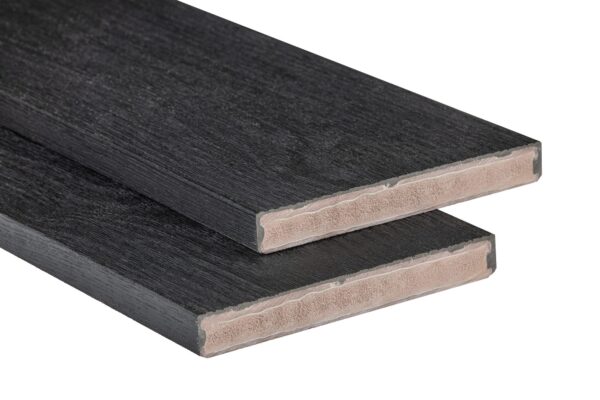
Puraboard is a solid deck board with no hollow chambers inside. Most composite decking blends wood fibre with plastic; Puraboard is made of polyurethane all the way through, with no wood in it at all. There is nothing in the board to rot, swell or split, so it behaves the same through a wet Irish winter as it does in July. The face carries a deeply embossed grain that reads as real timber from standing height, and it sits at the top of our composite decking range, above the capped PuraShield.
Puraboard is not the board for you if you want real wood that you can sand back and oil, or the lowest cost per square metre. For real wood, compare our timber decking; for the lowest cost, look at the hollow ranges below.
Hollow vs Solid Composite Decking
Most composite decking is hollow: chambers run the length of the board to save weight and material. That keeps the cost down, but it changes how the deck feels and how you finish it. Here is the trade-off, point by point:
- Feel underfoot: a solid board is quieter and firmer, with no hollow ring when you walk on it.
- Edges and ends: hollow boards need trims or edge boards to hide the chambers. A solid board has no chambers to hide, so its cut ends can be shaped and left on show.
- Fixing: hollow boards are held down with hidden clips. Puraboard uses no clips at all: every board is screw fixed.
- Cost: a solid board costs more per square metre than a hollow one, so it suits decks where the finish matters most.
If you want a lighter board that still feels stiff, compare the round hollow PuraPrime composite decking.
Wide Composite Decking Boards
Every Puraboard board is 175×22 mm, the widest composite decking board we stock, against 135 to 145 mm for our hollow boards. The extra width means fewer boards and fewer gaps across the deck, so it reads as a calm, generous surface, much like a wide timber plank. Enter your deck area in the calculator on the product page and it works out how many boards you need; the cart adds the fixings and extras.
Puraboard Colours
Puraboard comes in five colours, all with the same embossed grain, from a pale sandy beige to a deep black. Pick the shade by the light on your deck and the materials around it:
- Sandstone: a pale, sandy beige that keeps a small or shaded deck feeling light and open.
- Cashmere: a soft light grey with a warm undertone, calm and modern beside render and pale paving.
- Golden Teak: a warm honey tone with the look of freshly oiled teak, as on Puraboard Golden Teak decking.
- Chestnut: a rich mid brown with darker grain, at home beside brick, natural stone and planting.
- Ebony Black: a deep black that gives a crisp, contemporary edge against white render, as on Puraboard Ebony Black decking.
Pale shades stay cooler underfoot in strong sun than dark ones, which is worth weighing up on a south facing deck.
Grip and Fire Rating
Puraboard is rated R11 on the oil wet ramp slip test, a high grip rating for a decking board, which matters on shaded decks, around hot tubs and on steps. It is classed Dfl-s2 under EN 13501-1, the European reaction to fire standard. The “fl” means it was tested as a floor covering, D is its class on a scale that runs from A1 (non-combustible) down to F, and s2 is its smoke class.
Puraboard and the Rest of Our Composite Range
Our five composite ranges climb from entry to top. PuraPro composite decking is the best value square hollow board, and PuraPlus composite decking puts the same construction on a wider 145 mm board. PuraPrime is the stiffer round hollow mid range board. PuraShield composite decking adds a protective cap against stains and fading, with the widest choice of lengths. Puraboard tops the range: choose it when you want a solid board with no wood to rot and the best grip we offer.
Installing and Finishing a Puraboard Deck
Puraboard is screw fixed to a sound frame, with no clips. The Puraboard installation guide has the full detail; the basics are:
- Joists: set them at 400 mm centres for a straight lay, and closer for a diagonal one, on composite or timber decking joists, or on adjustable decking pedestals over a slab.
- Fixing: PuraFix screws, either top fixed and sunk just below the surface or side fixed through the board edge, so the fixings all but disappear. The PuraFix ProGuide and EdgeGuide keep them in line; find them in our decking screws and fixings.
- Gaps: leave 4 mm between boards and 5 mm at the perimeter.
- Edges: the matching Puraboard Bullnose, 150×22 mm, finishes the deck edge and step nosings, and the Puraboard Flex Bullnose, 48×22 mm, is a flexible trim for curved edges. Both come in the same five colours, with the rest of our decking trims and fascia.
There is no oiling, staining or sealing to do. Wash the deck with warm soapy water and a soft brush a couple of times a year, and keep a pressure washer nozzle well back from the surface, as a concentrated jet can scuff the grain. Puraboard is one of five ranges in our composite decking collection, which you can compare side by side in our Dublin showroom or order online for delivery across Ireland.
Frequently Asked Questions About Puraboard Solid Composite Decking
What joist spacing does Puraboard need?
Joists at 400 mm centres for a straight lay, measured from the middle of one joist to the middle of the next. If you lay the boards on the diagonal, the joists need to be closer, so plan the frame for the pattern before you start. The Puraboard installation guide has the full detail.
Can I use Puraboard on steps?
Yes. The R11 grip rating suits steps well, and the matching Puraboard Bullnose, 150×22 mm with a rounded front edge, finishes each step nosing and the deck edge in the same colour as your boards. For a curved step or edge, use the Puraboard Flex Bullnose instead.
How many Puraboard boards do I need?
Enter your deck size in the calculator on the product page for your colour, and it works out the boards. At 175 mm wide, Puraboard needs fewer boards across a deck than a narrower board. The cart adds the matching screws and extras automatically.
Is Puraboard fire rated?
Yes. Puraboard is classed Dfl-s2 under EN 13501-1, the European reaction to fire standard for floor coverings, on a scale that runs from A1 (non-combustible) down to F. If your project needs a higher class, PuraPro, PuraPlus and PuraPrime are classed Cfl-s1.
Does Puraboard use hidden clips?
No. Puraboard is screw fixed only. Use PuraFix screws, either top fixed and sunk just below the surface or side fixed through the edge of the board, so the fixings are barely visible once the deck is down. There are no clips to buy, line up or replace.