
Length
Width
Thickness
Colour Tone
Profile
Material
Fire Rating
Range
Species
Wood Type
Warranty
Moisture Content
Plywood Sheets
Plywood sheets are layers of timber glued with the grain running in alternate directions, which makes a panel strong both ways and keeps it flat. We stock birch, marine, hardwood faced, Malaysian hardwood, softwood, WISA spruce, flexible, oak veneered and fire retardant plywood, from 4 mm to 30 mm thick, mostly in 2440×1220 mm sheets. Choose the type by whether the board will get wet or be seen, then the thickness by the job. Every sheet is stocked in our warehouse and delivered across Ireland.
Sort by


Showing 1-12 of 37 results
Plywood for sale in Ireland
Plywood is the sheet to use when a panel has to be strong for its weight, hold a screw in its edge or cope with damp. We stock nine types of plywood sheets in our warehouse, from 4 mm birch for drawer bottoms to 30 mm boards for heavy shelving, most of them in the standard 2440×1220 mm sheet. Each type has its own page below, so you can compare grades, thicknesses and stock, then order online for delivery across Ireland.
The types fall into seven groups, each made for a different kind of job:
- Birch plywood: furniture, fitted units and CNC work, with an edge you can leave on show
- Marine plywood: shower seats, wet room benches, van floors and anything that stays wet
- Hardwood faced and Malaysian hardwood plywood: bench tops, platforms and floors that get covered or painted
- Softwood and WISA spruce plywood: sheds, garden rooms, roof decks and wall sheathing
- Flexible plywood: curved cabinet ends, bath panels and reception counters
- Veneered plywood: real oak faces for doors, drawer fronts and panelling
- Fire retardant plywood: wall and ceiling linings where the panel needs a fire class
What plywood is
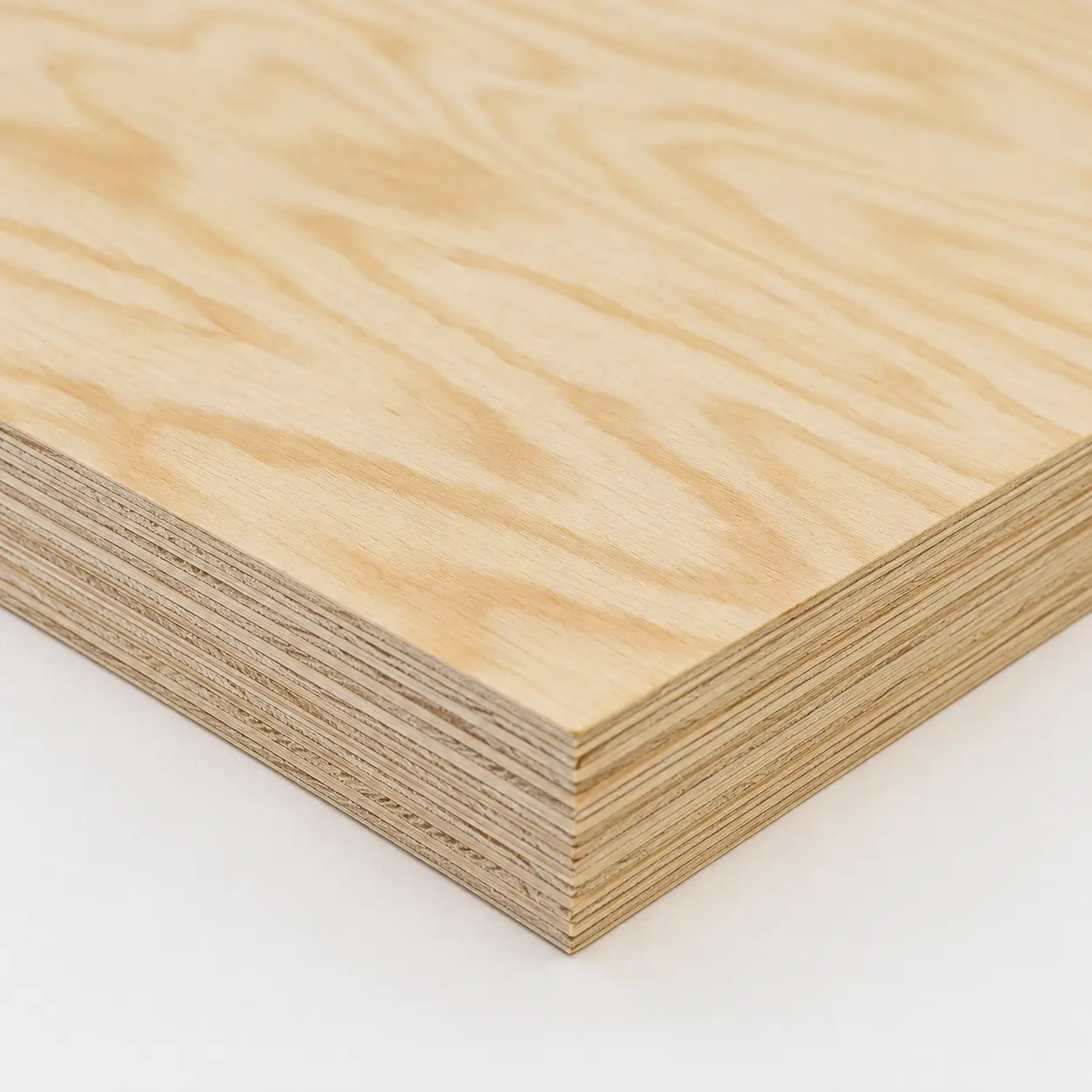
Plywood is thin layers of timber glued together with the grain of each layer running across the one below it. Timber is strong along its grain and weak across it, so alternating the layers gives a panel that is strong in both directions and stays flat. It is why a plywood shelf carries more than a solid board of the same thickness, and why a sheet cut into six pieces does not twist.
What separates one board from another is the timber inside it and the glue holding it together, and both matter more than thickness. Plywood sheets that look identical on a rack behave very differently once they get wet.
How to choose plywood
Plywood sheets that look alike on a rack are built for very different jobs, so choose the type before the thickness. Four questions do most of the work:
- Will it get wet? Marine plywood is the board for work that stays wet. Softwood and WISA spruce plywood are bonded to Class 3, the exterior glue category, for building work that ends up covered. Birch, hardwood faced and Malaysian plywood are for indoor or humid use.
- Will it be seen? Birch gives a clean layered edge, veneered plywood gives a real oak face, and hardwood faced plywood is the sensible board where paint or a covering hides it.
- Does weight matter? WISA spruce is the lightest sheet for roofs and walls, while Malaysian hardwood plywood is the dense board for floors that carry weight.
- Is there a curve or a fire class? Flexible plywood bends straight off the sheet, and fire retardant plywood carries a Euro Class B-s1,d0 rating.
With the type settled, the sheet size is usually the standard 2440×1220 mm, the sheet still called an 8×4 because it is roughly 8 by 4 feet. Okoume marine plywood comes in 2500×1220 mm, oak veneered plywood in 2500×1250 mm, and some birch thicknesses in a longer 3050 mm sheet for runs where a joint would show.
Start with the type, not the thickness
The grade decides whether the board survives the job; thickness only decides how far it spans and what fittings it takes. We carry nine ranges, and they divide up by what you are building.
Birch plywood
Furniture, fitted units and anything where the edge will be on show. Birch is solid birch the whole way through rather than birch faces over a cheaper core, so there are no gaps in the layers and a cut edge is a clean stripe you can sand and oil instead of hiding. It machines better than anything else we carry, which is why CNC work specifies it. The 18 mm sheet is the default for cabinets because hardware is sized around that depth, and 4 mm is what most drawer bottoms and cabinet backs are made from. The range runs 4 mm to 30 mm on the birch plywood page.
Marine plywood
Water is a certainty rather than a risk in some jobs: shower seats, wet room benches, bathroom floors, boat interiors, van floors and planters. Our two ranges differ mostly in weight and hardness: the hardwood board takes daily wear better, while the okoume board is around ten kilos lighter in a bigger sheet and dents more easily. The 12 mm hardwood marine sheet covers most wet area joinery. Both ranges are compared on the marine plywood page.
Hardwood faced plywood
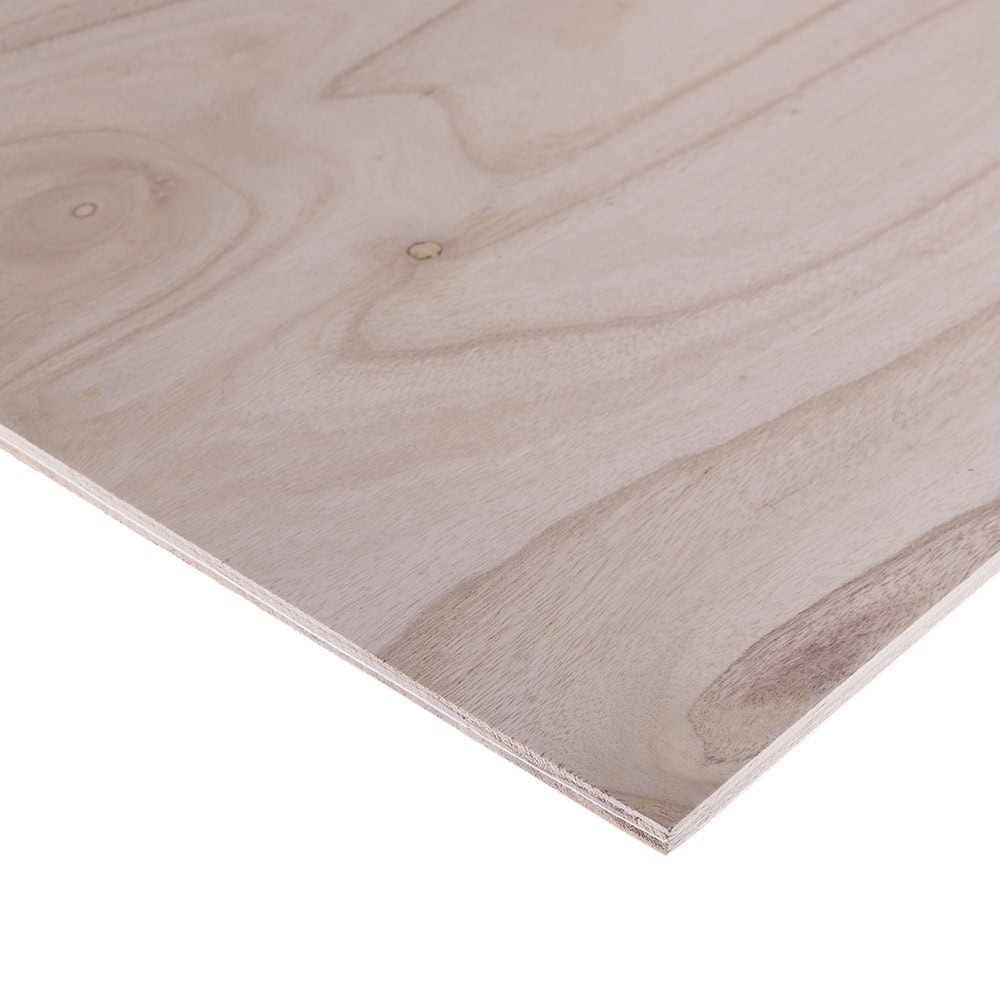
This is the workhorse for anything that gets covered up or painted: bench tops, storage platforms, loft boarding, cupboard bases and panels that will be tiled over. Hardwood faces over a poplar core make it lighter than birch and quite a bit cheaper, which is the right compromise for a panel nobody will look at. Thicknesses run 5.5 mm to 25 mm on the hardwood faced plywood page.
Malaysian hardwood plywood
Denser and tougher than the poplar core board, and the one for a floor or platform that has to keep carrying weight: shed and workshop floors, storage decks, van floors and site hoarding. Store the sheets flat and off the floor until they go down, and seal the faces and edges on anything laid over a damp base. 18 mm is the structural thickness: see the Malaysian hardwood plywood page.
Softwood plywood
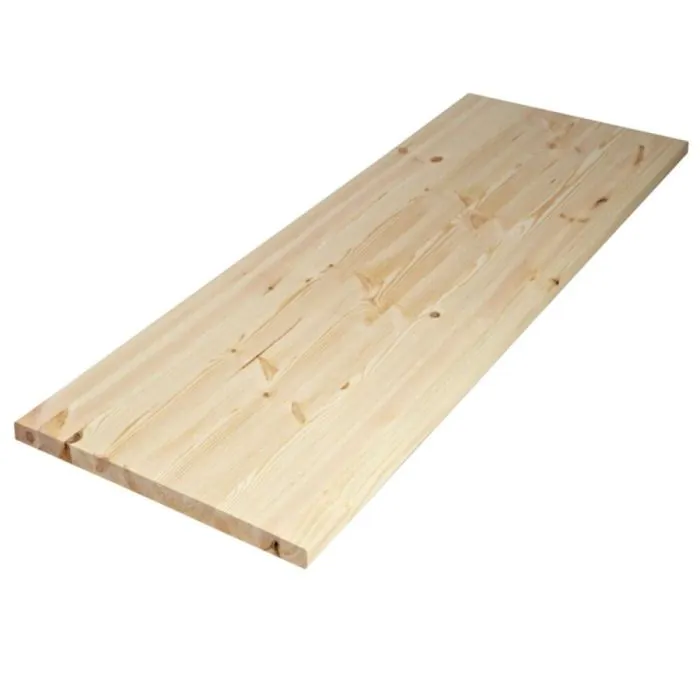
Sheds, garden buildings and anything left out for a few weeks before it is closed in. The pine board we carry is bonded to EN 314-2 Class 3, the exterior category, so the glue line survives being rained on during a build, which is where an interior board gets ruined. Bonding does not make the timber rot proof, so it belongs under a covering or cladding rather than on show. The same page carries laminated pine board, solid pine strips edge glued into a sheet, for shelving you want to oil and leave visible. Both are on the softwood plywood page.
WISA spruce plywood
Roofs and walls, because it is light. A full 18 mm sheet is roughly twelve kilos lighter than birch of the same size, and twelve kilos decides whether passing sheets up onto a garden room roof is a one person job. It is a Finnish board made to a consistent standard, so sheets are the thickness they claim and they lie flat. Roof decking, wall sheathing and flooring are the usual jobs: WISA spruce plywood.
Flexible plywood
Curves are what this one is for. Bendy ply comes round a radius straight off the sheet, and two layers laminated over a former come off rigid and hold the shape, which is the proper way to build a curved cabinet end or a bath panel. Sort out direction before you order, because each sheet bends one way only and one that rolls the wrong way cannot be made to work. Check the bend direction listed for each sheet against your curve before you add it to the cart. Both are on the flexible plywood page.
Veneered plywood
Real oak on a birch core, veneered on both faces so the panel stays flat, for cabinet doors, drawer fronts, panelling and the visible sides of built in furniture. The 13 mm board makes a lighter door, while the 19 mm is what cabinet hardware is sized around. The veneer is thin, so sand lightly and never drag a sheet across anything. See the veneered plywood page.
Fire retardant plywood
A birch board pressure treated to Euro Class B-s1,d0, for wall and ceiling linings where the specification puts a rating on the panel itself. The treatment is forced right through the timber rather than painted on, so cutting it does not remove the protection and cut edges stay rated. Keep the delivery paperwork, because a certified job will ask for it. It is on the fire retardant plywood page.
Choosing a thickness
With the grade settled, thickness comes down to span and to what has to screw into the board. Four to six millimetres is for panels that sit captive in a groove, so drawer bottoms, cabinet backs and templates, and at that thickness a sheet will follow a gentle curve as it comes. Nine to twelve covers light shelving, small cabinets and floor panels on close centres. Fifteen to eighteen is the working range for cabinets, worktops, floors and platforms, and most jobs land on eighteen because hinges, shelf pins and long assembly screws are designed around that depth. Twenty four and thirty are for heavy shelving and spans that would sag in anything thinner.
Settle the weight question before you order. A full 18 mm sheet runs from about 25 kg in spruce to 36 kg in birch, which is the difference between a job you can do on your own and one that needs two people.
How much does plywood cost?
The price of a plywood sheet comes down to what is inside it. The species of the core and faces, the glue class, the face grade, the thickness and the sheet size all move it, and so does any treatment or special construction, which is why fire retardant, flexible and veneered boards sit above a plain sheet. Hardwood faced plywood costs less than birch, which makes it the better value where the board will be painted or covered.
The fair way to compare plywood prices is by what the job needs to cover rather than by the price of one sheet. Work out the area or the list of parts, then use the calculator on the product page to turn it into a sheet count, so you are not paying for board you will cut to waste. Live prices are shown on every sheet in the grid above, and your whole order is totalled in the cart before you check out.
Working with plywood
Keep the good face upwards and use a blade with plenty of teeth. Plywood chips when it is rushed, and the damage happens on the side the teeth exit, so put a scrap board underneath and score the line first where the edge will be seen. Support the sheet across the cut.
Pilot every fixing that goes into an edge, even in birch. Plywood grips a screw better than almost any other panel, but one driven in dry can still open a glue line, and you will not see that until the joint moves. Keep fixings back from corners, where the outer layers have least to hold.
Seal both faces and not just the one you can see, because a board sealed on one side takes up moisture on the other and cups away from the dry face. That is how a bench top in a garage or a floor panel over a damp subfloor goes wrong. Exposed edges on birch and on the veneered boards are a finish in their own right, so sand them up through the grits and do them at the same time as the face.
Plywood or MDF
Plywood is the answer when the panel has to be light, hold a screw in its edge, span further or survive getting wet, and for anything structural. MDF suits a painted surface, a routed profile that has to come out crisp, and a job where a flat consistent face matters more than weight. The MDF ranges are on the MDF page.
Plywood in Dublin and across Ireland
Every plywood sheet on this page is stocked in our North Dublin warehouse, ready for collection or delivered across Ireland. The range covers the jobs people actually build, from kitchen carcasses and CNC furniture to van floors, garden room roofs and fire rated linings, rather than a token sheet in each grade. Browse the rest of our sheet materials for MDF, OSB and MFC.
Frequently Asked Questions About Plywood Sheets
What is the difference between B/BB and BB/BB plywood?
The letters grade the two faces, front first and back second. BB/BB, as on our birch plywood, means both faces meet the same BB standard: small tight knots and neat plugged patches, but no open holes or splits. On a B/BB board the front face is graded B and the back BB.
What is the difference between Class 2 and Class 3 plywood?
The class describes the glue bond. Class 2 copes with humid conditions such as an unheated garage but not wet ones. Class 3 is the exterior category, so the glue line survives being rained on. Neither class makes the timber itself rot proof.
Which plywood is exterior grade?
Marine plywood is the board for work that stays wet. Our pine and WISA spruce plywood are bonded to Class 3 for outdoor work that will be covered, painted or sheltered. Birch, hardwood faced and Malaysian plywood are for indoor or humid use.
What size is a sheet of plywood?
Most of our plywood comes in the standard 2440×1220 mm sheet. Okoume marine plywood comes in 2500×1220 mm, oak veneered plywood in 2500×1250 mm, and 15, 18 and 24 mm birch also in a 3050 mm long sheet.
Is plywood fire resistant?
Ordinary plywood burns and is not a rated board. Where a specification asks for a fire class, fire retardant plywood is an 18 mm birch board treated right through to Euro Class B-s1,d0.
Which plywood is best for furniture?
Birch plywood is the usual choice, because it is solid birch throughout with a clean layered edge you can leave on show, and it machines well for CNC work. For a real oak face, use oak veneered plywood on a birch core.