
Length
Width
Thickness
Colour Tone
Profile
Material
Fire Rating
Range
Species
Wood Type
Warranty
Moisture Content
Pine Fence Panels
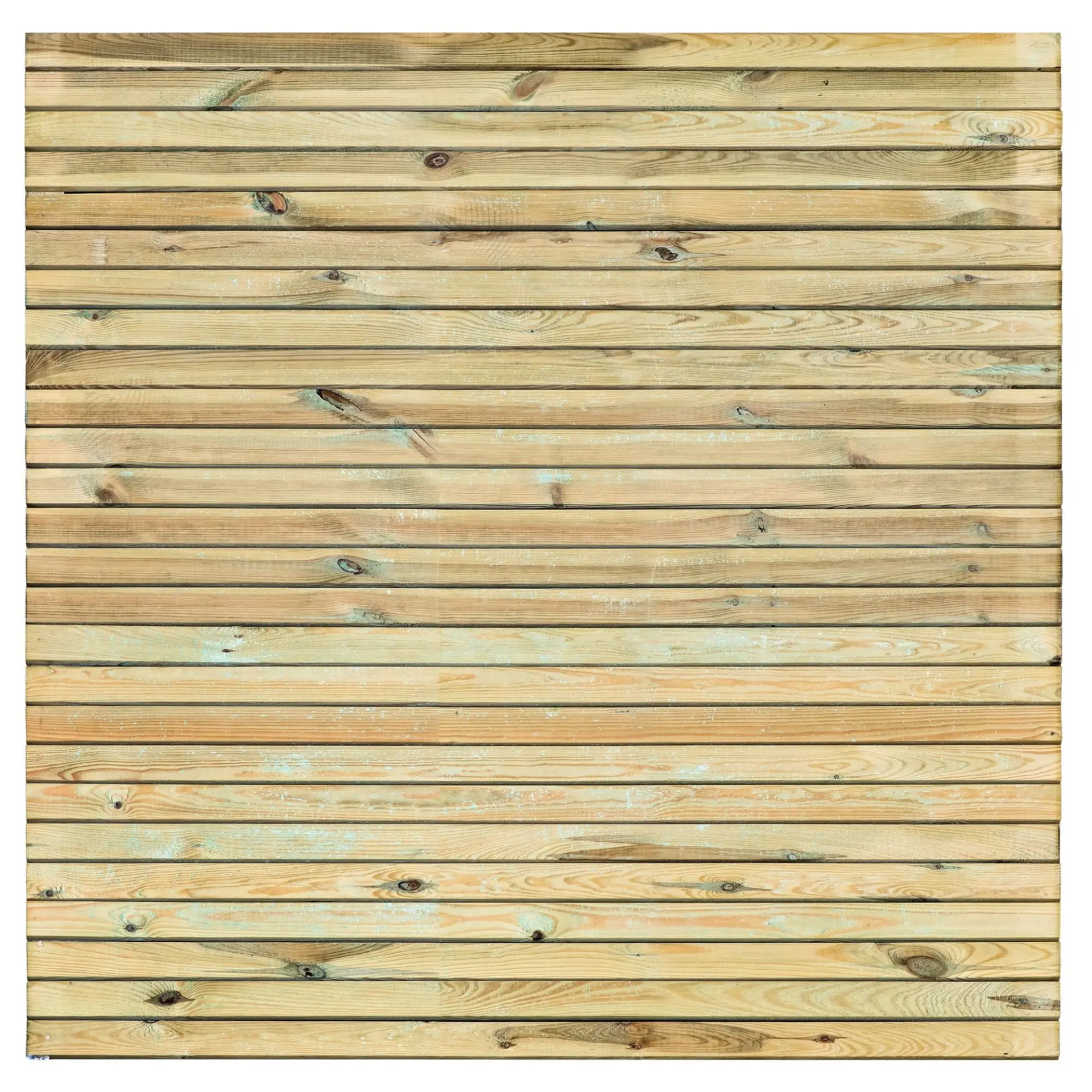
Pine fence panels are the budget friendly way to put up a neat timber boundary, built from an easy to work softwood with a pale honey-yellow colour. The Beckett slatted panel is 1800×1800 mm and drops between your posts, and a treated 80 mm pine round post with a pointed base, ready to drive into the ground, suits lighter fencing and garden work. Both are stocked in our warehouse and delivered across Ireland.
Sort by

Showing 1-2 of 2 results
Pine Fence Panels for Sale in Ireland
Pine is the workhorse softwood. It is light, around 520 kg/m³, so one person can carry and hang a panel, and it cuts, drills and fixes easily. It takes preservative readily, which is why it has been the standard garden fencing timber for so long. With the classic pale honey-yellow colour and a friendly knot pattern, a pine fence suits cottage gardens and modern homes alike.
Pine is Durability Class 4, meaning it relies on treatment rather than natural oils to last outdoors. Treated and looked after, a pine fence gives a service life of 15 years and beyond.
Pine Panels and Posts
Our pine fencing covers the two things you need for a simple run. The Beckett slatted panel is 1800×1800 mm, a full height panel for garden boundaries and screening that hangs between posts. The treated pine round post is 80 mm in diameter with a pointed base for driving, and suits lighter fencing, plant supports and garden edging.
Both items are also listed under pine fencing accessories. The calculator on the product page works out how many panels your run needs.
Pine vs other timber fence panels
Pine is the value entry point in our timber fence panels. If you want a different look or a longer life with less upkeep, compare:
- Spruce fence panels: factory finished in black for a modern boundary.
- Douglas fir fence panels: a tougher softwood with a warm, reddish tone.
- Willow fence panels: an informal, rustic screen for country gardens.
- Hardwood fence panels: dense timber for the longest lasting fence.
Putting up a pine fence
A pine fence goes up quickly, and the details below add years to its life:
- Set the posts in concrete or on post anchors above ground level, because direct ground contact shortens the life of any softwood.
- Keep the bottom of each panel a few centimetres clear of the soil.
- Use stainless steel or hot-dip galvanised fixings. Pre-drilling is rarely needed except very close to board ends.
- Brush preservative onto any cut ends before fixing.
Finish the run with a garden gate and post caps from our fencing accessories.
Looking after a pine fence
Treatment is what makes pine last. Apply a quality preservative, then a UV protective stain or oil within the first few months, and refresh it every two or three years. Left bare, pine weathers to grey and ages faster, so a coat from our exterior oils and stains is the best money you will spend on the fence. A stain also lets you choose the colour of your boundary.
Pine is one of the species in our full timber fence panels range, stocked in our warehouse and delivered across Ireland.
Frequently Asked Questions About Pine Fence Panels
Does pine fencing need to be treated?
Yes. Pine is Durability Class 4, so it benefits from a quality preservative followed by a UV-protective stain or oil within the first few months, refreshed every two or three years. Untreated, it silvers to grey and its lifespan shortens.
How long does a pine fence last?
Properly treated and maintained, a pine fence gives a service life of 15 years and beyond. The key is a preservative and a UV protective stain or oil in the first few months, refreshed every two or three years, and panels kept clear of the soil.
How should I set the treated pine posts?
Set them in concrete or use post anchors above ground level, as direct ground contact shortens the life of any softwood. Treat any cut ends with preservative before fixing.
What fixings suit a pine fence?
Use stainless steel or hot-dip galvanised fixings outdoors. Pine is easy to work, and pre-drilling is rarely needed except very close to board ends.