
Length
Width
Thickness
Colour Tone
Profile
Material
Fire Rating
Range
Species
Wood Type
Warranty
Moisture Content
Softwood Plywood
Softwood plywood is the everyday building board: lighter and more affordable than the hardwood grades, and made for sheds, sheathing, hoarding and site work where the sheet is doing a job rather than being looked at. We carry 18 mm European pine plywood bonded to Class 3 for outdoor work, and 18 mm laminated pine board for shelving and tops, both in 2440×1220 mm sheets, stocked in our warehouse and delivered across Ireland.
Sort by
Showing 1-2 of 2 results
What softwood plywood is
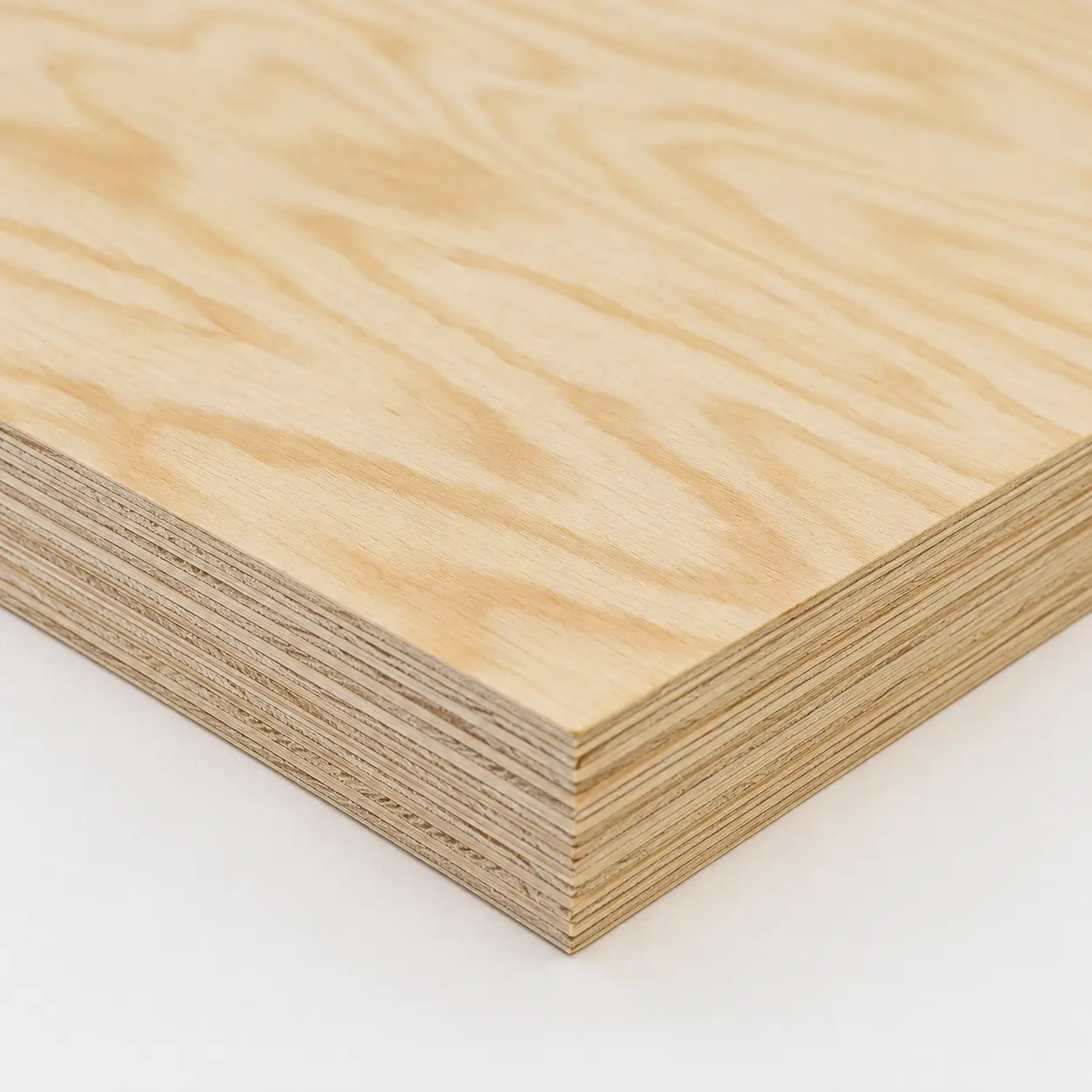
Softwood plywood is made from pine or spruce rather than from a hardwood like birch, and the difference shows in three ways: it is lighter, it costs less, and the face carries knots and open grain rather than the even pale surface birch gives you. The layers inside are thicker and there are fewer of them for a given thickness, which is a good part of why the price comes down.
None of that matters when the board is doing a job rather than being looked at. It is lighter to pass up a ladder and easier to cut, and on a shed wall or a roof deck the knots end up covered anyway. The two things to plan for are handling and fixing: lift sheets rather than dragging them, because a softwood face dents, and put your fixings into the face rather than the edge, where the board holds best.
Softwood plywood boards and sizes
We carry two softwood boards, both in the standard 2440×1220 mm sheet, the 8×4, at 18 mm thick, so the choice is about the job rather than the size.
The one to reach for on outdoor work is 18 mm European pine plywood, made to EN 314-2 Class 3. Most softwood plywood is an indoor board, and this one is the exception, which is why it goes on sheds, garden buildings and anything that has to sit out on site for a few weeks before it is closed in. A sheet weighs 27 kg.
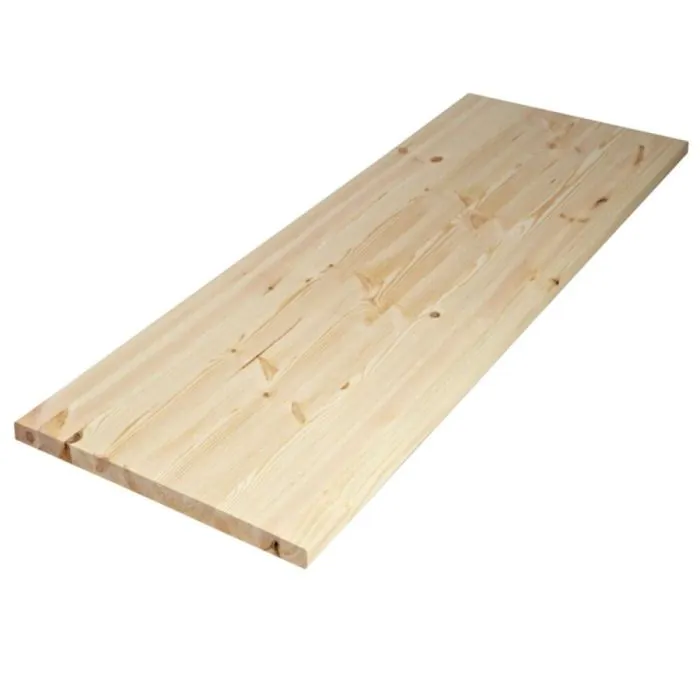
Alongside it we carry 18 mm laminated pine board, which is a different thing altogether and worth being clear about. It is not plywood at all: it is narrow strips of solid pine edge glued together into a full sheet, so you get a real timber surface and an edge you can plane or round over without any layers showing. At 26 kg it handles much like the plywood sheet, but it behaves like solid timber once it is fixed. It sits in this range because it is the softwood sheet people ask for when they want a shelf or a worktop they can oil and leave on show.
Class 3 bonding explained
Class 3 is the exterior bonding category, and it describes the glue rather than the timber. A Class 3 board survives being rained on: the glue line holds, the layers stay together, and the sheet is still a sheet after a wet fortnight on site. An ordinary interior plywood uses a glue that softens once it is properly wet, and once it has started to come apart there is no fixing it.
Because the bonding covers the glue and not the timber, the pine itself still wants protecting outdoors. Paint it, cover it with felt, a membrane or cladding, or give exposed faces and edges an exterior oil from our wood oils and stains range, and it does its job for the life of the building. For a surface that will be left bare in the weather, marine plywood is the board to choose.
What people use it for
Softwood plywood does the working jobs where a sheet has to be light, affordable and quick to fix. Outdoors, the regular uses are:
- Sheds and garden buildings: walls and roof decking covered by felt, a membrane or cladding.
- Soffits and fascia backing: under a painted finish.
- Garden furniture bases: painted or oiled.
- Site work: hoardings and site boarding, and sheets that have to sit out until the roof goes on.
Indoors it goes into garage and store shelving, backing and packing behind other materials, temporary protection over a finished floor during a build, and anything that is going to be taken down again. The laminated pine board covers the opposite case: shelving, desk and table tops, window boards, stair treads and risers, box furniture and utility worktops, where the surface is the point and you want to finish it rather than hide it.
Working with it
Softwood cuts very easily but it tears rather than chips, so use a sharp blade with plenty of teeth and support the sheet properly across the cut. A coarse blade leaves a furry edge that shows through paint later. Keep the face off the ground while you work, because it marks far more readily than birch and a score in a soft face is hard to sand out without leaving a dish.
Pilot your screws near an edge and near a knot. Softwood splits along the grain much more readily than a hardwood board does, and a knot is a hard spot that will deflect a screw off line just when you want it straight. On the laminated pine board there is a further thing to watch: it cuts more like a plank than a panel, so the board can pinch the blade as internal tension releases, and it wants to acclimatise in the room before you fix it down.
Painting and finishing
Knot the board before you paint it. Resin from a live pine knot bleeds through a painted surface months later and shows as a brown stain, and no amount of topcoat hides it once it has started. A proper knotting solution over every visible knot takes ten minutes and saves the job.
On anything outdoors, seal the cut edges and the screw holes as well as the faces. Water gets into a board through its edges long before it gets through a face, and an unsealed edge sitting on a wet sole plate is where rot starts. The laminated pine board is usually oiled or waxed rather than painted, which suits the timber better, and on a wide top it wants slotted fixings or buttons so it can move across its width instead of splitting or cupping.
How much does softwood plywood cost?
Softwood plywood is the lightest and most affordable plywood in our range, because pine grows faster than hardwood and the board is built from fewer, thicker layers. The laminated pine board is priced as a solid timber panel, since its surface is made to be seen. Both come in the same 2440×1220 mm sheet, so comparing per sheet and per square metre gives the same answer. Enter the wall, roof or floor area in the calculator on the product page to see how many sheets you need, and the cart adds the matching extras automatically.
Softwood plywood vs birch, Malaysian and spruce plywood
Softwood plywood is the board for work that will be covered, painted or taken down again. Where the face or the edge is going to be seen, birch plywood gives a clean pale face and an edge that looks deliberate. Where the board carries weight or takes repeated screwing, Malaysian hardwood plywood holds a fixing more firmly. WISA spruce plywood is the other softwood board we stock, and for anything genuinely wet rather than occasionally rained on, marine plywood is the one to use.
Softwood plywood in Dublin and across Ireland
Both boards are stocked in our Dublin warehouse, for collection or delivery across Ireland. At 26 and 27 kg an 18 mm sheet is a comfortable two person lift, and most people manage one alone at a push, though the 2440 mm length is the awkward part rather than the weight. Before the delivery arrives, clear a flat, dry spot to stack the sheets off the ground. The rest of the grades, and how they compare, are on the main plywood page.
Frequently Asked Questions About Softwood Plywood
What is pine plywood used for?
Our 18 mm European pine plywood is mainly used for sheds, garden buildings, walls and roof decks under felt, membrane or cladding, and for site work and hoarding. It is lighter and cheaper than the hardwood grades.
Is pine plywood exterior grade?
Its glue is bonded to EN 314-2 Class 3, the exterior category, so it survives being rained on during a build. That does not make the pine rot proof, so it belongs under a covering or paint, not bare in the weather for years.
What is the difference between pine plywood and laminated pine board?
Pine plywood is layers of veneer glued across each other. Laminated pine board is narrow strips of solid pine edge glued into a sheet, so it has a real timber face and an edge you can plane or round over. It suits shelves and tops you oil and leave on show.
Do I need to treat the knots before painting pine plywood?
Yes. Resin from a live pine knot bleeds through paint months later as a brown stain. Put knotting solution over every visible knot before you prime.
How heavy is an 18 mm pine plywood sheet?
The pine plywood sheet weighs 27 kg and the laminated pine board 26 kg. Both are comfortable for two people, and the 2440 mm length is usually the awkward part rather than the weight.