
Length
Width
Thickness
Colour Tone
Profile
Material
Fire Rating
Range
Species
Wood Type
Warranty
Moisture Content
Timber Cladding
Timber cladding is natural wood boarding for the outside walls of houses, extensions, garden rooms and sheds, in nine ranges from cedar and larch to Iroko, oak and charred larch. Choose the species for durability, colour and budget, then the profile, from 18 mm tongue and groove and shiplap to triple slatted and rhombus boards, with the length chosen on each product page. Held in our Dublin warehouse for collection or delivery across Ireland.
Sort by
Showing 1-12 of 40 results
What Timber Cladding Is and When to Choose It
Timber cladding is a skin of wooden boards fixed over the outside walls of a house, extension, garden room or shed. It protects the wall behind, lets the structure breathe, and gives a building warmth and texture that render and brick can’t. You also choose how it ages: left bare the boards weather to silver-grey, so most people oil them to hold the fresh colour.
Wood cladding is the wrong choice if you want a wall you never think about again. Oiled boards need a fresh coat every two or three years to keep their colour. It also has to be fixed properly: never straight onto the wall, and never with the bottom edge on the ground, where water wicks into the end grain. If that rules timber out, see the comparison with composite further down.
Types of Timber Cladding by Species
The species decides how long the boards last outdoors, what colour they start and finish, and where they sit on price. Durability is graded by durability class, a scale from Class 1, the most naturally resistant to rot, down to Class 5, the least. Larch and Douglas fir sit at Class 3, cedar and oak at Class 2, and Iroko and Thermowood at Class 1 or close to it.
Cedar and Larch Cladding
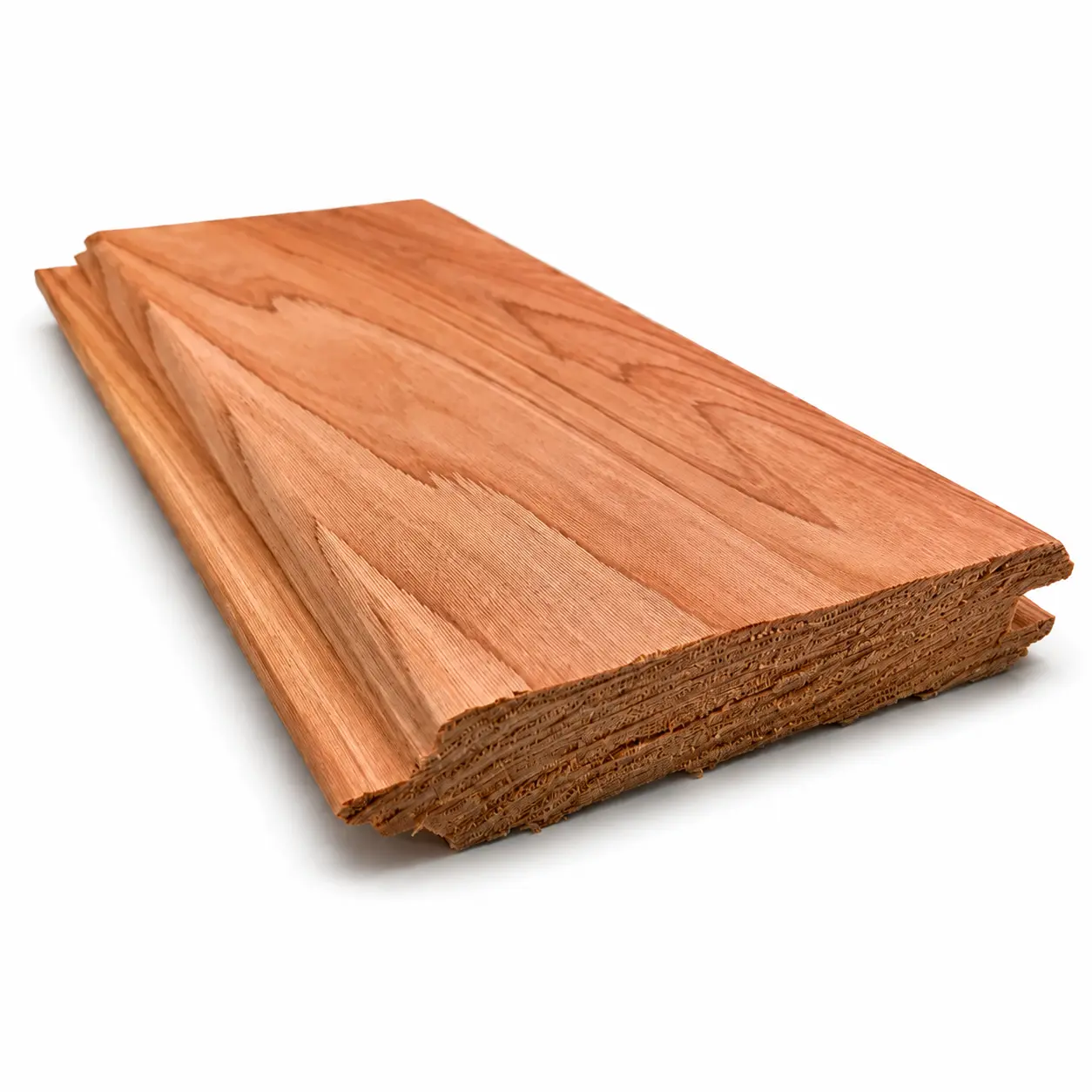
Western red cedar is the lightest board we stock, at around 380 kg per cubic metre, so it is easy to carry and light on the battens. It is Durability Class 2 with no chemical treatment, graded Clear Heart Vertical Grain, the top commercial grade, with very few knots. Our cedar cladding comes as 94×18 mm tongue and groove (T&G) boards, which lock edge to edge for a flush face, in a choice of lengths for walls large and small.
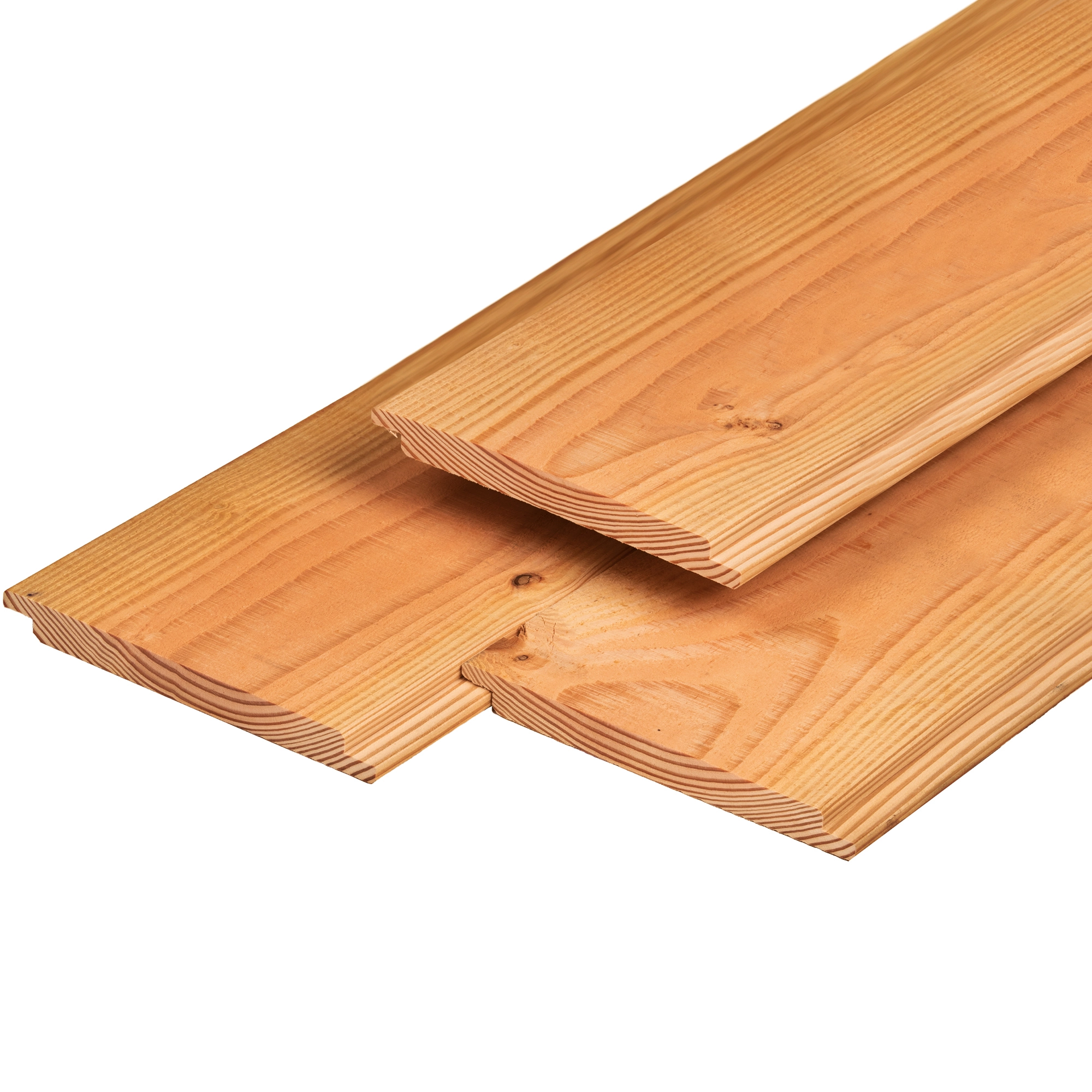
Larch is denser, at around 590 kg per cubic metre, and sits at Durability Class 3, with a warm reddish-brown colour, a livelier grain and more knots. So in cedar vs larch, cedar is lighter, calmer and more durable, while larch gives you weather resistance and character without hardwood prices. Our larch cladding is 94×18 mm T&G.
Douglas Fir and Ecowood Cladding
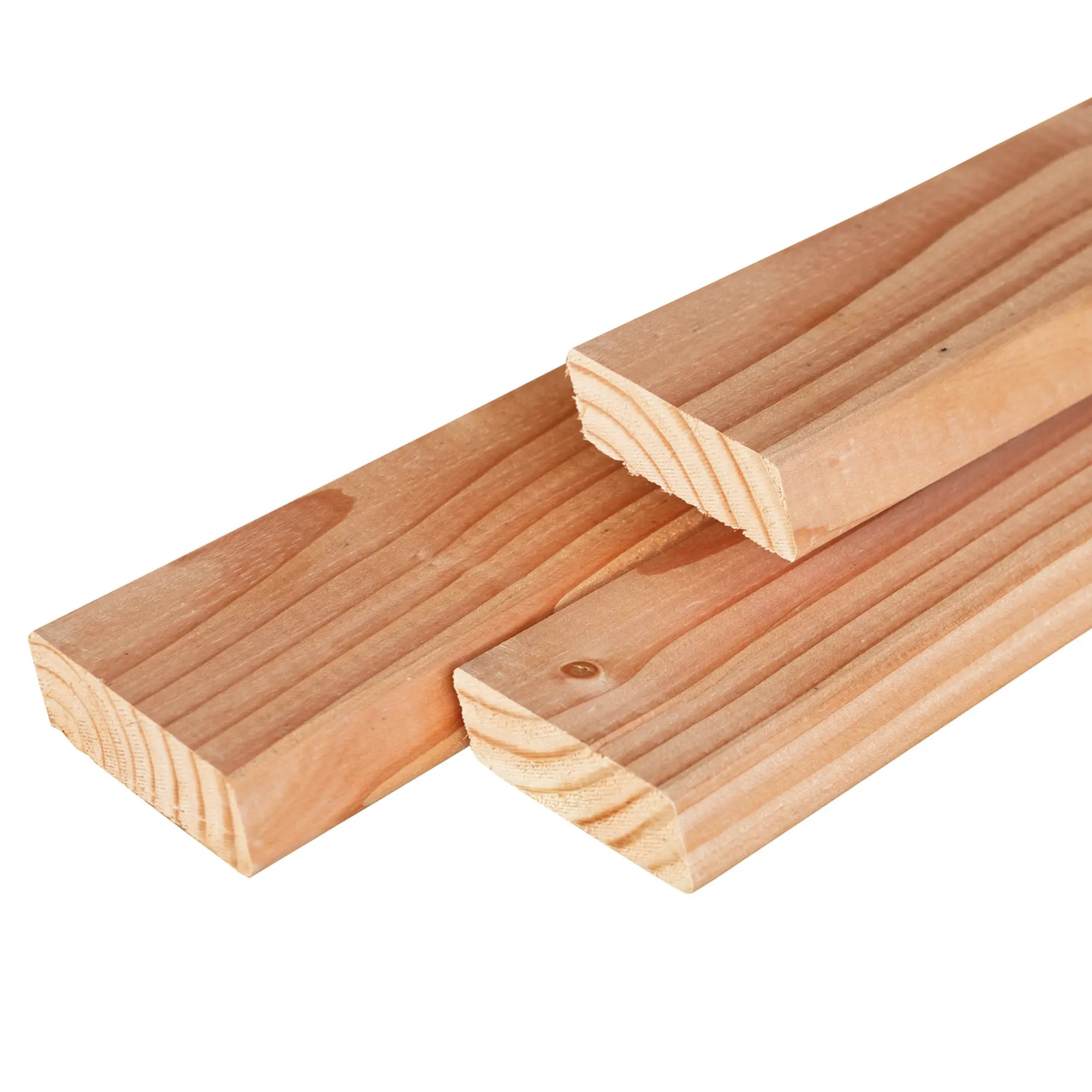
For the widest choice of profiles, start here. Douglas fir has the warmest reddish-pink to amber tone of any timber we stock and a straight, stable grain. At Durability Class 3 it earns its long life by being kept off the ground and ventilated behind. Our Douglas fir cladding comes in seven profiles, from T&G to rhombus, some in black.
Ecowood cladding is our value softwood range: a clean, consistent board with a long outdoor life at a friendly price. Its half lap and shadow gap boards have a wide 195 mm face that covers a wall quickly, a sensible pick for sheds, garden walls and big elevations.
Iroko and Oak Hardwood Cladding
Hardwoods cost more and weigh more, but they last. Iroko cladding is a West African hardwood at Durability Class 1 to 2 that ages from butter-yellow to chocolate brown, then to silver if left bare. Its natural oils resist rot with no chemical treatment but repel paint and varnish, so oil is the finish to use, and most people oil it to keep the warm colour.
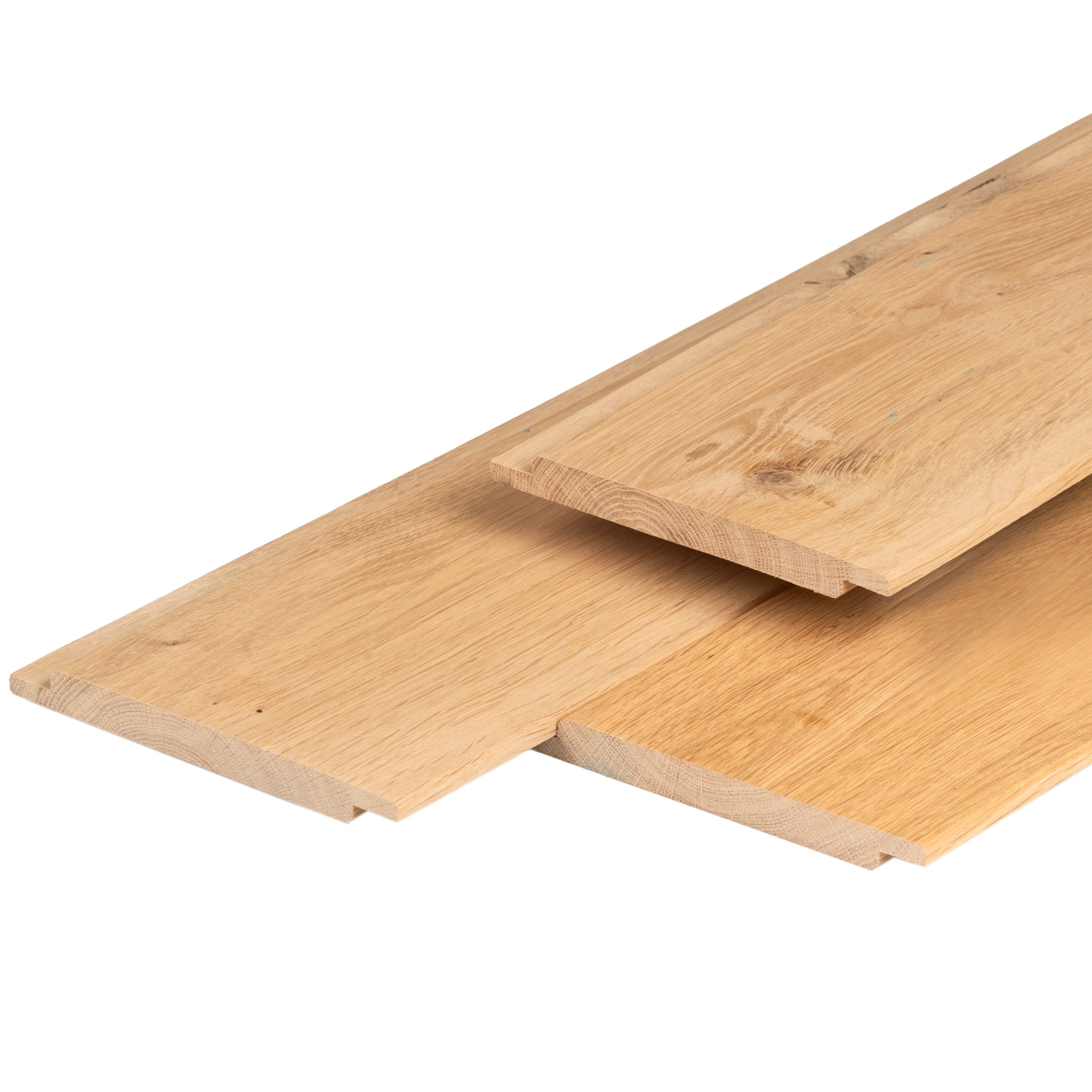
Oak cladding has the longest track record outdoors of any species we stock. It is Durability Class 2 and heavy, at around 720 kg per cubic metre, so plan the lifting and batten load. Its tannin, the natural preservative behind its weather resistance, stains black against mild steel. Choose T&G, or a reversible half lap oak board you can turn for a deeper or flatter shadow line.
Thermowood and MicroShades Cladding
Both are engineered for a longer life than untreated timber. Thermowood is thermally modified: heated to 180 to 215°C in a low-oxygen kiln, so the wood takes up far less water. That gives Durability Class 1 with no chemical preservative, very little movement, and a brown that runs right through, so cut ends don’t show pale wood. Our Thermowood cladding comes as a triple slatted Ayous board and a heavier triple slatted Thermo Spruce board.
MicroShades cladding is a treated softwood in T&G and shiplap that arrives factory-finished, so it goes up looking finished and you skip staining on site. Plan a refresh coat every two or three years.
Charred Larch Cladding
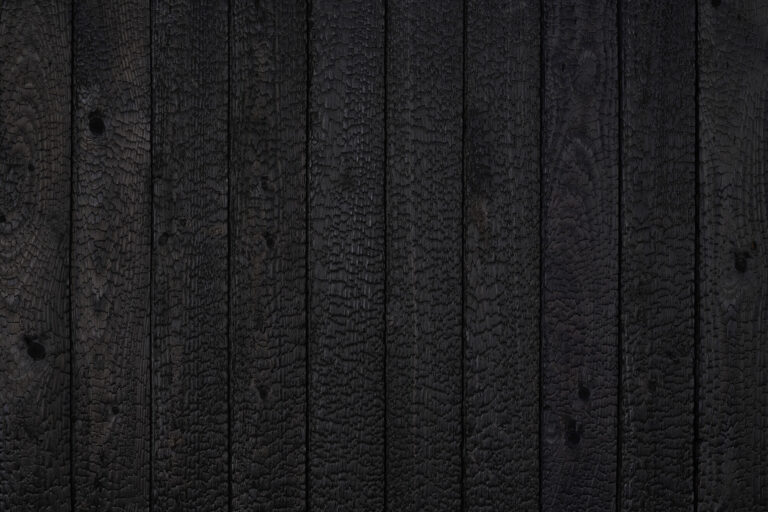
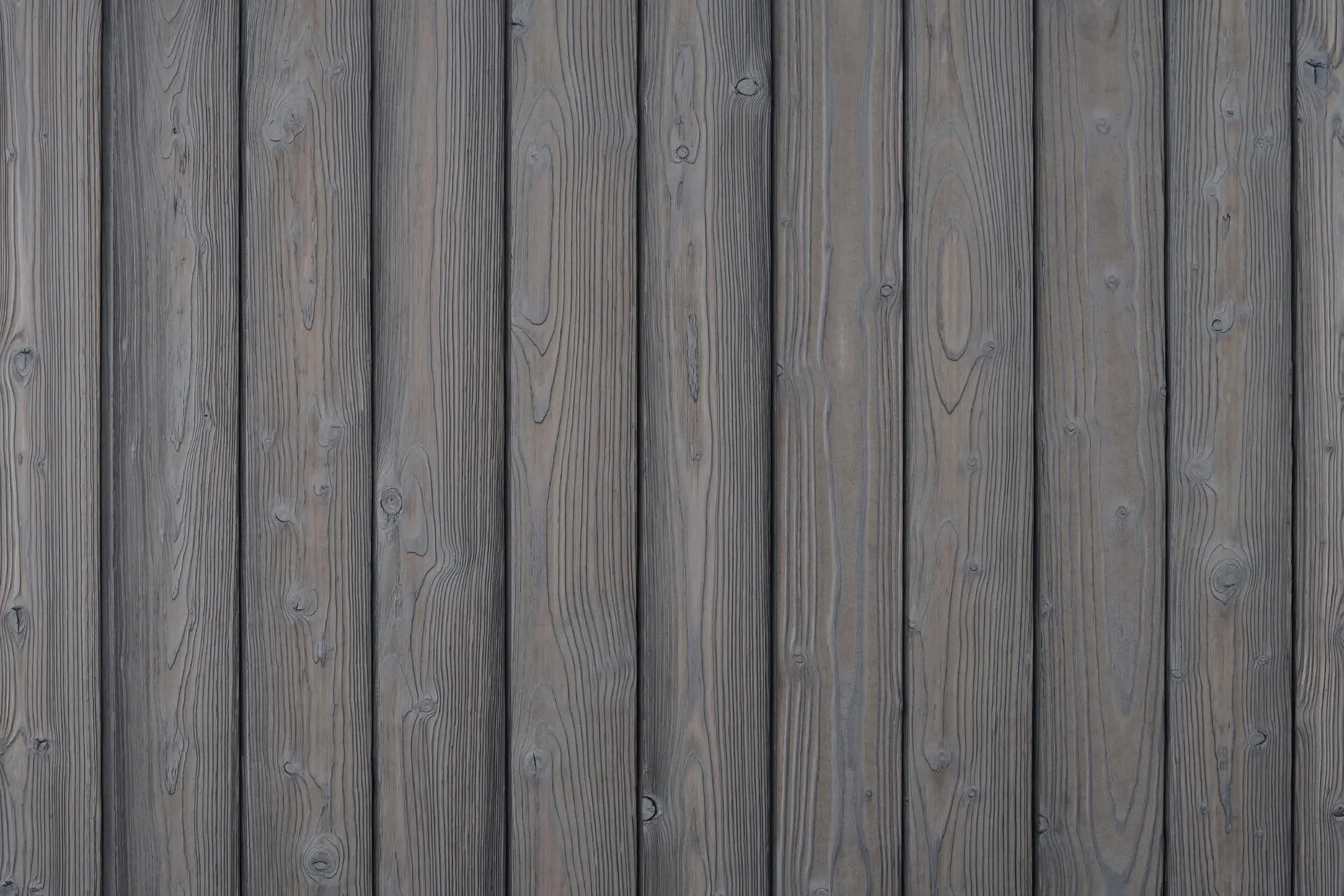
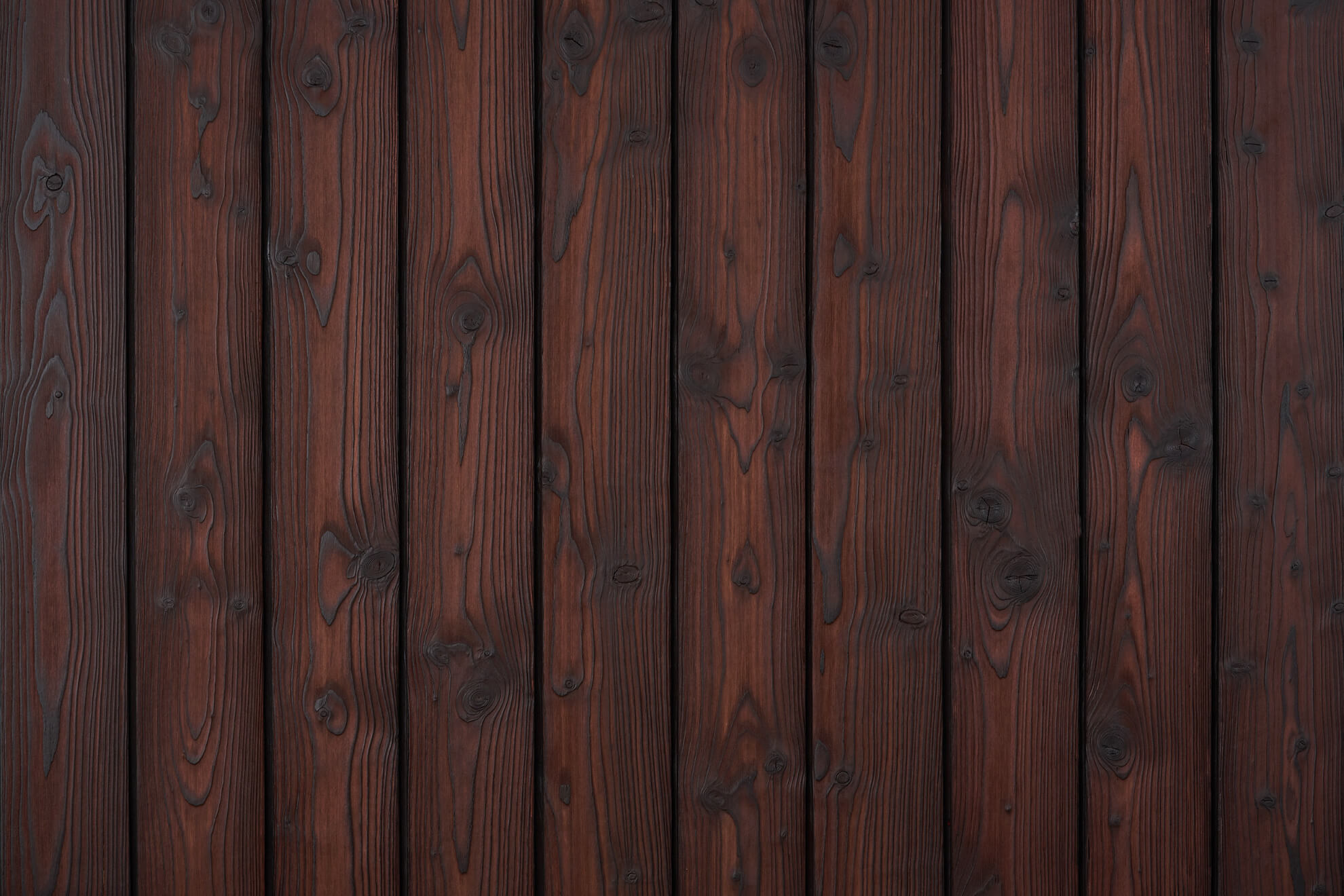
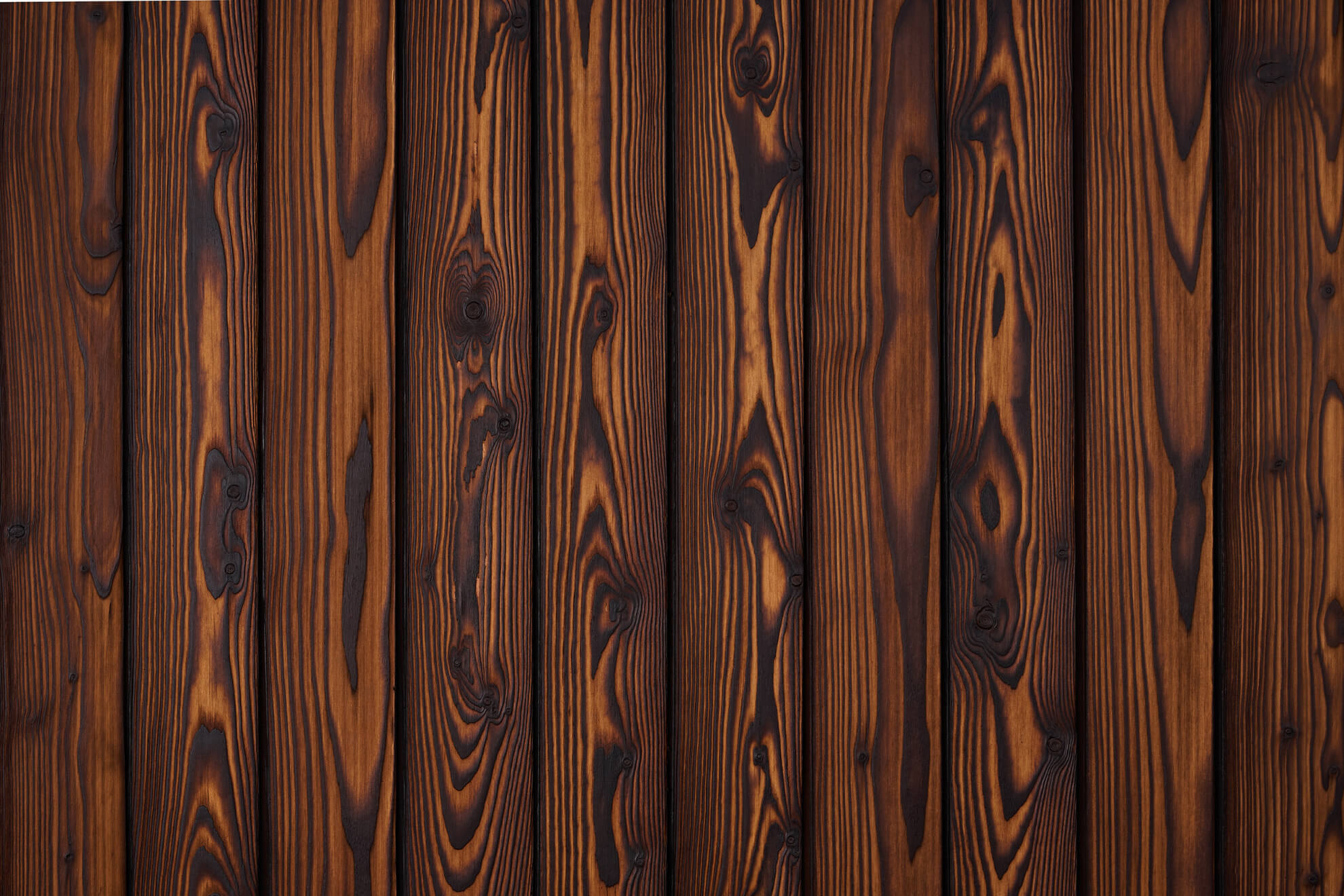
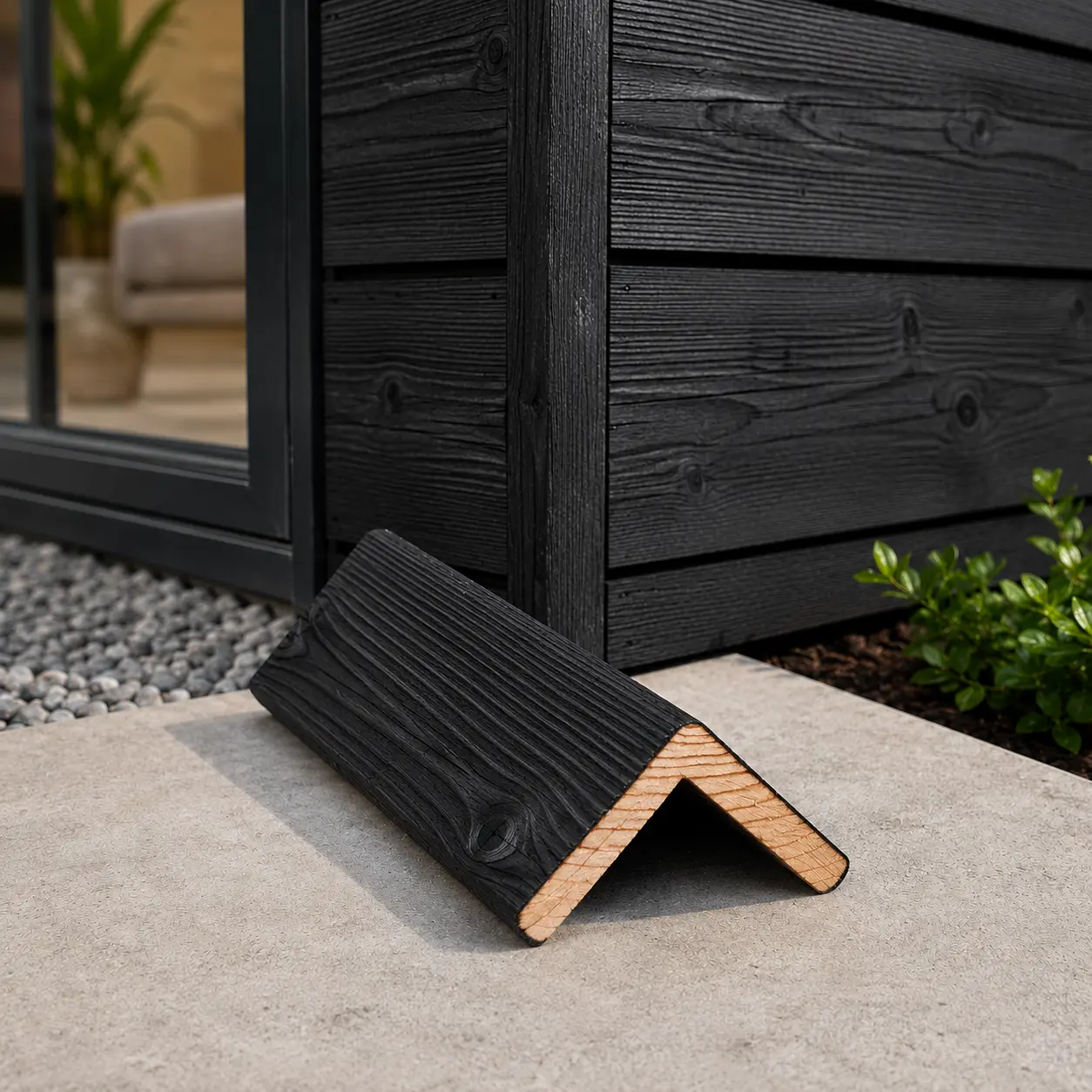
Charred timber, known in Japan as Shou Sugi Ban, is larch with its surface deliberately scorched. The char seals the face against rot, insects and UV light, and because it is part of the wood rather than a coating, it can’t peel. Our charred timber cladding comes in six finishes, from light grey to deep charred, on 145×20 mm boards, with matching 45×45 mm corners. Handle it with care, as a struck edge can flake.
Timber Cladding Profiles
The profile is the shape machined into a board’s edges. It decides the look of the wall, how the boards join and how rain runs off them. Most of our boards are 18 to 22 mm thick, and the face width, the part you see once fixed, runs from 65 mm to 200 mm. Choose the look first, then the species:
- Tongue and groove: a flush, continuous face with tight joints, in seven of our nine species, with faces from 94 to 195 mm, all 18 mm thick.
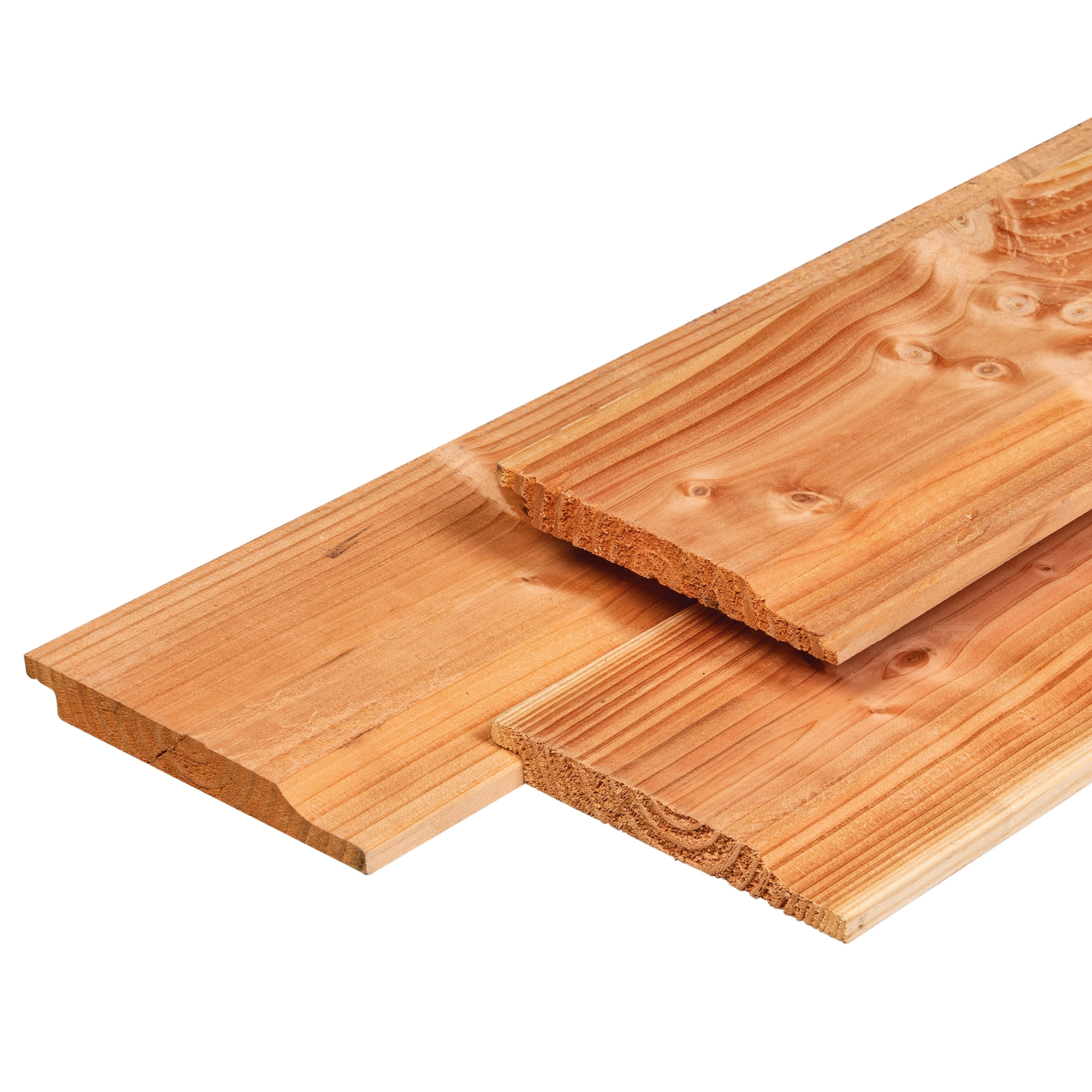
- Shiplap and half lap: each board laps over the one below so rain runs off, on faces from 140 to 195 mm; Douglas fir shiplap cladding gives a flush wall with a fine shadow line.
- Feather edge: tapered boards, 195 to 200 mm across, overlapped for a traditional, rustic look, in natural or black Douglas fir and in Ecowood.
- Square edge: plain straight-edged 200×20 mm Douglas fir boards for the simplest face.
- Shadow gap: a stepped joint that leaves a dark recessed line between boards, in charred larch and Ecowood, on faces from 145 to 195 mm.
- Triple slatted: one board, 130 to 145 mm across, machined to read as three narrow slats, so you get the slatted look at the fixing speed of one board.
- Rhombus: narrow 65×20 mm angled slats fixed with an open gap; Douglas fir rhombus cladding gives the sharp shadow lines of a modern facade.
Natural, Black and Charred Finishes
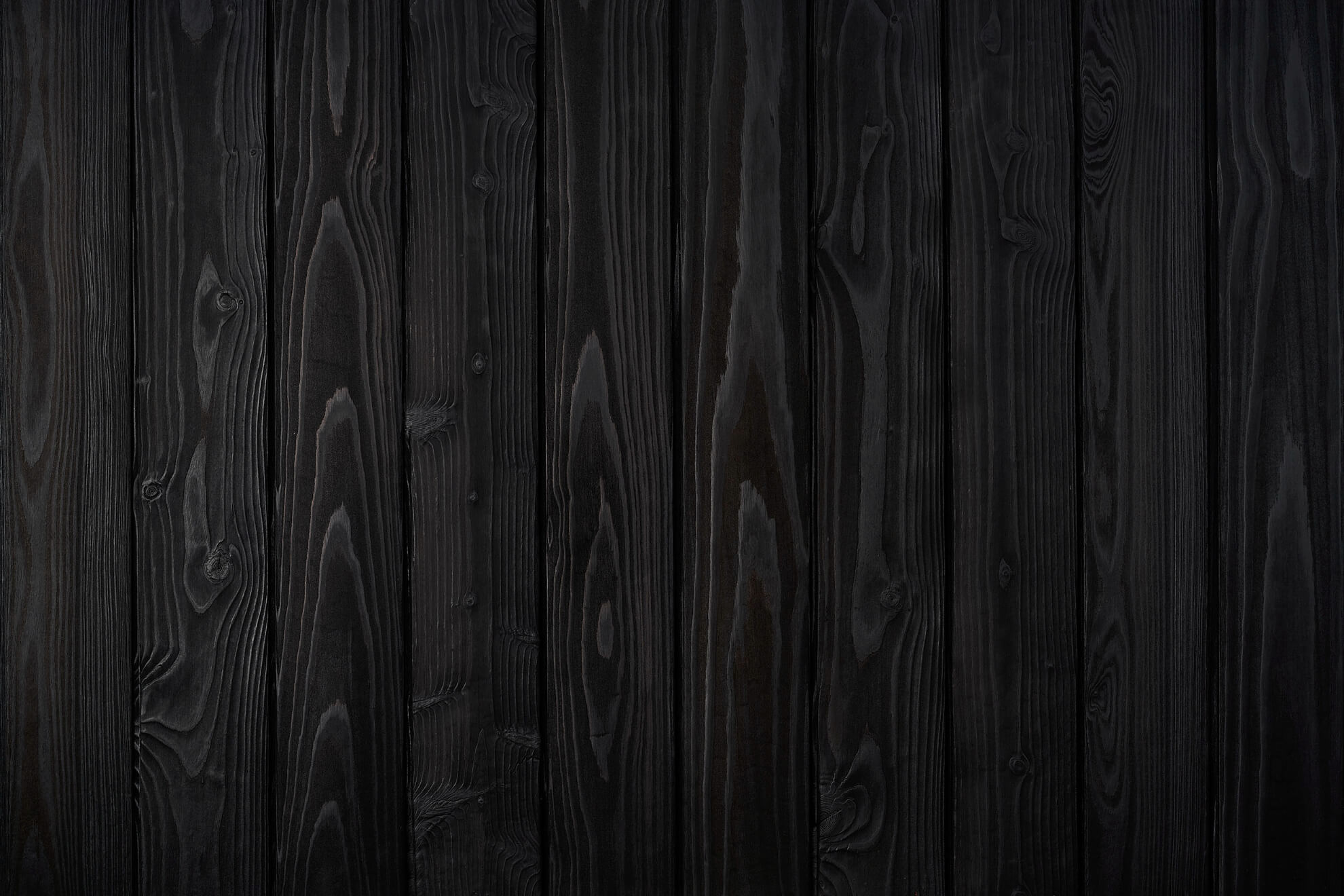
Most boards arrive natural, and you decide later whether to let them silver or oil them. For black timber cladding from day one there are two routes. Black Douglas fir feather edge and triple slatted boards come in a smooth black finish, while charred larch takes its colour from the scorched surface, with a textured, matte look and the grain showing through.
Timber Cladding Prices in Ireland
Live prices are in the grid above, and a few things set them. Species matters most: Ecowood and Douglas fir are the value end, larch adds natural durability without hardwood prices, and Iroko, oak, Thermowood and charred larch cost more for the timber or the extra processing. After that, a wider, thicker or longer board costs more.
Boards are sold by the length, but the fair way to compare is per square metre (m²) of wall, because face widths run from 65 mm to 200 mm and two similar prices can cover very different areas. Enter your wall area into the calculator on any product page and it works out how many boards you need; the cart adds the matching extras automatically.
Timber Cladding vs Composite Cladding
Timber and composite cladding solve the same problem in different ways. Timber gives you real grain and a finish you can change over the years, but it wants an oil every two or three years to hold its colour. Composite is the near-maintenance-free option. Choose timber for the character of real wood, composite for the lowest upkeep.
Installing and Looking After Timber Cladding
Timber cladding for external walls lasts as long as its detailing allows. Every species goes up over a ventilated batten cavity: a gap behind the boards, formed by battens, that lets air move and moisture escape. Get these steps right:
- Battens: fix cladding battens to the wall to form the ventilated cavity.
- Breather membrane: behind open-joint profiles such as rhombus, fit a black UV-stable breather membrane, a sheet that sheds water but lets vapour out, so the gaps read as shadow.
- Stainless fixings (A2 inland, A4 near the coast): A4 is the higher grade for salt air. Cedar, Iroko and oak streak black against mild steel or galvanised fixings. Screws and trims are in our cladding accessories.
- Pre-drilling and gaps: pre-drill near board ends to stop splitting, and leave the expansion gaps the profile is designed around.
- Ground clearance: keep the bottom edge clear of the ground so water can’t wick into the end grain.
After that, looking after timber cladding is a choice rather than a chore. It doesn’t need oil to last, but left bare it weathers to silver grey and needs only an occasional wash with a soft brush, so most people oil it. To hold the colour, apply cladding oils and stains made for exterior timber within the first few months, then refresh every two or three years. Avoid film-forming paint and varnish on natural boards, as they crack when the timber moves.
Timber Cladding in Dublin and Across Ireland
Every board in this range is held in our Dublin warehouse. Collect your order there, or have it sent with delivery across Ireland. To see battens, trims and composite alongside timber, browse our full cladding range.
Frequently Asked Questions About Timber Cladding
How long does timber cladding last?
It depends on the species and on how well it is detailed. Our product data gives Douglas fir 15 to 25 years outdoors, larch and MicroShades 20 years and beyond, Thermowood 25 years and beyond, and charred larch 30 years and beyond. Cedar, oak and Iroko resist rot naturally at Durability Class 1 to 2. A ventilated cavity and stainless fixings help any species reach its full life.
Can I use timber cladding on a shed or garden wall?
Yes. The same boards work on a shed, garden room or garden wall as on a house, fixed over battens with a ventilated gap behind. Ecowood and Douglas fir feather edge are good value for outbuildings, and they don’t need oil to last, but left bare they weather to silver grey, so most people oil a shed as well as the house. See our exterior oils and stains.
Can timber cladding be fitted vertically or horizontally?
Yes. Our cladding boards run vertically or horizontally over a ventilated batten cavity. Lap profiles such as shiplap, half lap and feather edge are shaped so each board laps the one below, which suits a horizontal run, while T&G and slatted boards work well either way.
Will timber cladding turn grey?
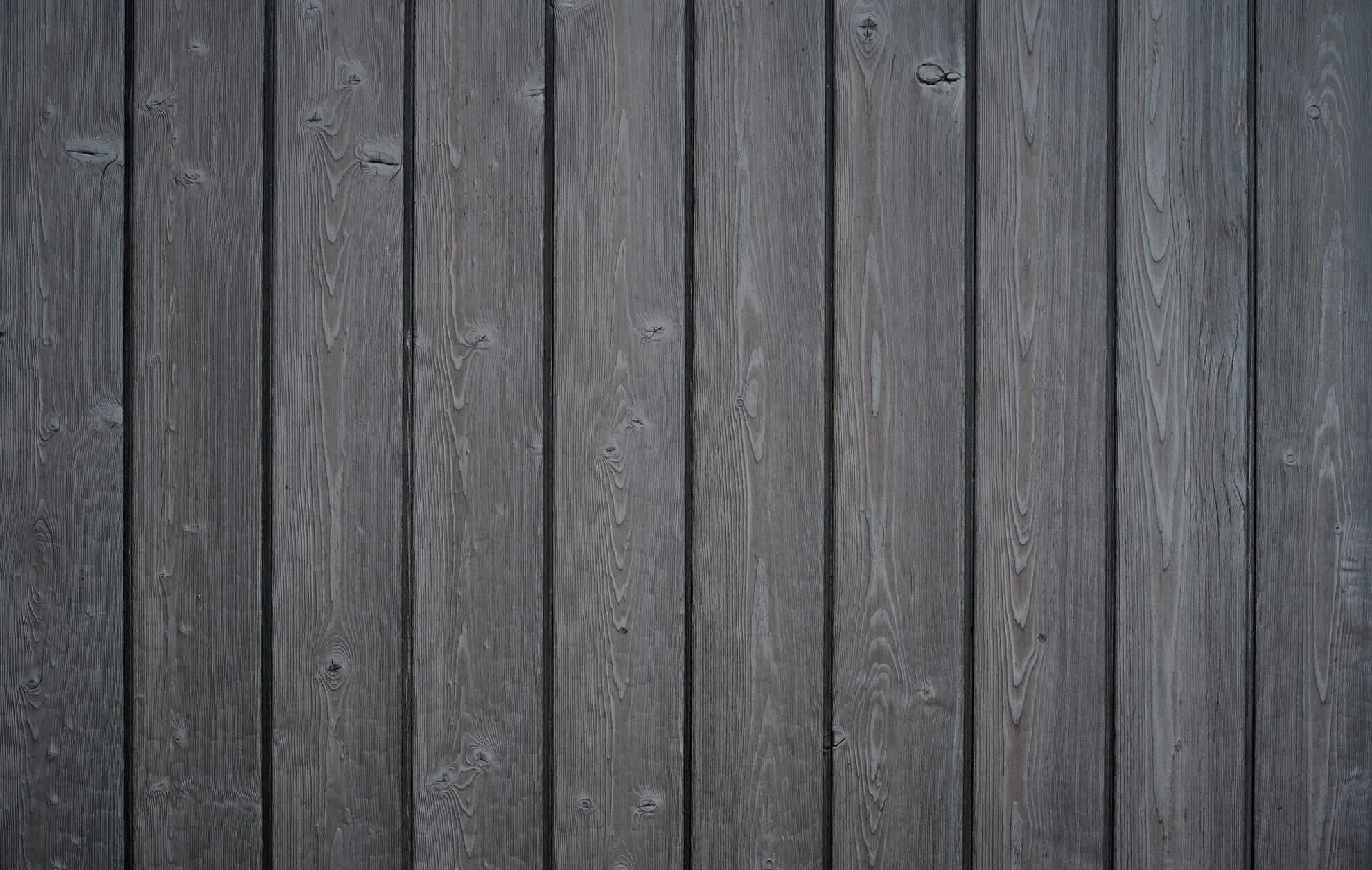
Yes, if it is left untreated. Cedar, larch, Iroko and Ecowood weather to silver grey over about 12 to 18 months, and oak over about 12 months. Most people oil their cladding to keep the fresh colour: apply a UV-protective oil from our exterior oils and stains within the first few months, before the greying starts.
Are there matching corners and trims for timber cladding?
Yes. Cedar cladding has matching 44×44 mm cedar L angles, and charred larch has 45×45 mm corners in each of its six finishes, so external corners match the boards and the end grain is covered. Other trims, screws and fixings are in the cladding accessories range.