
Length
Width
Thickness
Colour Tone
Profile
Material
Fire Rating
Range
Species
Wood Type
Warranty
Moisture Content
Composite Cladding
Composite cladding is a low-maintenance wall board for houses, extensions and garden rooms that gives you the look of timber without oiling, staining or painting. Choose slatted PuraTech boards, 170 mm wide and rated Euroclass D-s1,d0 or E, or flat tongue and groove boards from PuraClassic, rated Euroclass B, and capped PuraShell, in colours from Light Grey to Ebony Black and Cedar. Stocked in our warehouse and delivered across Ireland.
Sort by
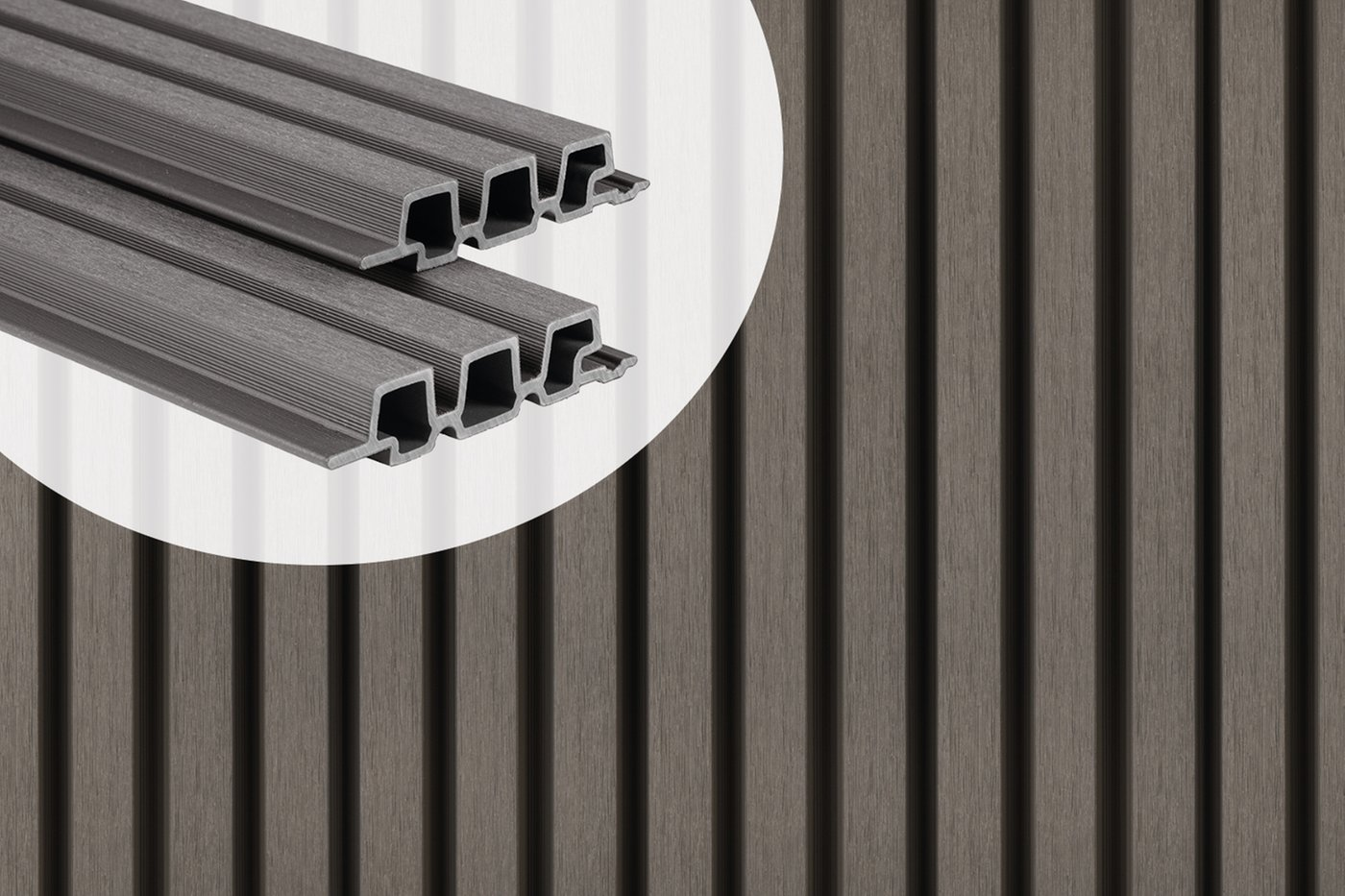
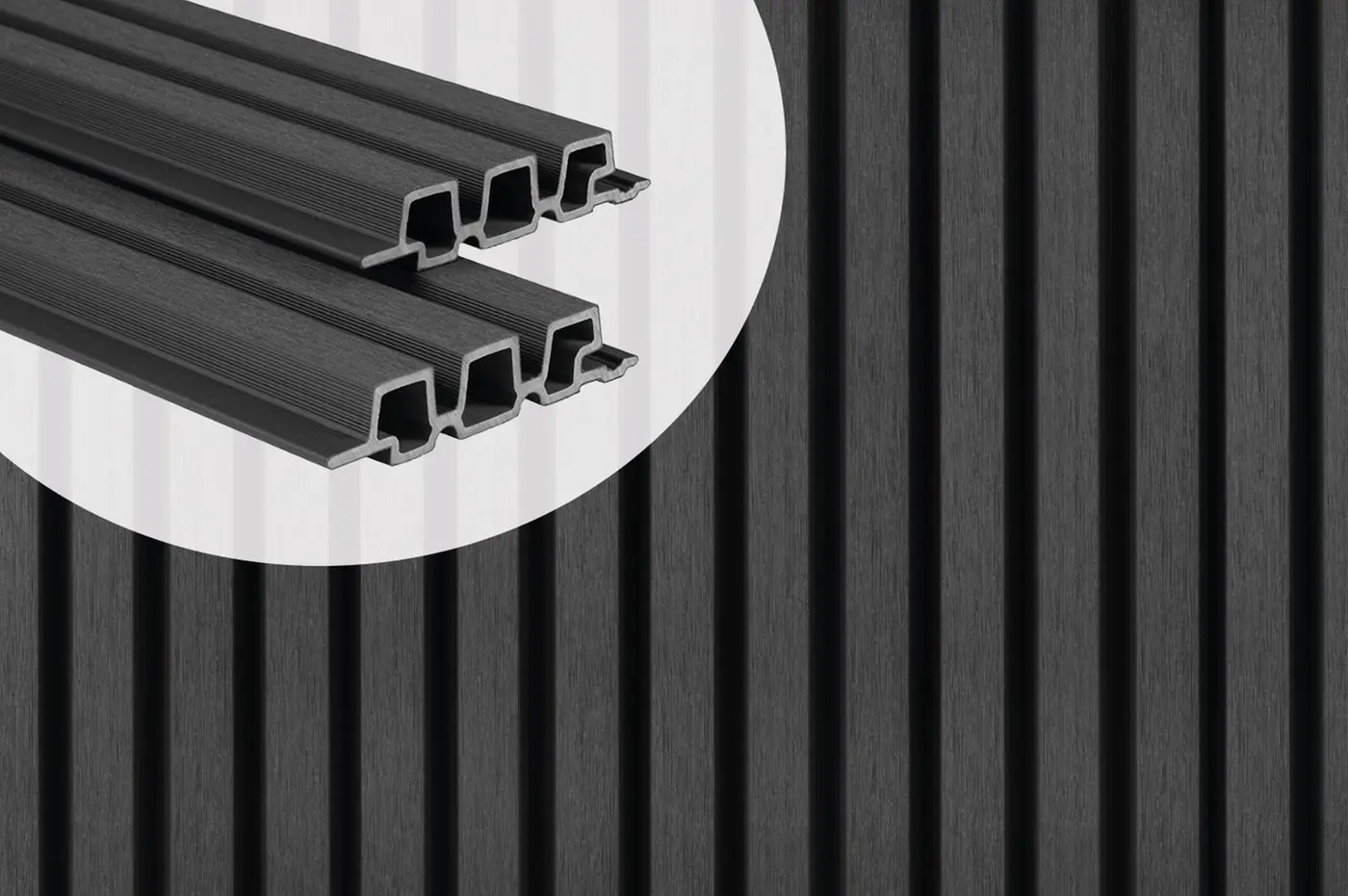
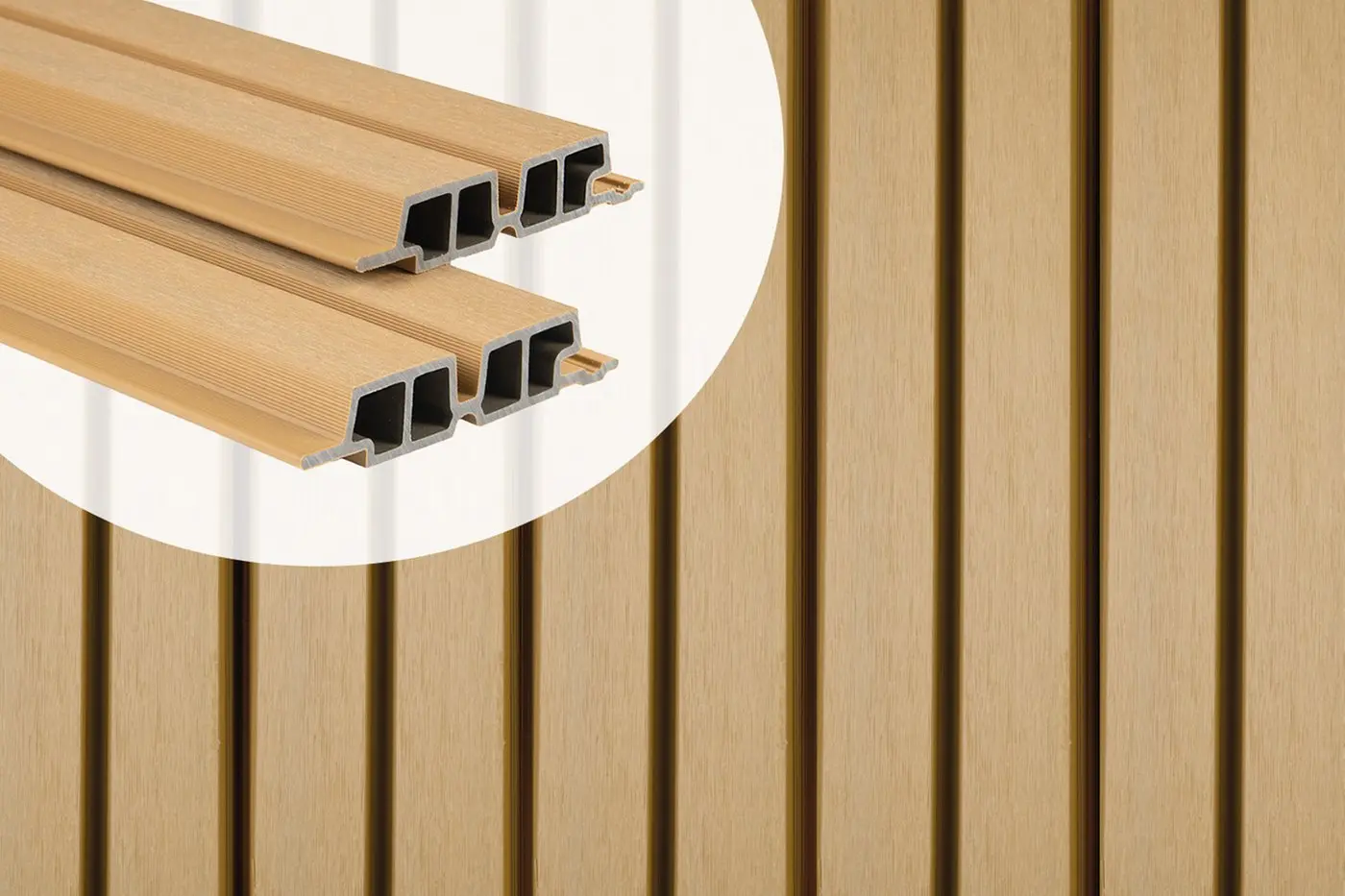
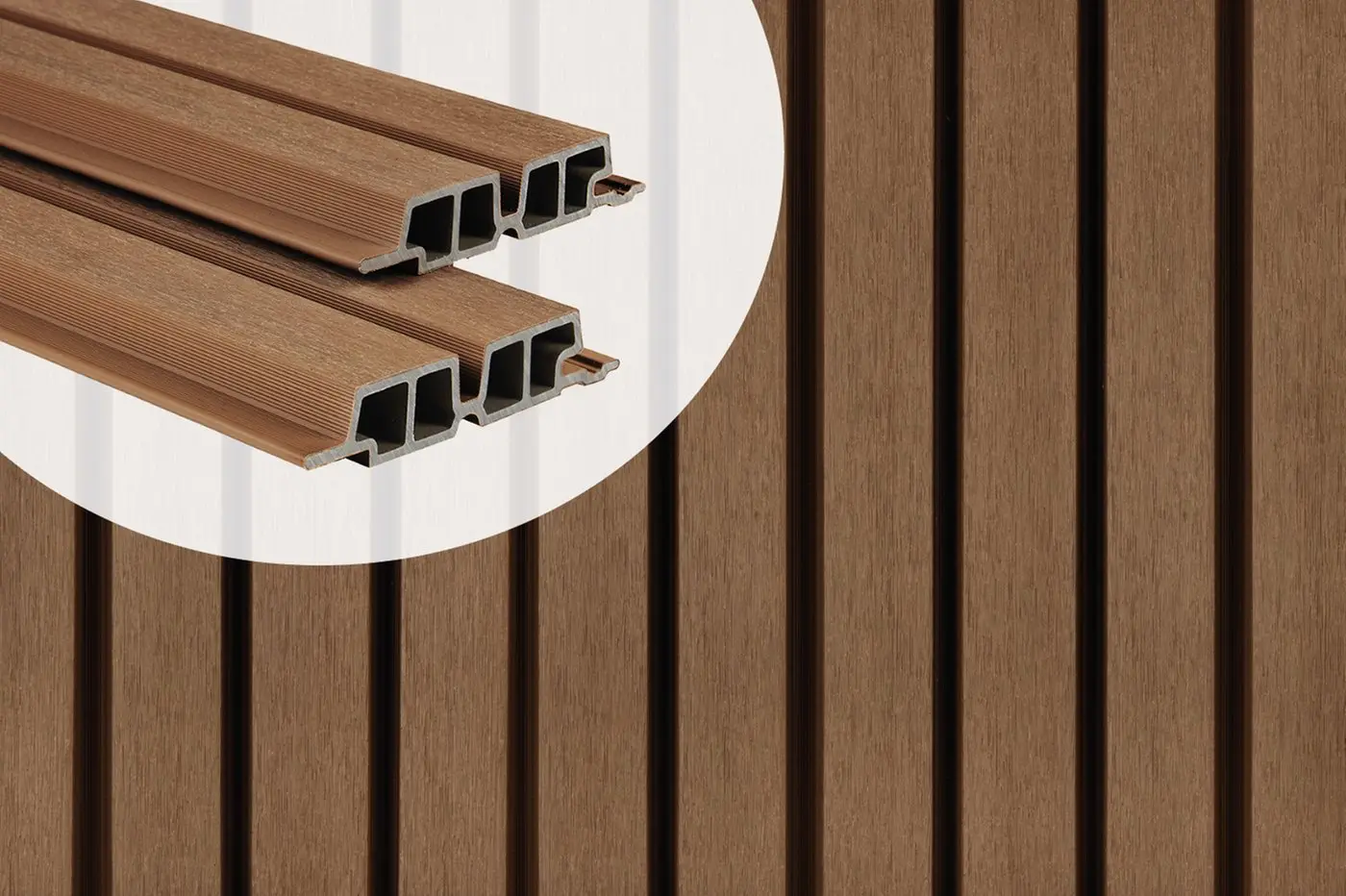
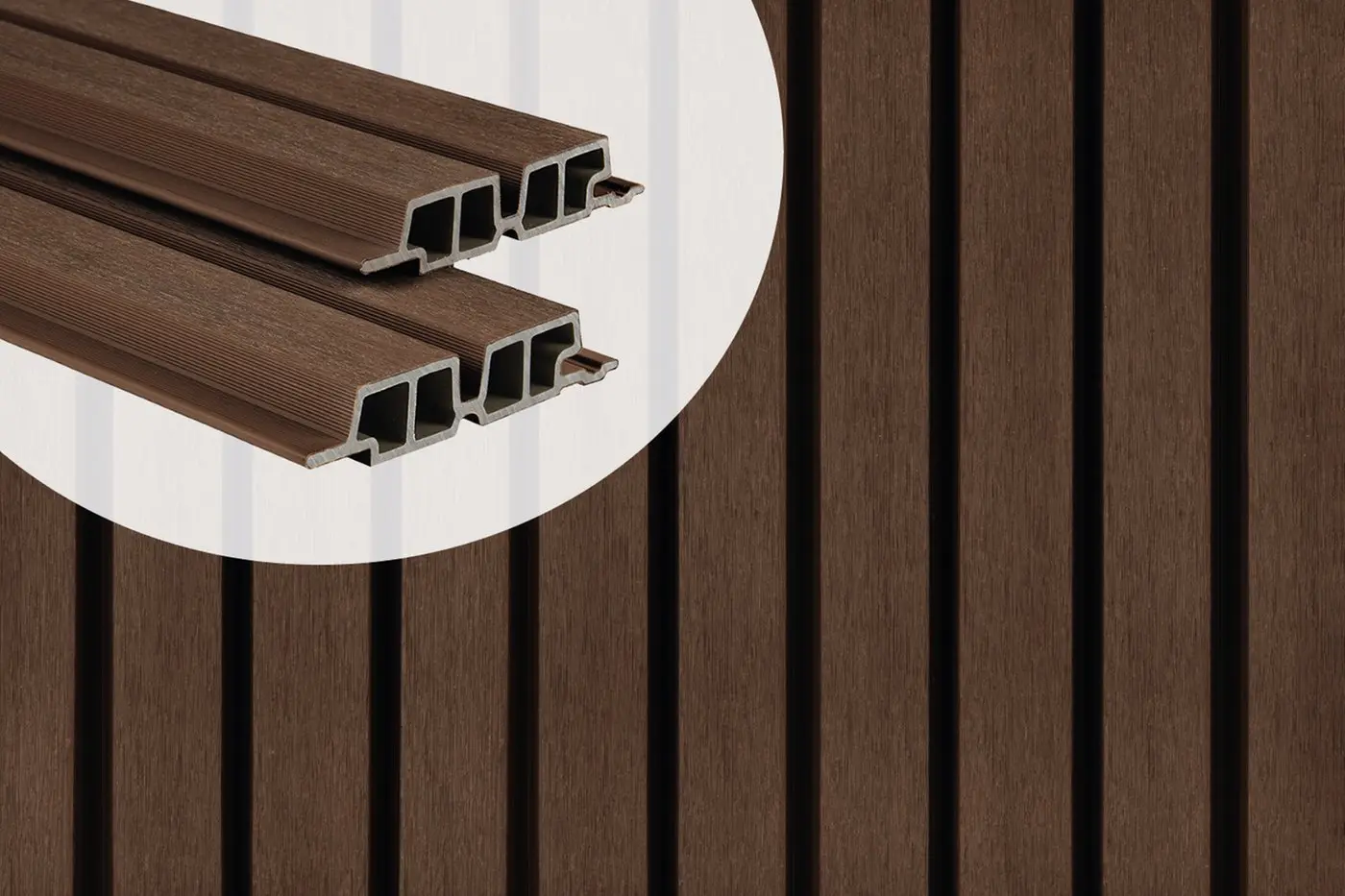
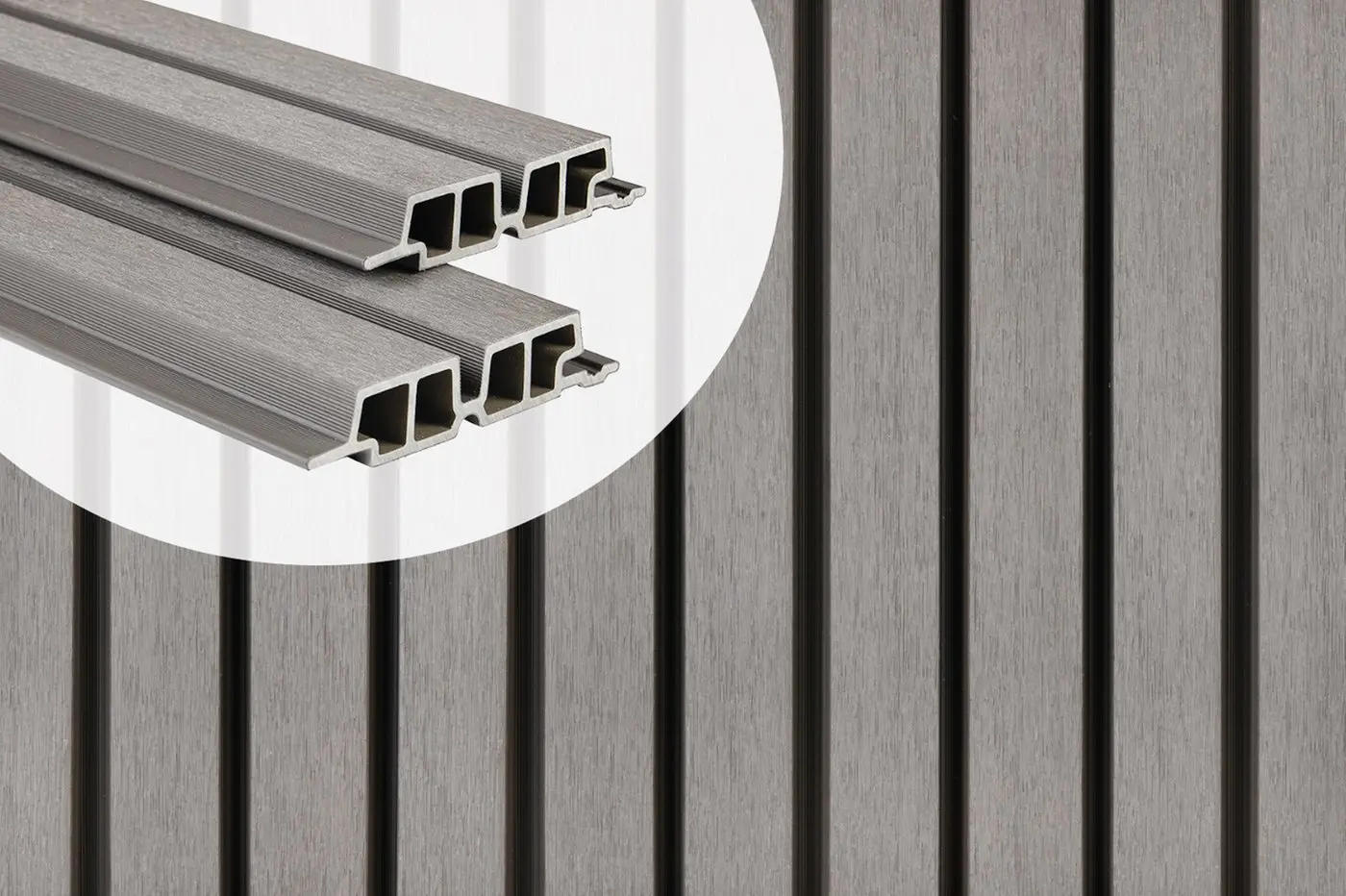
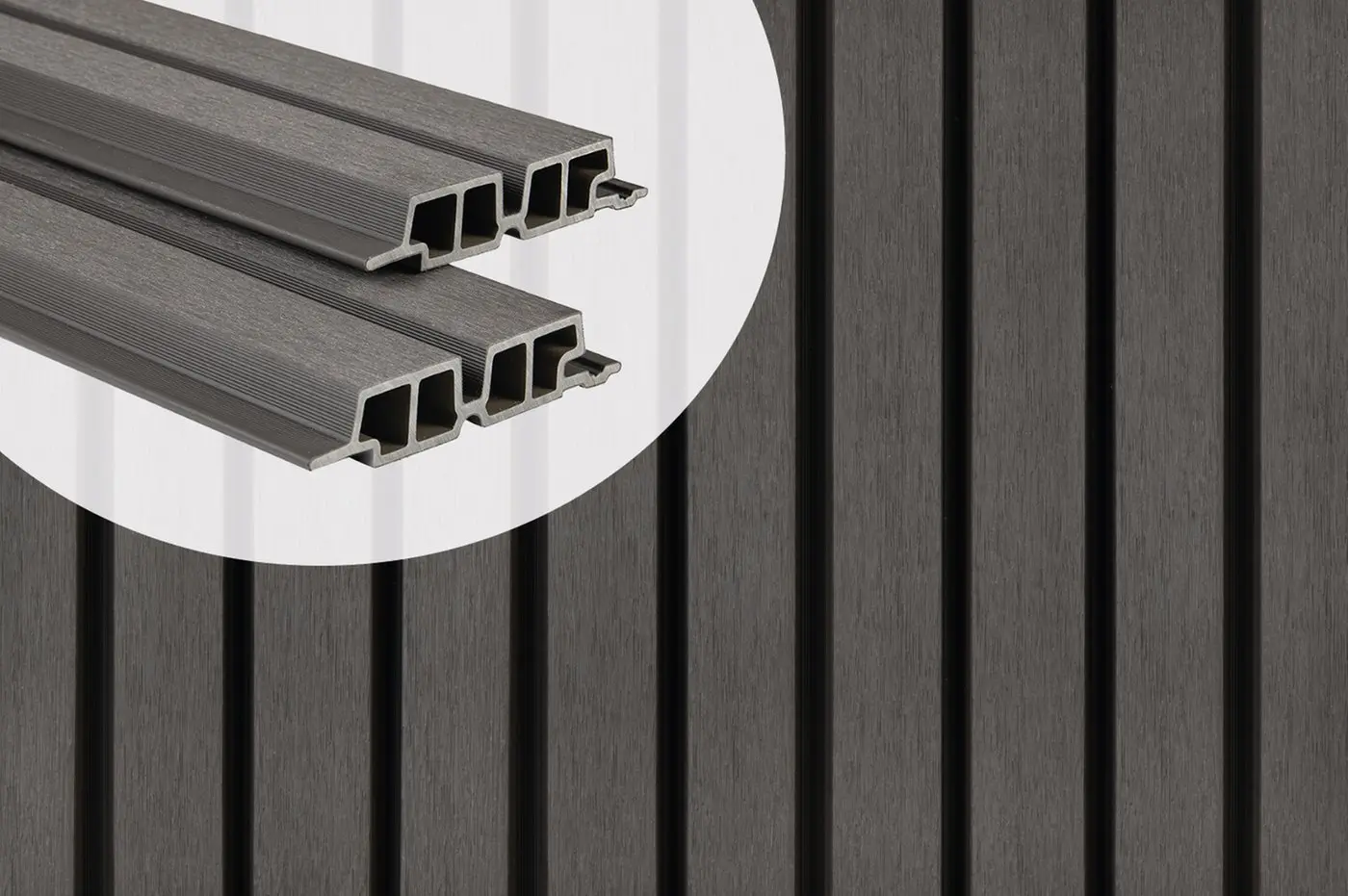
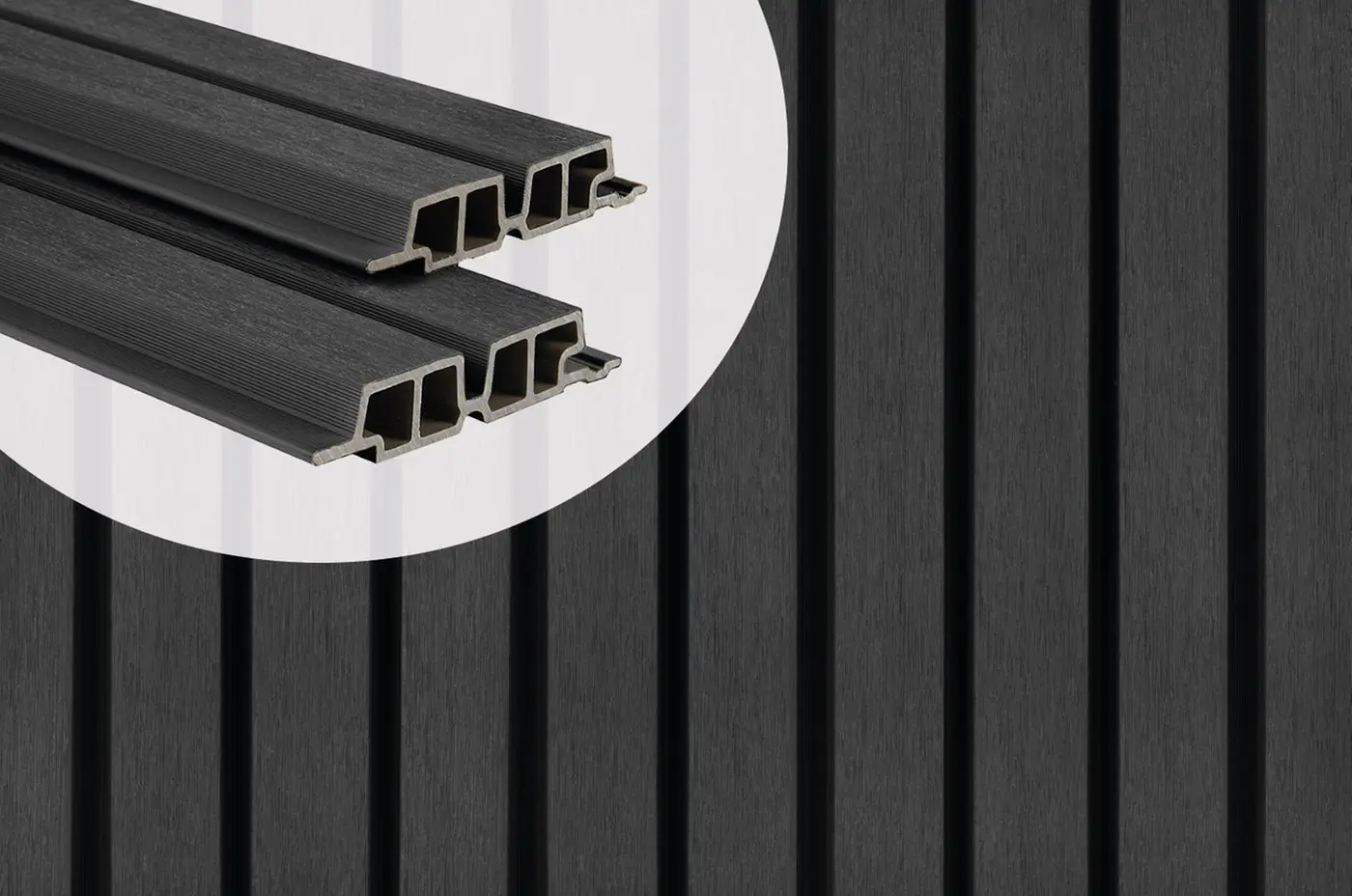
Showing 1-12 of 19 results
Why choose composite cladding
Composite cladding is a wall board made from wood fibre and plastic, shaped and coloured to look like timber. It goes over the outside walls of a house, extension or garden room on battens, the same way timber cladding does, but it needs no oiling, staining or painting to keep its colour. For a wet climate like Ireland’s, that means no yearly maintenance round and no bare patches where a finish has worn through.
The colour you choose is the colour you live with, so it pays to pick it carefully, and like any cladding it performs best fixed properly, over battens with an air gap behind. Get those two things right and composite wall cladding is about the lowest-effort way to give a building a timber look that lasts.
What is WPC cladding?
WPC stands for wood plastic composite, the material every board on this page is made from. Wood fibre gives the board its warmth, grain and stiffness; the plastic, usually high-density polyethylene (HDPE), binds it and keeps water out. WPC cladding and composite cladding are the same thing under two names, and both are different from PVC cladding, which is all plastic.
Types of composite cladding: slatted or tongue and groove
Our composite cladding comes in two profiles. Slatted boards have raised slats along their length, so the wall reads as a run of narrow battens with shadow lines between them. Tongue and groove (T&G) boards lock edge to edge into one flat, continuous face with the screws hidden in the joints. Choose the look first, then the range for the fire class and colour you need.
Slatted composite cladding: PuraTech
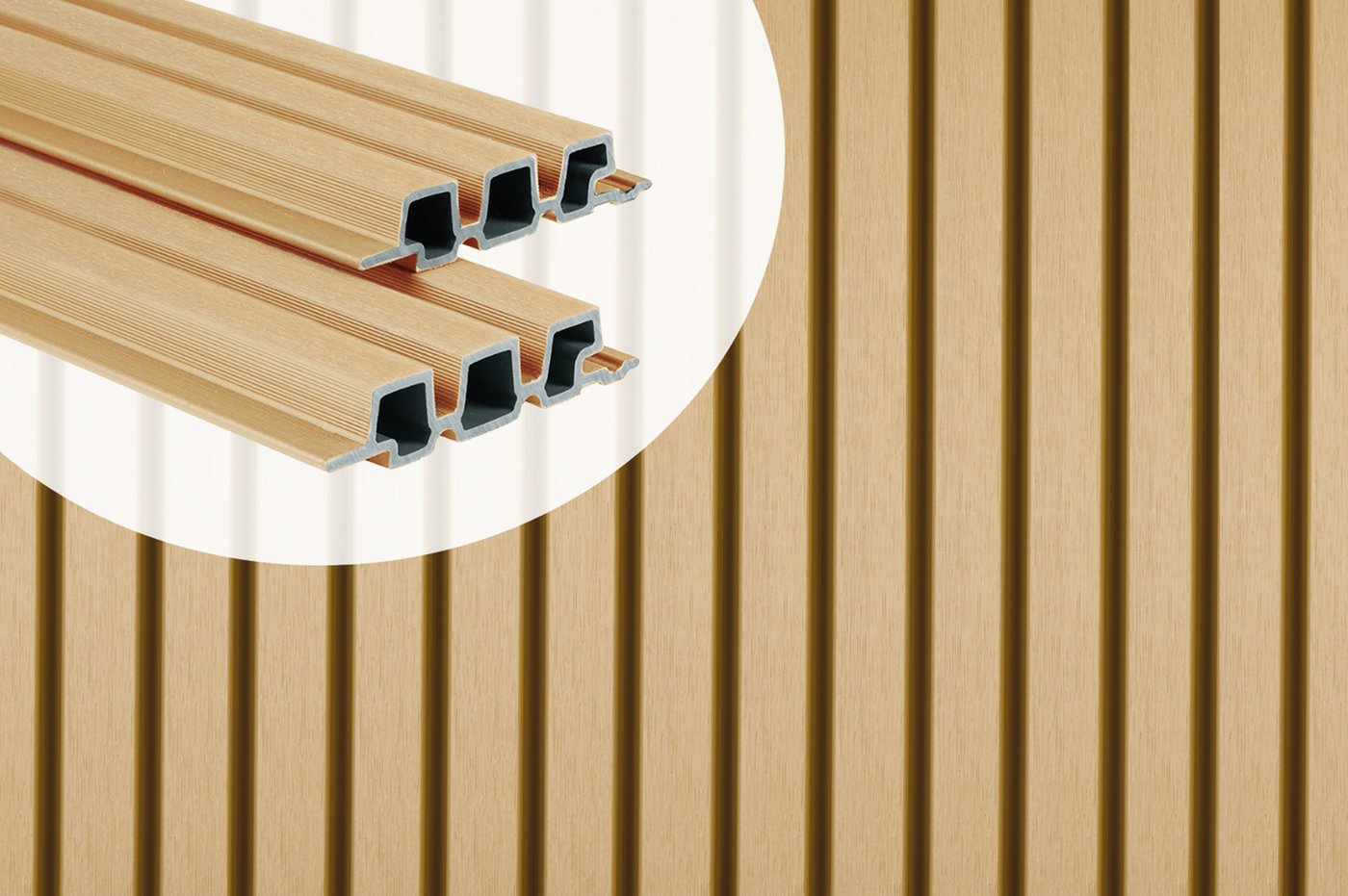
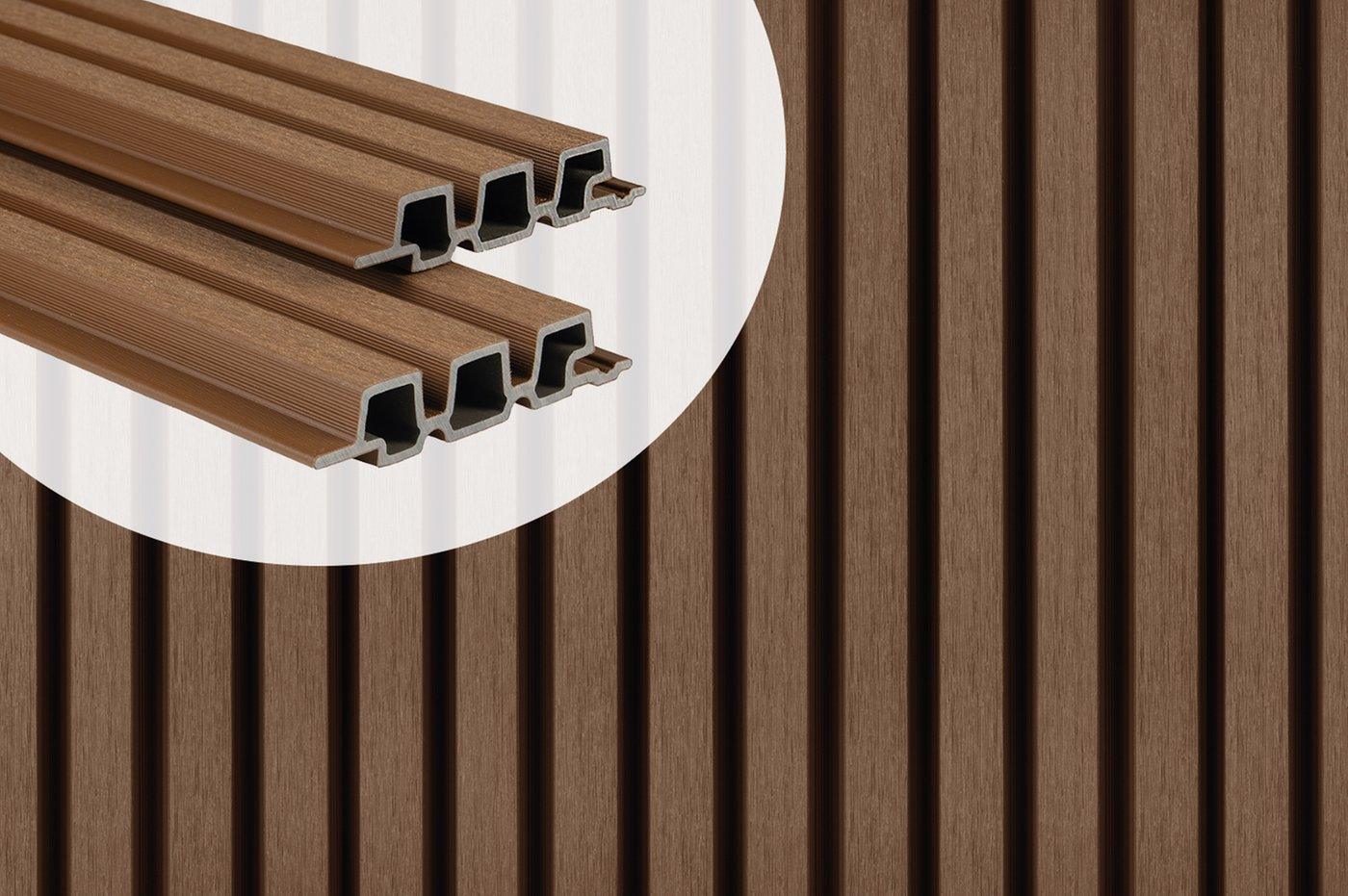
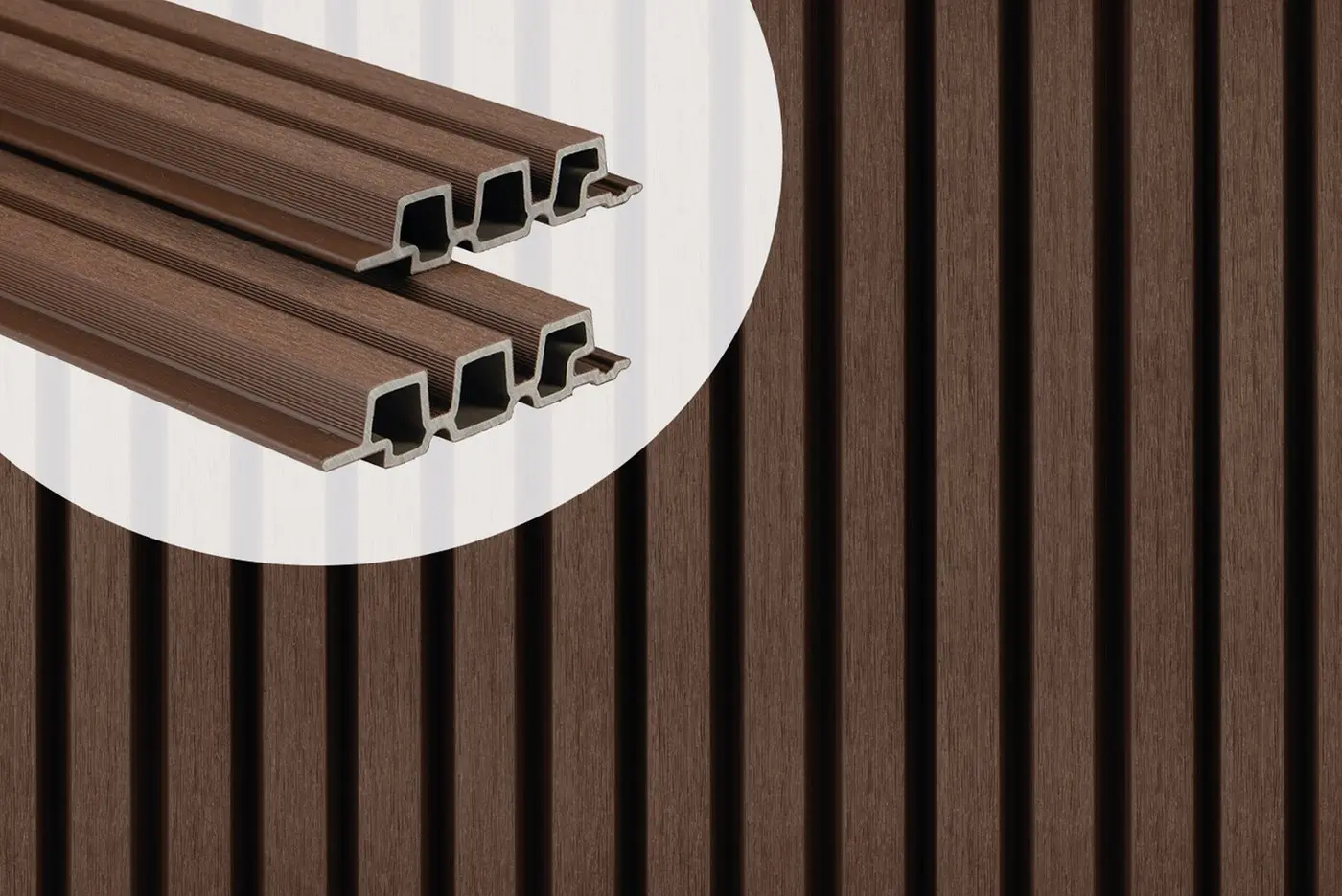
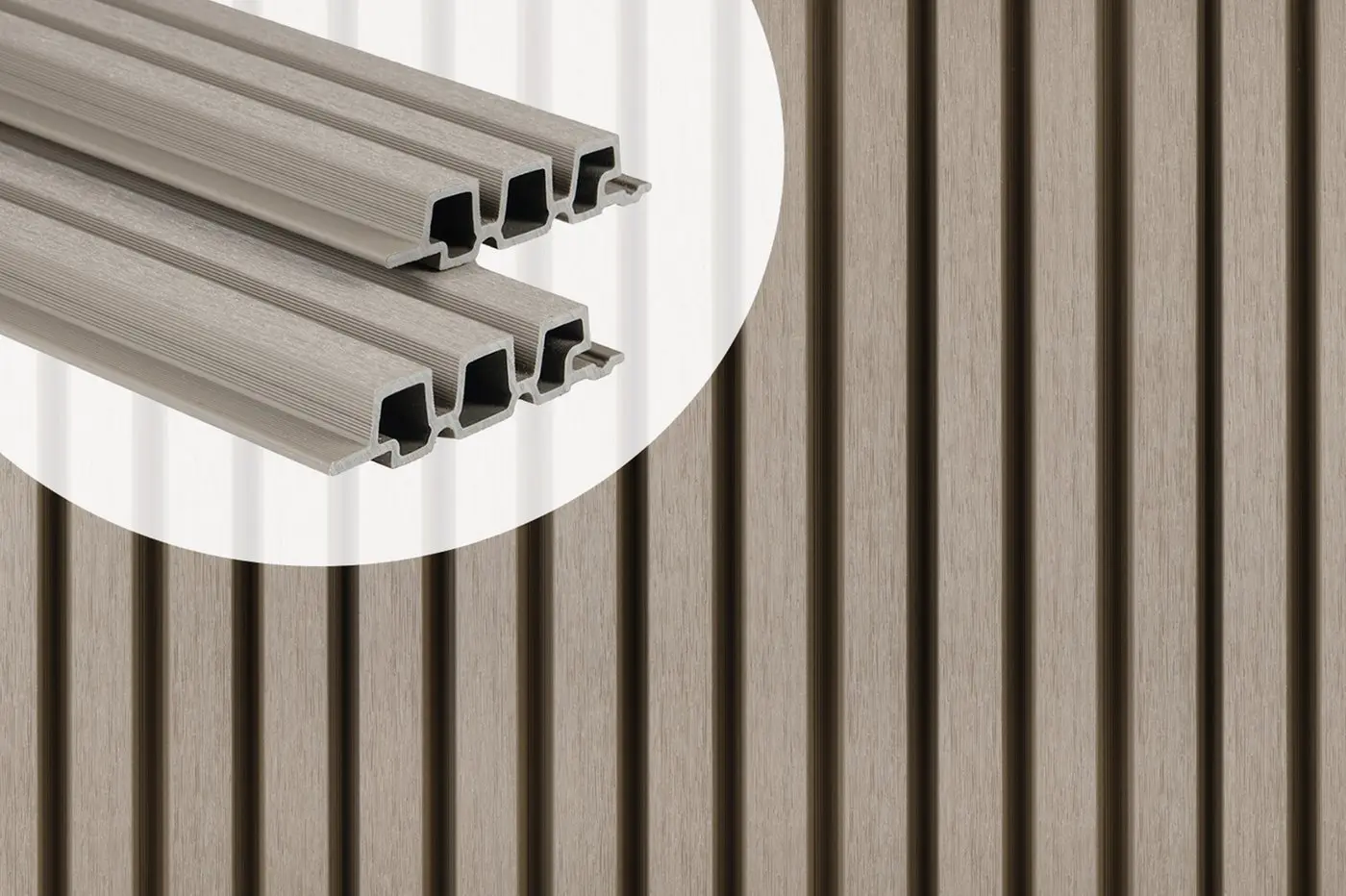
PuraTech is our feature range of composite slatted cladding: a capped, slatted board 170 mm wide and 33 mm thick, in six colours. PuraTech 30 has three 30 mm slats per board for a fine, layered shadow line and is rated Euroclass E. PuraTech 55 has two 55 mm slats for a bolder rhythm that reads well on tall walls and is rated Euroclass D-s1,d0.
Fire rated T&G composite cladding: PuraClassic
PuraClassic composite cladding is a flat T&G board, 157×21 mm, and the only Euroclass B board in our range, so it is the one to choose when a fire class leads the brief. It comes in Charcoal with an embossed woodgrain or a brushed surface.
Capped T&G composite cladding: PuraShell
PuraShell composite cladding is our everyday flat board: a capped, co-extruded T&G board made from recycled wood fibres and HDPE, 21 mm thick with a woodgrain face. It suits new builds, extensions, renovations and garden rooms, comes in five colours with matching co-extruded corner trims, and screws to the battens.
Is there composite shiplap cladding?
Shiplap is a timber profile where each board overlaps the one below. We don’t make a composite shiplap board, because a flat T&G board such as PuraShell or PuraClassic gives the same run of clean horizontal lines with the screws hidden in the joints, and none of the upkeep of a painted wooden board. The traditional wooden profiles are in our timber cladding, compared below.
Comparing our composite cladding ranges
The three current ranges differ on three things: how the board is made, how it performs in a fire test, and how the wall looks. Here is where each one sits, so you can go straight to the right page.
Construction: capped or not
Capped, or co-extruded, boards have a tough polymer cap bonded around the composite core during manufacture. The cap faces the weather, resists stains and holds the colour. PuraTech and PuraShell are both capped. PuraClassic is an uncapped board, chosen for its fire classification rather than its construction.
Fire rating
Euroclasses are the European reaction-to-fire scale (EN 13501-1), from A1, non-combustible, down to F. Our composite cladding covers three classes:
- Euroclass B: PuraClassic, in both finishes, the highest class in our composite range.
- Euroclass D-s1,d0: PuraTech 55, where a specification asks for class D.
- Euroclass E: PuraTech 30, which suits most domestic work.
Look
Each range gives the wall a different face, so match it to the building:
- Feature wall with shadow lines: PuraTech, slatted, 33 mm deep, brushed multi-tone finish.
- Flat woodgrain face in a choice of colours: PuraShell, the all-rounder for garden rooms and extensions.
- Flat Charcoal face, woodgrain or brushed: PuraClassic, for contemporary and specification-led projects.
Composite cladding boards: sizes and colours
Each range comes in one face size, so the size follows from the range you pick. PuraTech is the deepest board at 170×33 mm, and that depth is what gives its slats their shadow. PuraClassic is a slimmer 157×21 mm T&G board that keeps the wall build-up tight around windows and doors. PuraShell is 21 mm thick as well, with the width listed on each product page. Choose the length on the product page; longer boards mean fewer end joints on a wide wall.
The colours fall into three families. Most colours come in both PuraTech and PuraShell, so you can often choose the colour first and the profile second:
- Grey composite cladding (Light Grey, Dark Grey, Charcoal): for modern houses and render; Dark Grey is an anthracite that still reads as grey, and Charcoal is the PuraClassic colour.
- Black composite cladding (Ebony Black): a true deep black for a wall that stands out, as on the PuraTech 30 Ebony Black board.
- Wood tones (Cedar, Teak, Ipé, Walnut): the look of timber cladding without the upkeep, from Cedar, as on the PuraShell Cedar board, to the deep chocolate-brown of Ipé.
Composite cladding prices in Ireland
Every board’s current price is in the grid above. Three things set the price of composite cladding: the profile, the fire class and the size of the board. A capped slatted board with more material in it sits higher than a slim flat board, and within a range a longer board costs more per board than a shorter one.
Because the boards differ in width and length, compare ranges by the cost per square metre (m²) of wall rather than per board. A wider board covers more wall per board and a longer one saves end joints and offcuts, so the cheapest board per piece is not always the cheapest finished wall. Enter your wall area in the calculator on any board’s page to get the number of boards; the cart adds the matching extras automatically.
Composite cladding vs timber and PVC cladding
Composite sits between real wood and all-plastic cladding. Here is the trade-off with each, so you can tell whether composite is right for your walls.
Composite or timber cladding?
Timber cladding gives you real grain and a finish you can change over the years, but oiled boards need a fresh coat every two or three years to hold their colour. Composite needs no oiling or painting and keeps the colour it came in, but it can’t be sanded back or refinished. Choose timber for the character of real wood, composite for the lowest upkeep.
Composite or PVC cladding?
People often search for PVC cladding when they mean composite. PVC boards are made only of plastic. Composite blends wood fibre into the plastic, which gives a warmer, more timber-like look and a grain you can see and feel. Every board on this page is composite.
Installing and looking after composite cladding
Each range has its own installation manual with the batten spacing, fixing pattern, expansion allowances and detailing at openings, so read the one for your boards before you start. The basics are the same for all of them:
- Battens and cavity: fix cladding battens to the wall to form a ventilated cavity, an air gap behind the boards that lets moisture escape. For PuraTech, that means battens at 400 mm to 600 mm centres, at least a 20 mm cavity and 100 mm clear of the ground.
- Fixing: PuraTech is fixed with concealed screws through the groove in its profile; PuraClassic is screwed through the tongue; PuraShell uses a screw fixing system. Stainless steel screws are in our cladding screws.
- Trims: finish corners, window reveals and cut ends with matching composite cladding trims, and order them with the boards so everything arrives together.
After that, looking after composite cladding means a wash with warm soapy water once or twice a year. Textured faces, such as the slats of PuraTech 30 or an embossed woodgrain, catch a little more dust than a smooth board, so give them an extra rinse now and then. Each range’s care guide lists the approved cleaning products.
Composite cladding in Dublin and across Ireland
Our composite cladding is held in our Dublin warehouse. View the colours in our Dublin showroom, collect your order, or have it sent with delivery across Ireland. Planning a deck as well? Our composite decking shares several colour names with the cladding, and battens, trims and timber are in the rest of our cladding range.
Frequently Asked Questions About Composite Cladding
How do I install vertical composite cladding?
Follow the installation manual for your range: it sets out the batten spacing, fixing pattern, expansion allowances and detailing at openings. The PuraTech 30 manual also covers which way to turn the boards so the shadow lines stay consistent along a long wall. Read it before you plan a vertical layout.
How far apart should battens be for composite cladding?
It depends on the board, so use the installation manual for your range. For PuraTech, battens go at 400 mm to 600 mm centres, with a double batten where boards meet end to end. Whatever the spacing, the battens must leave a ventilated cavity behind the cladding so air can move and moisture can escape.
Does composite cladding fade?
Composite doesn’t need oiling to hold its colour, and there is no stain or paint on the surface to wear off. Capped boards such as PuraTech and PuraShell carry the colour in a tough outer cap that faces the weather, which is the most colour-stable construction in our range.
Can I use composite cladding on a garden room?
Yes. PuraShell is made for garden rooms as well as new builds, extensions and renovations, and the other ranges go up the same way: over battens, with a ventilated cavity behind the boards. If the building needs a fire class, choose PuraClassic, rated Euroclass B.
What is composite cladding made of?
Composite cladding, also called WPC cladding, is a wood plastic composite: wood fibre bound with a plastic, usually high-density polyethylene (HDPE). PuraShell, for example, is made from recycled wood fibres and HDPE. Capped boards add a polymer outer layer bonded on during manufacture for extra stain and colour resistance.