
Length
Width
Thickness
Colour Tone
Profile
Material
Fire Rating
Range
Species
Wood Type
Warranty
Moisture Content
Construction Timber
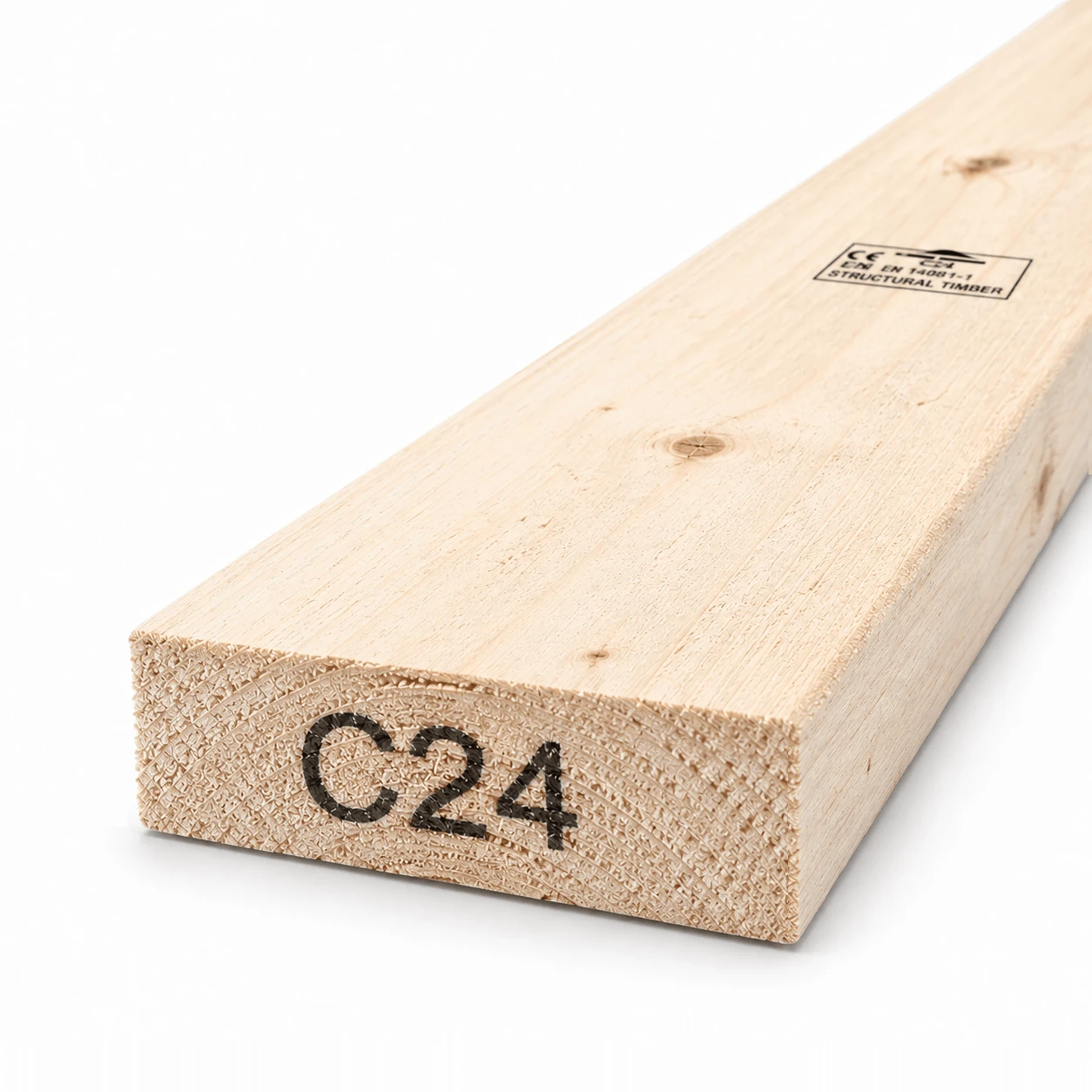
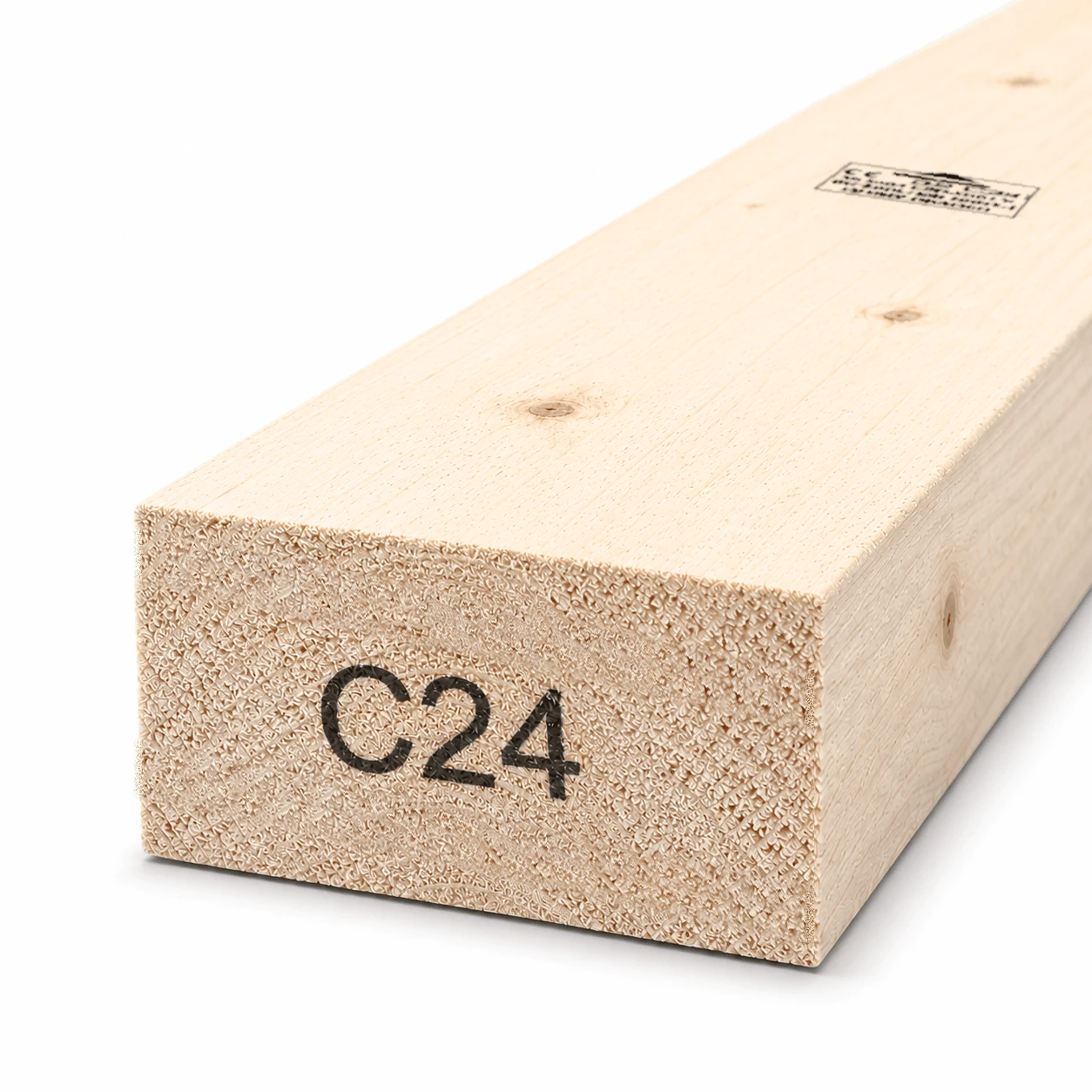
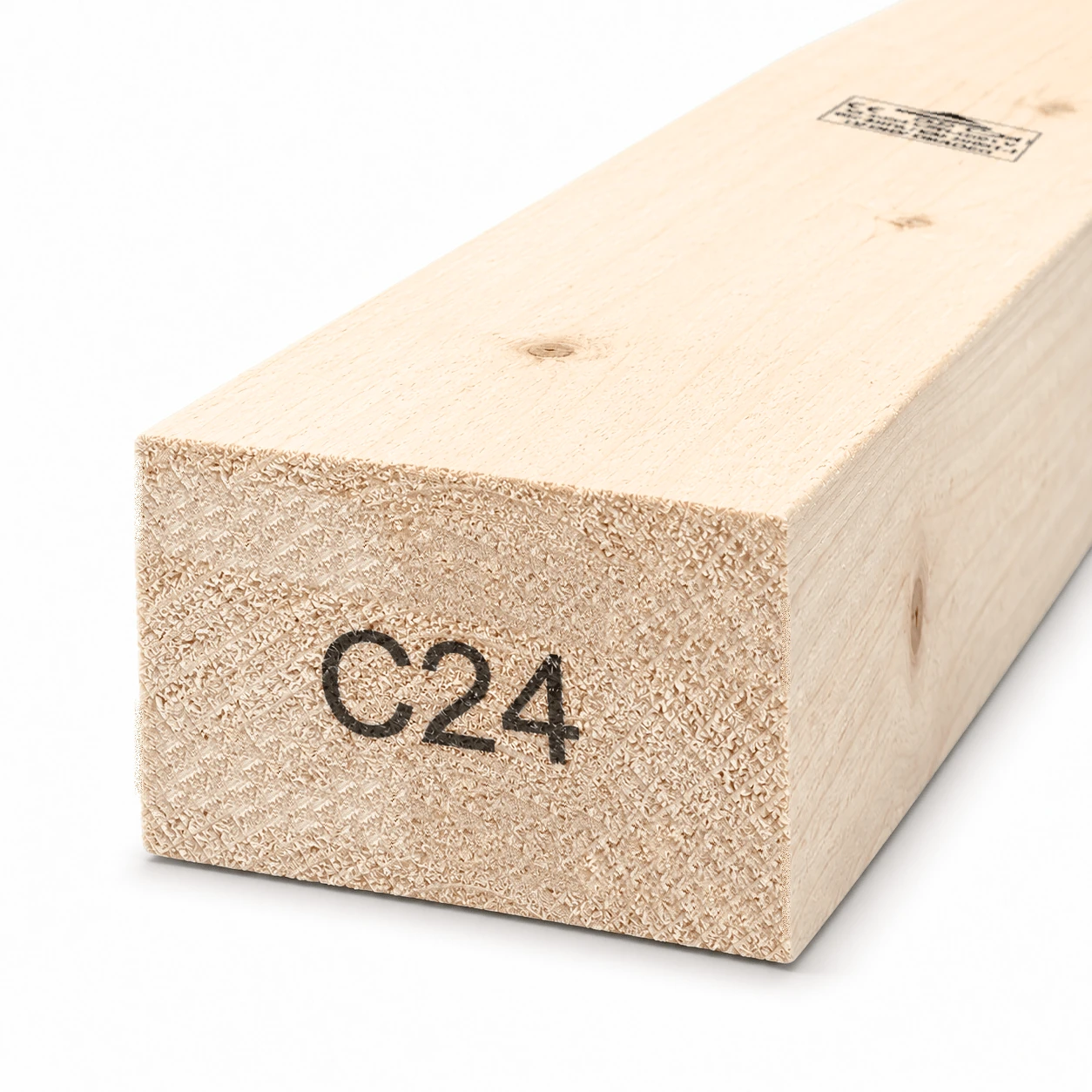
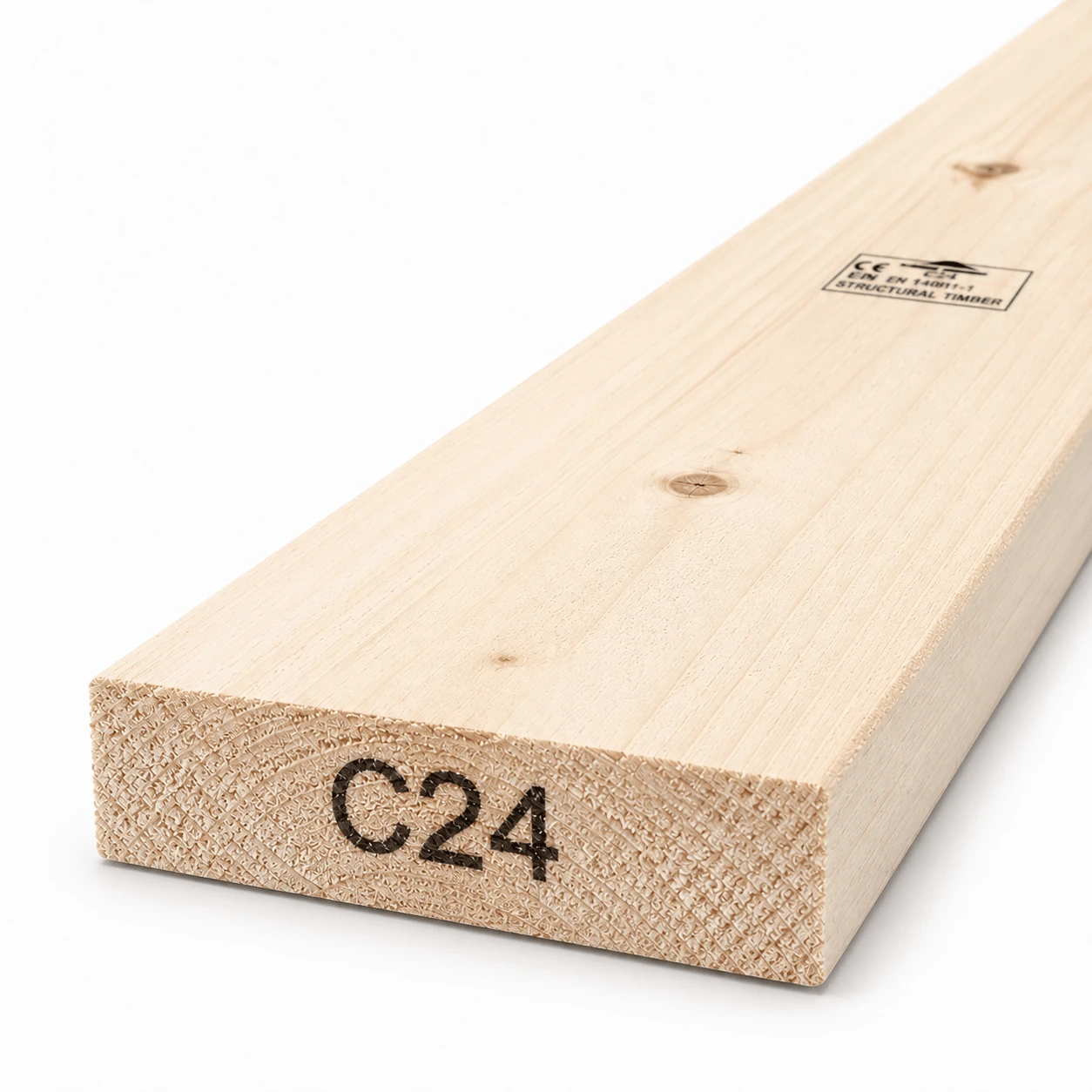
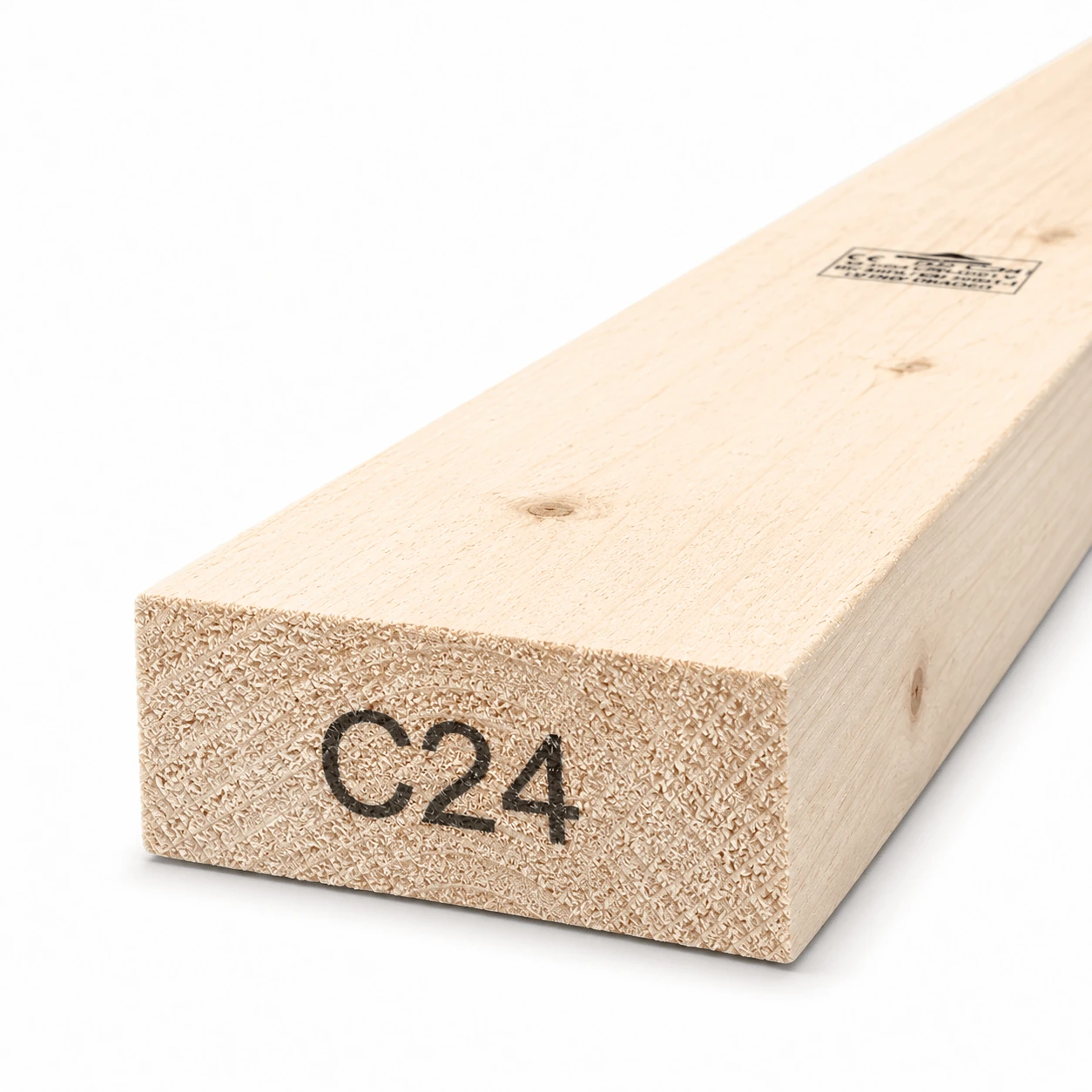
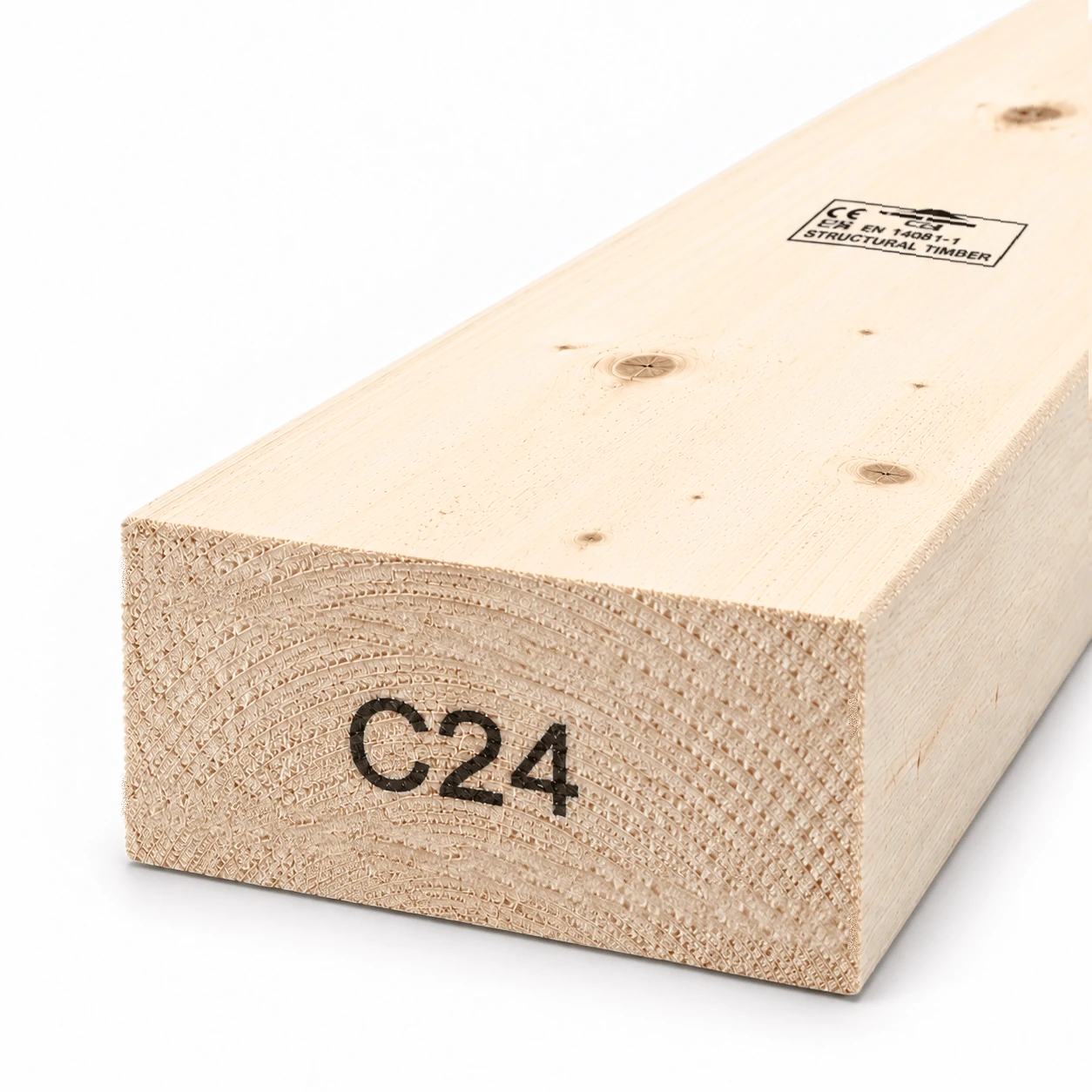
Construction timber is the strength graded structural softwood a building is framed from, for joists, rafters, studs, plates and beams. Everything here is C24 in 22 sizes, from 75×22 mm battens to 225×75 mm beams, and it comes two ways: sawn for dry internal work, or pressure treated for anywhere damp or outdoors. Held in our North Dublin warehouse for collection or delivery across Ireland.
Sort by
Showing 1-12 of 44 results
What construction timber is
Construction timber is the structural softwood a building is framed from: the joists under a floor, the rafters over a room, the studs in a wall and the plates they sit on. The trade also calls it carcassing timber, because it forms the carcass of the building. It is not meant to be seen. It is meant to carry a load and stay the size you cut it, which is why it is sold by strength grade rather than by size alone.
Everything in this range is strength graded to C24, the class most Irish drawings call for, kiln dried and rough sawn. Grading means each piece has been checked for the knots and grain faults that weaken timber, so you get a guaranteed minimum strength that an engineer or inspector can rely on.
Construction timber is the wrong choice for anything on show that needs a smooth finish. It is rough sawn, not planed, and it is built to sit behind plasterboard, flooring, cladding or a roof covering.
Types of construction timber: sawn or treated
There is one real decision in this range, and it is made by where the timber ends up. Both types are the same C24 grade in the same 22 sizes, from 75×22 mm to 225×75 mm, so a treated joist spans exactly what a sawn one does. What changes is whether the timber can stay damp without rotting.
Sawn timber: dry internal structure
Sawn C24 is kiln dried to below 22% moisture content and left untreated, for floor and ceiling joists, rafters, stud partitions and wall plates inside a heated, dry building. It is the cheaper of the two and the right specification wherever the timber stays dry. Our C24 timber page explains the grade, compares it with C16 and matches every size to its job.
Treated timber: outdoors, damp and masonry contact
Treated C24 has preservative driven in under vacuum pressure, for deck frames, sole plates on a slab, garden rooms, sheds, pergolas, carports and battens behind cladding. If a member runs from inside to outside, treat the whole length as external. The C24 treated timber page covers when you need it, cut ends and the fixings it takes.
Standard timber sizes in Ireland
Timber in Ireland is still ordered by its old imperial name, so a 4×2 is roughly 4 inches by 2 inches. What you receive is the finished size in millimetres, 100×44 mm for a 4×2, and every product name shows both. The sizes fall into four thickness families, and the family tells you the kind of work it does:
- 1 inch sections, 75 to 225×22 mm, are battens, noggins, fascia and soffit grounds, sarking and formwork, and are not structural on their own.
- 1.5 inch sections, 75 to 225×35 mm, make counter battens, non loadbearing partitions, rails, trimmers and stair strings.
- 2 inch sections, 75 to 225×44 mm, are the studs, wall plates, rafters and joists, from 3×2 up to the 9×2 used for long spans.
- 3 inch sections, 100 to 225×75 mm, are the posts, beams, purlins and heavy trimmers, from 4×3 up to 9×3.
Each size comes in a choice of lengths, shown on its product page. Choose the length that covers your run in one piece with a little spare for trimming, because a joint in a joist or beam needs its own support underneath. Let the section, not the length, decide what a member will span.
Every size we stock
These are the 22 standard timber sizes we hold, grouped by thickness. Each link opens the sawn version, where you choose the length; the same sizes come pressure treated in our C24 treated timber range.
- 1 inch, 22 mm thick: 3×1 timber, 4×1 timber, 6×1 timber, 7×1 timber, 9×1 timber
- 1.5 inch, 35 mm thick: 3×1.5 timber, 4×1.5 timber, 4.5×1.5 timber, 6×1.5 timber, 7×1.5 timber, 9×1.5 timber
- 2 inch, 44 mm thick: 3×2 timber, 4×2 timber, 4.5×2 timber, 6×2 timber, 7×2 timber, 9×2 timber
- 3 inch, 75 mm thick: 4×3 timber, 4.5×3 timber, 6×3 timber, 7×3 timber, 9×3 timber
Sizes we do not stock
Some sizes you will see on drawings are not in the range: 8×2, 10×2 and 12×2, and the square and near square sections such as 6×4 and 9×4. The 2 inch range steps from 7×2 (175×44 mm) to 9×2 (225×44 mm), and the 3 inch range tops out at 9×3 (225×75 mm). If a drawing names a size that is not listed, have your designer confirm which listed section replaces it.
Working with construction timber
Graded timber only performs as graded if it goes in straight, dry and properly fixed. A few habits on site make the difference, whichever type you buy.
Storing and sizing
Stack timber off the ground on level bearers, cover the top and leave the ends open so air moves through the pack. Kiln dried timber left on wet ground takes moisture back up and moves once it is fixed. Size each member from your drawing or a span table, because span, spacing and load decide the section, not what looks about right.
Cut ends, fixings and connections
Treated and sawn timber need different handling at the joints, and most failures start there. On treated timber, brush every cut and drilled hole with end grain preservative, because the treatment does not reach the core. Zinc plated screws suit dry sawn work, but treated timber needs hot dip galvanised or stainless steel fixings. For outdoor frames, the concrete post bases, pole holders and post connectors are in our outdoor timber hardware range.
Construction timber in Dublin and across Ireland
Every size in both ranges is held in our North Dublin warehouse, ready for collection or delivery across Ireland. Choose sawn or treated, pick the size from the grid, then choose the length on the product page and add it to your cart. Construction timber sits within our wider outdoor timber range, alongside posts, joists, battens and the finishes that go with them.
Frequently Asked Questions About Construction Timber
Do you stock 8×2, 10×2, 12×2 or 6×4 timber?
No. The 2 inch range goes 3×2, 4×2, 4.5×2, 6×2, 7×2 and 9×2, so nothing sits between 7×2 (175×44 mm) and 9×2 (225×44 mm), and nothing is deeper. The 3 inch range tops out at 9×3 (225×75 mm). If a drawing names an unlisted size, have your designer confirm the replacement.
What lengths does construction timber come in?
Every size in both the sawn and the treated ranges comes in a choice of lengths, shown on its product page. Choose the one that covers your run in one piece, with a little spare for trimming.
Is construction timber planed?
No. Every length in both the C24 sawn and C24 treated ranges is sold rough sawn, as the product names state, so expect a sawn surface rather than a smooth planed finish. It is meant to sit behind plasterboard, flooring, cladding or a roof covering.
How heavy is construction timber?
Weight rises with the section: a 4×2 (100×44 mm) is an easy one person carry, a 9×2 (225×44 mm) weighs a little over twice as much for the same length, and a long 9×3 (225×75 mm) needs extra hands or a hoist. Freshly treated timber is heavier than the same section dry, so plan extra hands for the long beams.