
Length
Width
Thickness
Colour Tone
Profile
Material
Fire Rating
Range
Species
Wood Type
Warranty
Moisture Content
Douglas Fir Cladding
Douglas Fir cladding in feather edge, tongue and groove, shiplap, half lap, triple slatted, rhombus and square edge profiles, with feather edge and triple slatted also in black. Douglas Fir is one of the most stable softwoods for cladding, with a warm reddish pink grain. Stocked in our warehouse and delivered across Ireland.
Sort by


Showing 1-9 of 9 results
About Douglas Fir Cladding
Douglas Fir is one of the most stable softwoods you can clad a building in: it stays straight and true, has a long, even grain and a warm reddish pink colour. We stock it in seven profiles, several in natural and black, all stocked in our warehouse and delivered across Ireland.
Douglas Fir Cladding Profiles
Start with the profile, which sets the look of the wall. On the product page you then choose the length; longer boards mean fewer joints on long runs. Enter your wall area in the calculator there and it works out how many boards you need; the cart adds the fixings and extras.
Traditional Overlapping Profiles
These boards overlap each other, so every course sheds rain onto the one below. They suit sheds, garden rooms, barns and any building where you want a classic timber look.
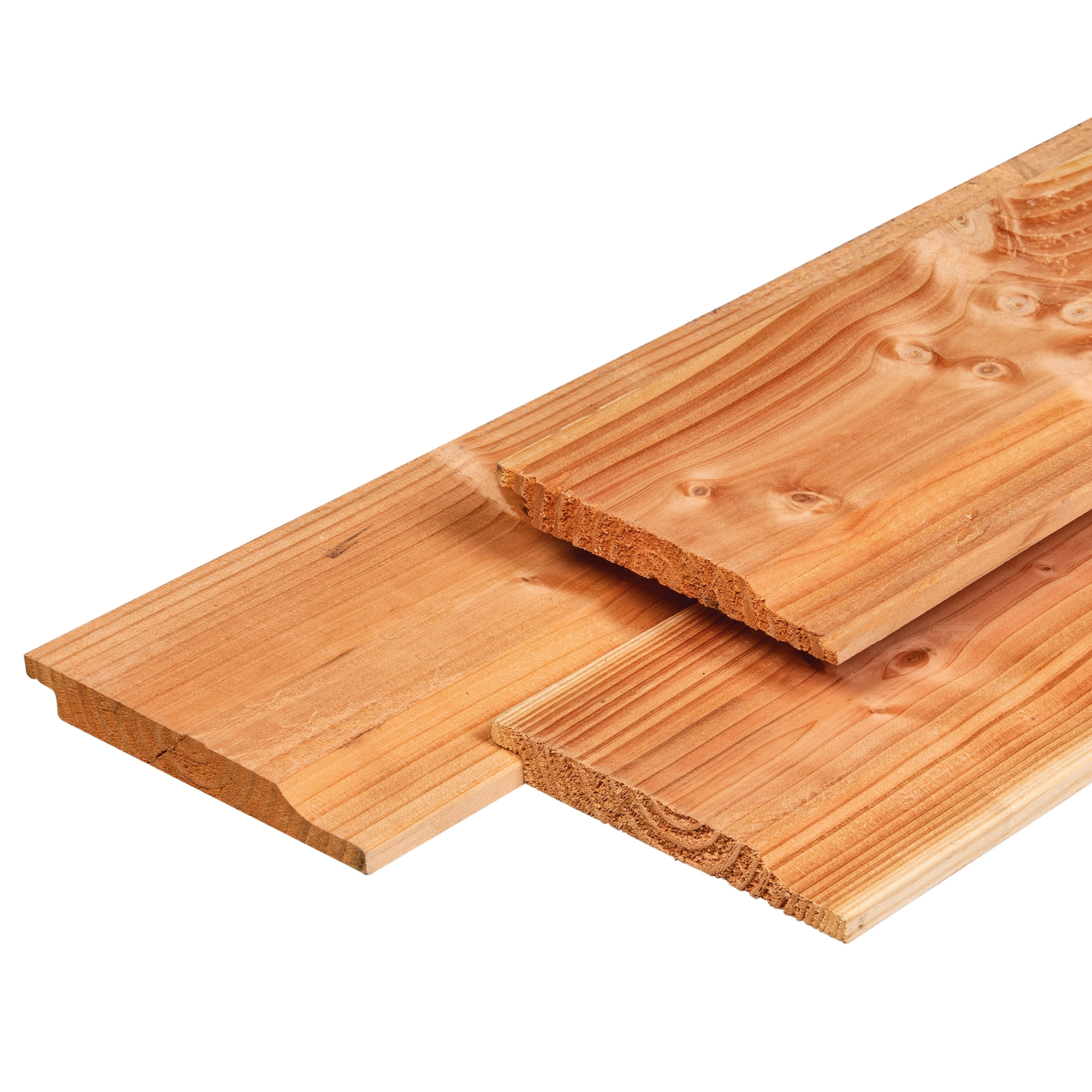
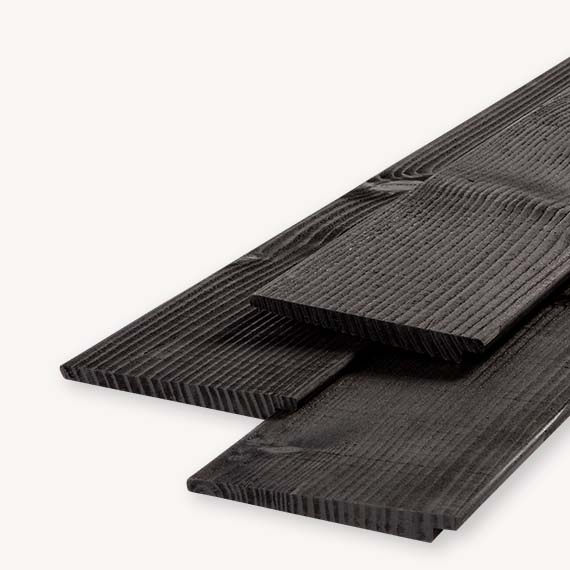
- Feather edge: tapered 200×19.5 mm boards, thick at the bottom edge and thin at the top, for a rustic, deep shadowed facade. Available in natural and black, with the black also in a narrower 140 mm board for a finer pattern of lines.
- Shiplap: 145×18 mm boards with a rebate that locks each board over the next, giving a neat shadow line on horizontal cladding.
- Half lap: wide 195×18 mm boards that overlap by half their thickness, for broad, simple elevations with fewer lines.
Flush and Open Joint Profiles
For a flatter, more architectural wall, these boards sit side by side rather than overlapping.
- Tongue and groove: 195×18 mm boards that lock together into a tight, flush face. Fix them vertically, horizontally or on the diagonal.
- Square edge: plain 200×20 mm boards for board on board cladding, or fixed with a gap for an open joint look.
Contemporary Slatted Profiles
These profiles create strong shadow lines, the look behind many modern extensions and garden rooms.
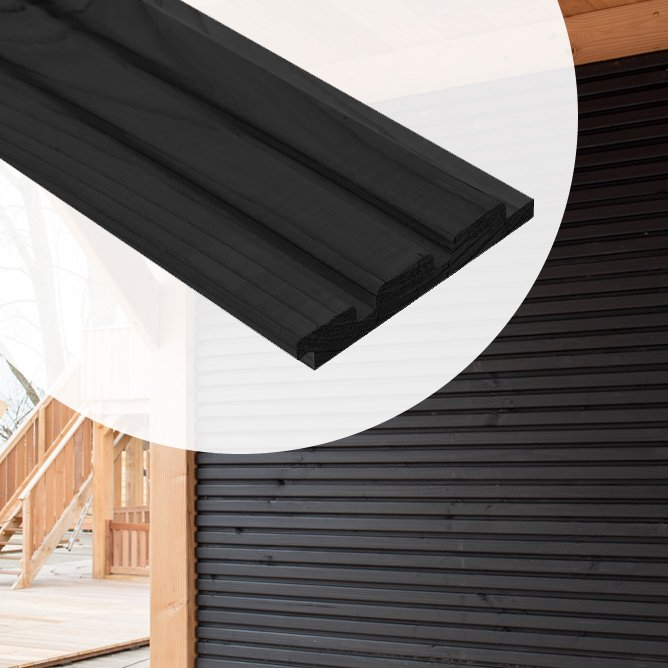
- Triple slatted: 130×19 mm boards with three slats machined into each face, for a linear pattern without fixing individual battens. Available in natural and black.
- Rhombus: narrow 65×20 mm boards with angled edges, fixed with an open gap so each board casts a crisp shadow and the wall can breathe.
Why Choose Douglas Fir Timber Cladding
- Stability: resists warping and cupping, which matters most on open joint walls where every board is on show.
- Durability Class 3: natural resin adds weather resistance, with a service life of 15 to 25 years when detailed well.
- Light and easy to work: quick to cut, handle and fix.
- Colour: warm reddish pink tones that deepen with age.
For a more durable softwood, compare larch cladding. For a lighter, finer finish, see cedar cladding.
Installing Douglas Fir Cladding
- Fix to treated battens over a breather membrane, with a ventilated gap of at least 20 mm behind the boards.
- Use A2 or A4 stainless steel fixings and pre-drill near the board ends.
- A little resin can bleed from fresh cuts and knots. It stops as the timber dries.
Treating Douglas Fir Cladding
Douglas Fir lasts longest outdoors with a finish, especially on exposed walls. Left bare, it weathers to silver grey. We recommend a UV protective oil made for softwoods within the first few months of fixing, refreshed every two or three years, to protect the timber and keep the warm colour. See our wood oils and stains.
For every species and profile we stock, browse all our timber cladding.
Frequently Asked Questions About Douglas Fir Cladding
How does Douglas Fir cladding change over time?
Douglas Fir starts with warm, reddish-pink tones. Its natural resin gives it weather resistance, and the warm tones deepen with age. Left untreated it gradually weathers to silver. To keep the reddish-pink colour, oil it.
Does Douglas Fir cladding need treatment?
We recommend treating it within the first few months after installation for the longest life outdoors, especially in exposed locations. Use a UV-protective oil made for softwoods and refresh it every two or three years.
How long does Douglas Fir cladding last?
Douglas Fir is rated Durability Class 3, which means a service life of 15 to 25 years outdoors when properly detailed. Fixing it over a ventilated batten cavity with stainless fixings helps it reach the upper end of that range.
Which Douglas Fir profiles do you stock?
We stock T&G, shiplap, half lap, feather edge, square edge, triple slatted and rhombus profiles. Feather edge, half lap and triple slatted also come in black. Each product page gives the board’s face size, and you choose the length there.
Is resin bleed normal on Douglas Fir?
Yes. Resin can bleed a little from freshly cut surfaces and around knots. This is normal, stops as the timber dries and becomes part of the wood’s character over time.