
Length
Width
Thickness
Colour Tone
Profile
Material
Fire Rating
Range
Species
Wood Type
Warranty
Moisture Content
Oak Joists
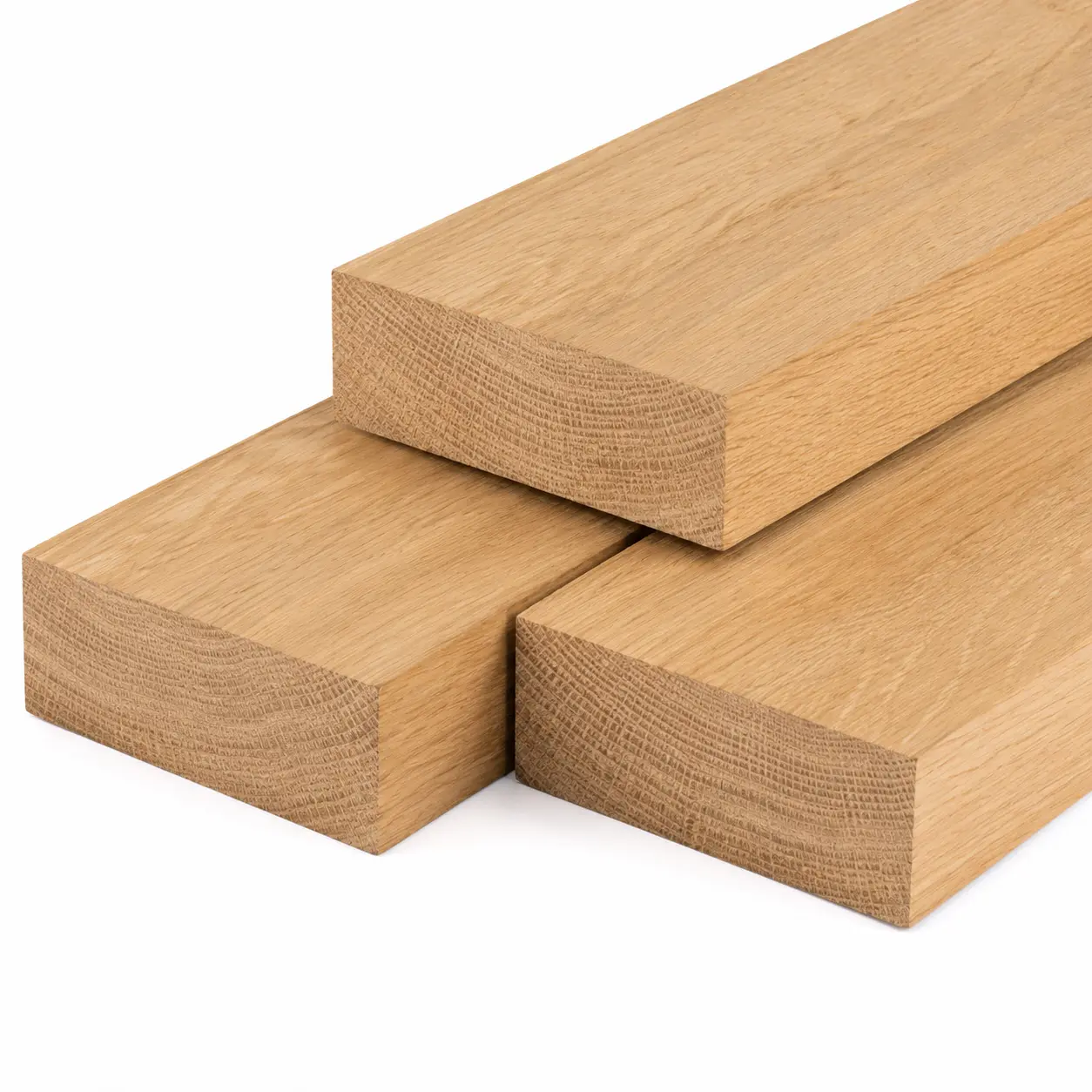
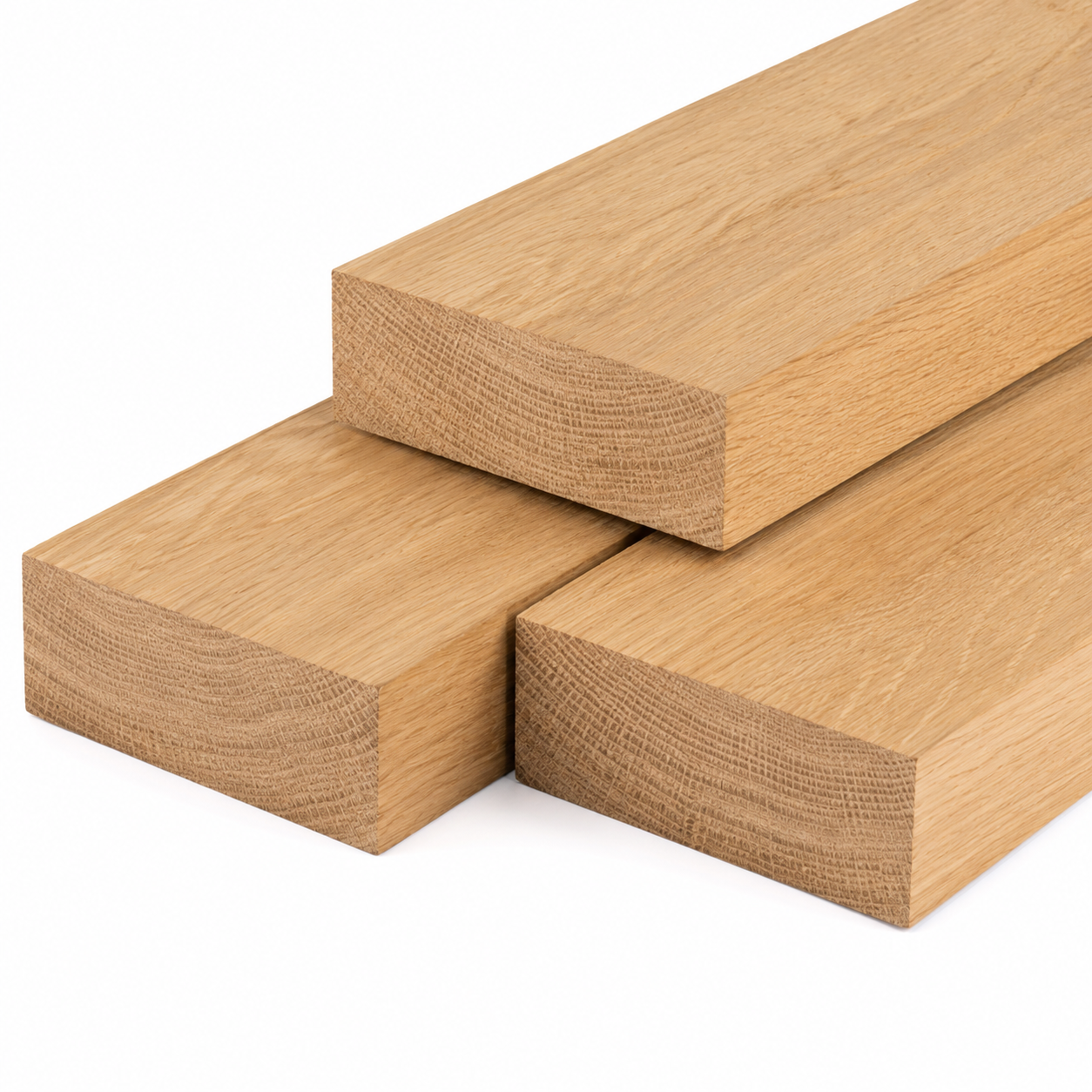
Oak joists are heavy sawn European oak joists for decks, walkways, raised floors and exposed frames where you want real hardwood doing the structural work. Choose 150×70 mm or 200×70 mm sections, then the length on the product page. Oak is Durability Class 2, naturally resistant to rot and insect attack, with a warm honey brown colour, and every joist is stocked in our warehouse and delivered across Ireland.
Sort by
Showing 1-2 of 2 results
Oak Joists for Sale in Ireland
Oak is the timber Ireland has built with for a thousand years, and it still has the longest track record outdoors of any species we stock. An oak joist is the choice when the frame is part of the look: an open walkway, a raised deck with its structure on show, or a frame that has to match oak beams and posts around it.
Our oak joists are heavy sawn sections, so they carry a rustic, textured face that suits both period restoration and contemporary design.
Oak joist sizes
Both sections are a full 70 mm thick, so you choose the depth by the span and the load. The 150×70 mm joist is a heavy section for decks, walkways and garden frames, and the deeper 200×70 mm takes longer spans and heavier frames.
The span an oak joist can carry depends on its size, the spacing and the load, so have an engineer or a span table confirm the size before you build. Choose the length on the product page; a joist that runs the full width of the deck means no joints to support. The calculator on each product page works out how many joists you need.
Why choose oak joists?
Oak is Durability Class 2, naturally resistant to rot, insects and fungal decay, and dense at around 720 kg/m³. The open grain and weight give an oak frame a solid, permanent feel that softwood can’t match. The joists arrive a warm honey brown and weather over the first year into a soft silver patina.
Joist spacing
For a residential timber deck, space oak joists at a maximum of 400 mm centres. For heavier loads, close them up to 300 mm centres or less, and give the frame a slight fall so water drains away.
Oak vs other timber joists
For a planed hardwood frame, see our hardwood joists. Douglas Fir joists come in the same 70 mm heavy thickness in a lighter softwood. To build the whole structure in oak, add oak beams and posts, and finish around it with oak boards or oak sleepers.
Fixing and looking after oak joists
Oak is high in tannin, which reacts with mild steel and galvanised metal and leaves black streaks. Build with that in mind:
- Use stainless steel fixings, hangers and connectors only. See our timber connectors.
- Seal cuts and notches with end grain preservative before fitting, because oak is not a Class 1 timber.
- Pre drill every fixing near the ends.
Oak doesn’t need treating to last, but exposed joists weather to silver grey. Where the frame is on show, most customers oil it to keep the honey colour, using a hardwood oil from our exterior wood oils.
See every species in our timber joists range.
Frequently Asked Questions About Oak Joists
What sizes are oak joists?
Heavy sawn oak joists come in 150×70 mm and 200×70 mm. Each comes in a choice of lengths, so pick one to suit your span.
Why choose oak for joists?
European Oak is Durability Class 2, naturally resistant to rot, insects and fungal decay, and dense at around 720 kg/m³. Use stainless fixings only, because oak’s tannin stains galvanised and mild steel.
Should I seal cut ends on oak joists?
Yes. Oak is not a Class 1 timber, so seal cuts and notches with end grain preservative before fitting.