
Length
Width
Thickness
Colour Tone
Profile
Material
Fire Rating
Range
Species
Wood Type
Warranty
Moisture Content
Oak Boards
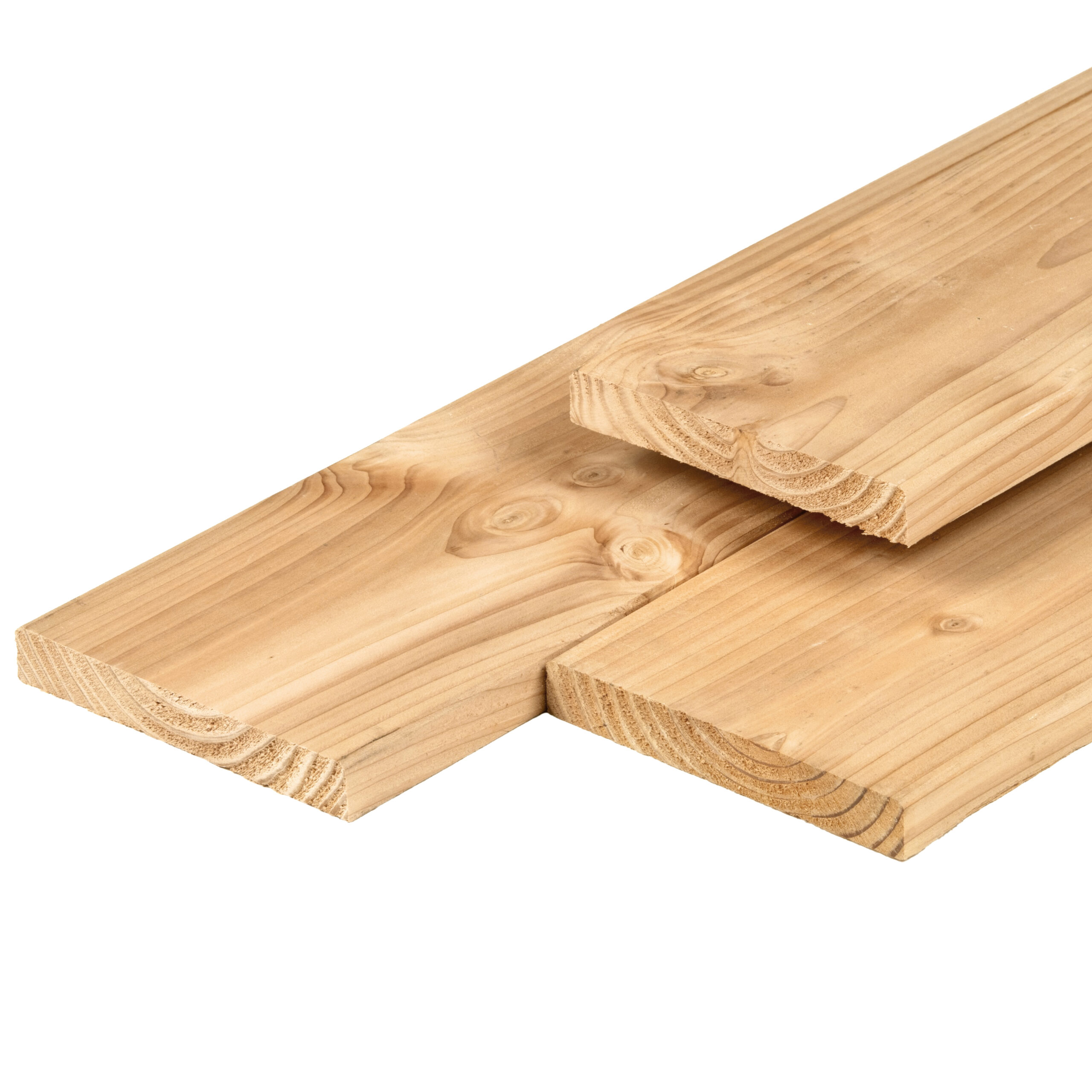
Oak boards are solid, planed European oak for bench tops, shelves, heavy gate rails, fascias and bespoke trims, anywhere you want real hardwood on show. The board is 180×28 mm, planed smooth and ready to work. Oak is dense, naturally durable and full of honey coloured grain, and the board is stocked in our warehouse and delivered across Ireland.
Sort by
One product found
Oak Boards for Sale in Ireland
An oak board is the piece you reach for when the job calls for real hardwood and nothing else will do. Ours is European oak, Quercus robur, planed smooth so you can cut it to length and fix it straight away. Use it as a garden bench top, a shelf, a heavy gate rail, a fascia or a bespoke trim, and you get oak’s weight and open grain wherever you put it.
Oak has been used indoors and out for centuries, and the grain gives a depth and warmth that softer timbers can’t match.
Oak board size
We stock one planed oak board, sized to cover the most common jobs. At 180×28 mm it is wide enough for a bench seat or shelf and thick enough for a heavy gate rail. Plan your cuts before you pick a length, so two rails or seats come from one board, and the calculator on the product page tells you how many boards your project needs.
Why choose oak?
Oak sits in Durability Class 2, naturally resistant to rot, insect attack and fungal decay. At around 720 kg/m³ it is dense, which is exactly why it wears so well as a working surface and why a bench top or rail in oak feels solid under the hand. Fine surface checking, small cracks along the grain, is normal as oak settles and does not affect its strength.
Oak vs other timber boards
For a harder wearing hardwood deck or facade, Yellow Balau boards are Durability Class 1 and come up to 45 mm thick. If you want a lighter softwood, the Ecowood board is a thick 195×45 mm section and Douglas Fir boards bring a reddish pink tone. To match a whole project in oak, see oak beams and posts, oak joists, oak sleepers and oak cladding.
Working with oak boards
Oak is high in tannin, the natural preservative behind its weather resistance. Tannin reacts with mild steel and galvanised metal and leaves black streaks, so a few habits matter:
- Pre drill before you screw, especially near the ends, because the dense grain splits if a fixing is forced.
- Use stainless steel fixings outdoors, never galvanised or mild steel. See our timber screws.
- Seal the end grain of any board that lives outside.
Looking after oak
Oak doesn’t need treating to last outdoors, but left bare it weathers from honey to silver grey. Most customers want to keep the warm colour, so they oil the board within the first few months and refresh the oil every two or three years. Our exterior wood oils include Deks Olje saturating oil for dense hardwoods.
See every species and size in our timber boards range.
Frequently Asked Questions About Oak Boards
What is the oak board used for?
It is a single planed European Oak board, 180×28 mm. It suits bench tops, shelves, heavy gate rails, fascias and bespoke trims.
Is it European oak?
Yes, Quercus robur. It is Durability Class 2, naturally resistant to rot, insect attack and fungal decay, and dense at around 720 kg/m³.
Can I use the oak board outdoors?
Yes. Pre-drill before screwing, use stainless steel fixings because oak’s tannin marks galvanised and mild steel, and seal the end grain. Fine surface checking is normal as oak settles and does not affect its strength.