
Length
Width
Thickness
Colour Tone
Profile
Material
Fire Rating
Range
Species
Wood Type
Warranty
Moisture Content
Timber Boards
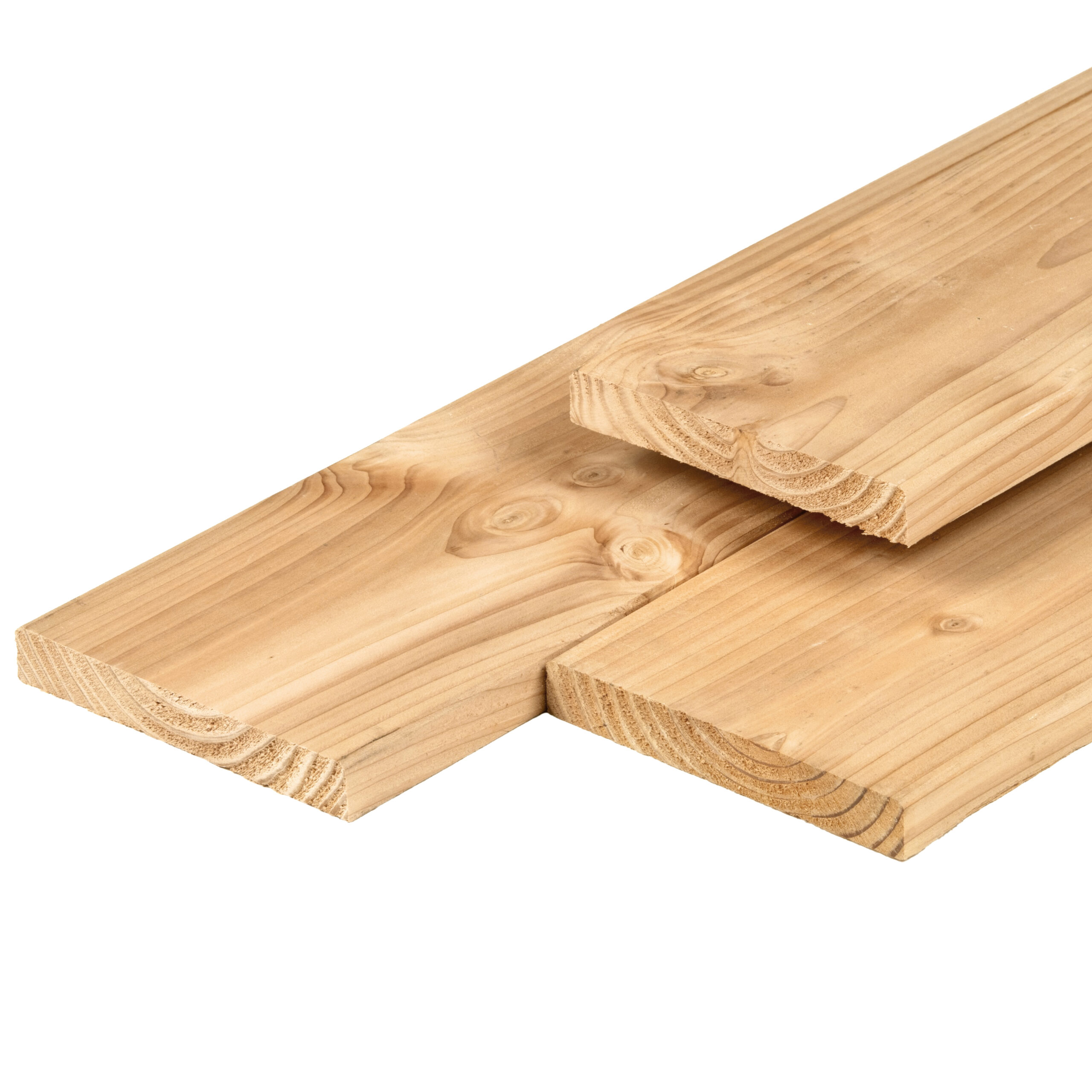
Timber boards are wide, solid outdoor boards for bench tops, heavy rails, fascias, decks, facades and bespoke joinery. Our range covers planed European oak at 180×28 mm, Ecowood at 195×45 mm, a Douglas Fir square edge board at 200×20 mm and Yellow Balau hardwood at 145×45 mm and 190×27 mm. All are stocked in our warehouse and delivered across Ireland.
Sort by



Showing 1-5 of 5 results
Timber Boards for Sale in Ireland
A timber board is the piece you reach for when a batten is too slim and a joist is too heavy. These are wide, solid sections you can see and touch: a garden bench top, a gate rail, a fascia, a shelf, a run of feature cladding or a hardwood deck. Every board here is sold by the length, so you buy exactly the number you need rather than a pack.
We stock four species, each with its own page, so you can compare the look, the weight and the durability before you choose. The sections below explain what each one is best at.
Types of timber boards
The choice comes down to how hard the board has to work and how you want it to look. Hardwoods are heavier and harder wearing; softwoods are lighter, easier to cut and fix, and quicker to handle on site.
Oak boards
Our oak boards are planed European oak, Durability Class 2 and around 720 kg/m³. The honey grain and weight make them the natural pick for bench tops, shelves, heavy gate rails and bespoke trims where the timber is on show.
Ecowood boards
The Ecowood boards are our own brand of kiln dried Red Class softwood. Kiln drying gives a predictable moisture content, so the board stays stable on site. At around 520 kg/m³ it is light enough to handle alone, and it suits decking, cladding and exterior structural work.
Douglas Fir boards
Douglas Fir boards bring the warmest reddish pink tones of any timber we stock, with a straight grain and a strong knot pattern. It is one of the strongest softwoods, Durability Class 3, and the square edge board suits cladding, feature framing and structural joinery.
Yellow Balau boards
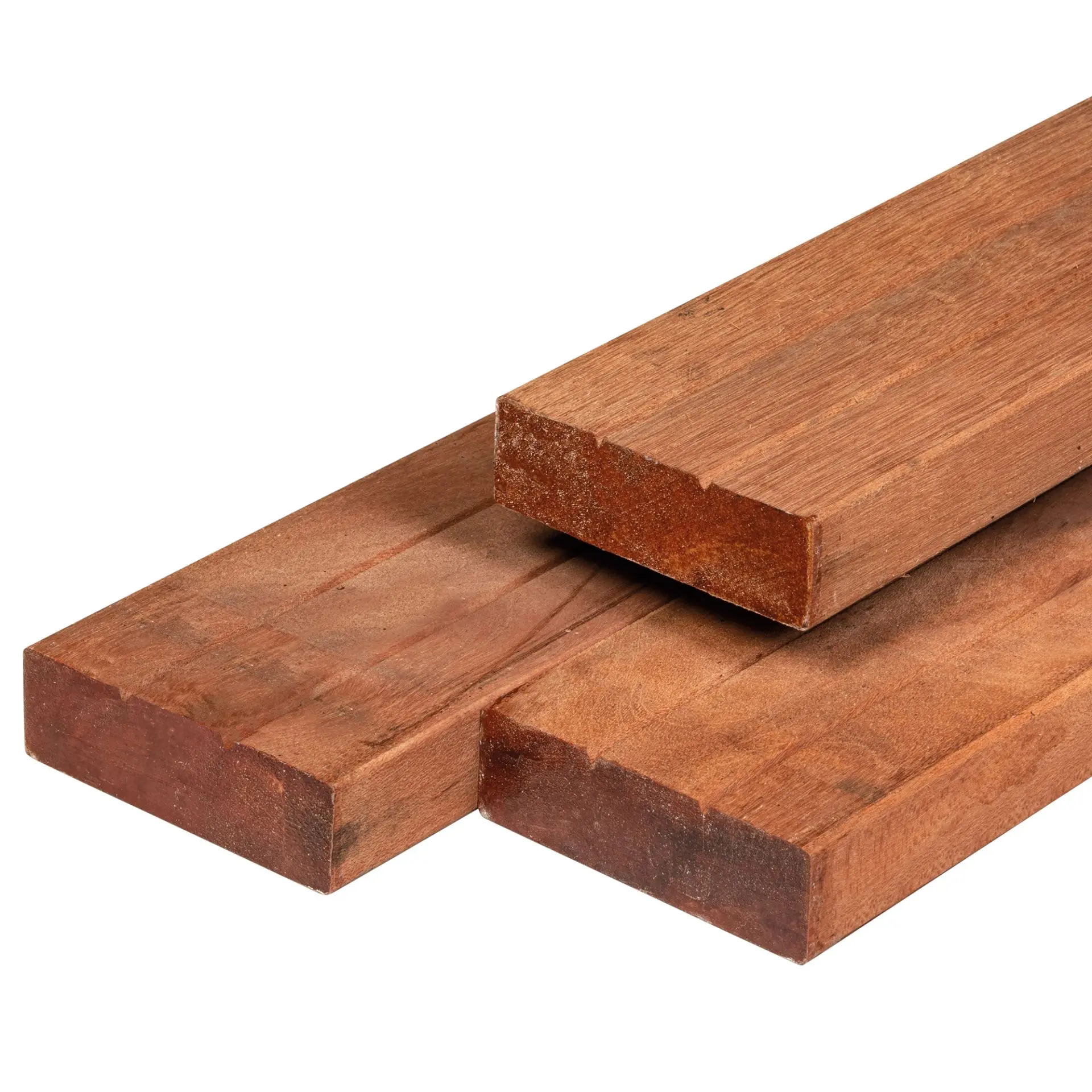
Yellow Balau boards are a dense tropical hardwood, around 930 kg/m³ and Durability Class 1, with a service life of 20 to 25 years. The golden brown boards are made for hardwood decks, facades and anything that takes heavy wear.
Timber board sizes
Sizes are the finished dimensions, so pick the section by the job the board has to do:
- Oak at 180×28 mm is planed smooth for bench tops, shelves, fascias and heavy gate rails.
- Ecowood at 195×45 mm is a thick, wide section for decking, cladding and outdoor framing.
- Douglas Fir comes as a 200×20 mm square edge board, wide and slim for cladding and feature framing.
- Yellow Balau at 145×45 mm is the heavy hardwood section for benches, heavy rails and hard wearing surfaces, and at 190×27 mm it is a wide board for decks and facades.
Choose the length on the product page; longer boards mean fewer joints on long runs.
How much do timber boards cost?
The price of a timber board depends on the species, the section and the length. Hardwoods such as oak and Yellow Balau cost more than softwoods because they are denser and harder wearing, and a 45 mm board holds far more timber than a 20 mm one. Compare boards by cost per metre, or by cost per m² of deck or facade covered, rather than per board, because each species comes in different lengths. Enter your area in the calculator on the product page and it works out how many you need; the cart adds the fixings and extras.
Timber boards vs decking and cladding
These boards are plain, square edged sections. If you want a grooved or profiled deck board, see our timber decking range, and for tongue and groove or shiplap facades see Douglas Fir cladding and the other cladding species. Slimmer sections for screens and slatted fences are in our timber battens range.
Fixing timber boards
The same few rules apply whichever species you choose:
- Pre drill every fixing near the ends, and every fixing at all in Yellow Balau and oak, because dense timber splits if a screw is forced.
- Use stainless steel A2 or A4 screws outdoors. Oak and Yellow Balau contain tannin, which reacts with galvanised and mild steel and leaves black streaks. See our timber screws.
- Seal the end grain of any board that lives outside, and leave room for seasonal movement rather than pinning a board rigidly at both ends.
Looking after timber boards
None of these boards needs treating to last, but left bare every species weathers to a silver grey within a year or two. Most customers oil their boards within the first few months to keep the colour: honey for oak and Ecowood, reddish pink for Douglas Fir and golden brown for Yellow Balau. Refresh the oil every two or three years. Our exterior wood oils include Deks Olje for dense hardwoods and UV protective oils for softwoods.
Browse the rest of our outdoor timber range for posts, beams, joists and sleepers to go with your boards.
Frequently Asked Questions About Timber Boards
What is the best wood for outdoor furniture or a garden bench?
A dense, naturally durable board wears best. Our planed oak board, 180×28 mm, is made for bench tops and heavy rails, and Yellow Balau, Durability Class 1, comes in boards up to 45 mm thick. Neither needs treating to last, but both weather to silver grey, so most people finish them with a hardwood oil to keep the colour.
What board sizes do you stock?
Planed oak at 180×28 mm, Ecowood at 195×45 mm, a Douglas Fir square edge board at 200×20 mm, and Yellow Balau at 145×45 mm and 190×27 mm. Each is sold by the length, so you only buy what the job needs.
Will a timber board move after I fix it?
A little, with the seasons. Leave room for movement in any run rather than pinning a board rigidly at both ends, seal the end grain on boards that live outside, and pre-drill near the ends.