

Length
Width
Thickness
Colour Tone
Profile
Material
Fire Rating
Range
Species
Wood Type
Warranty
Moisture Content
Timber Beams & Posts
Timber beams and posts are the heavy square sections that hold up pergolas, carports, porches, decks and garden structures, and we stock them in European oak, Douglas Fir, Western Red Cedar, Ecowood, MicroShades, Yellow Balau and spruce. Sizes run from 69×69 mm posts to 200×200 mm beams. Every beam and post is stocked in our warehouse and delivered across Ireland.
Sort by

Showing 1-7 of 7 results
Timber Beams for Sale in Ireland
A timber beam or post is the backbone of any outdoor structure. Posts carry the load down to the ground, beams carry it across the top, and both are on show, so the species you choose decides how the structure looks as well as how long it lasts. The same sections frame pergolas, carports, porches, raised decks and garden rooms.
Each species has its own page with every size and length. The sections below help you compare them and choose.
Types of timber beams and posts
The main choice is between hardwood, which is heavier and naturally durable, and softwood, which is lighter, easier to cut and quicker to handle on site. We stock seven species:
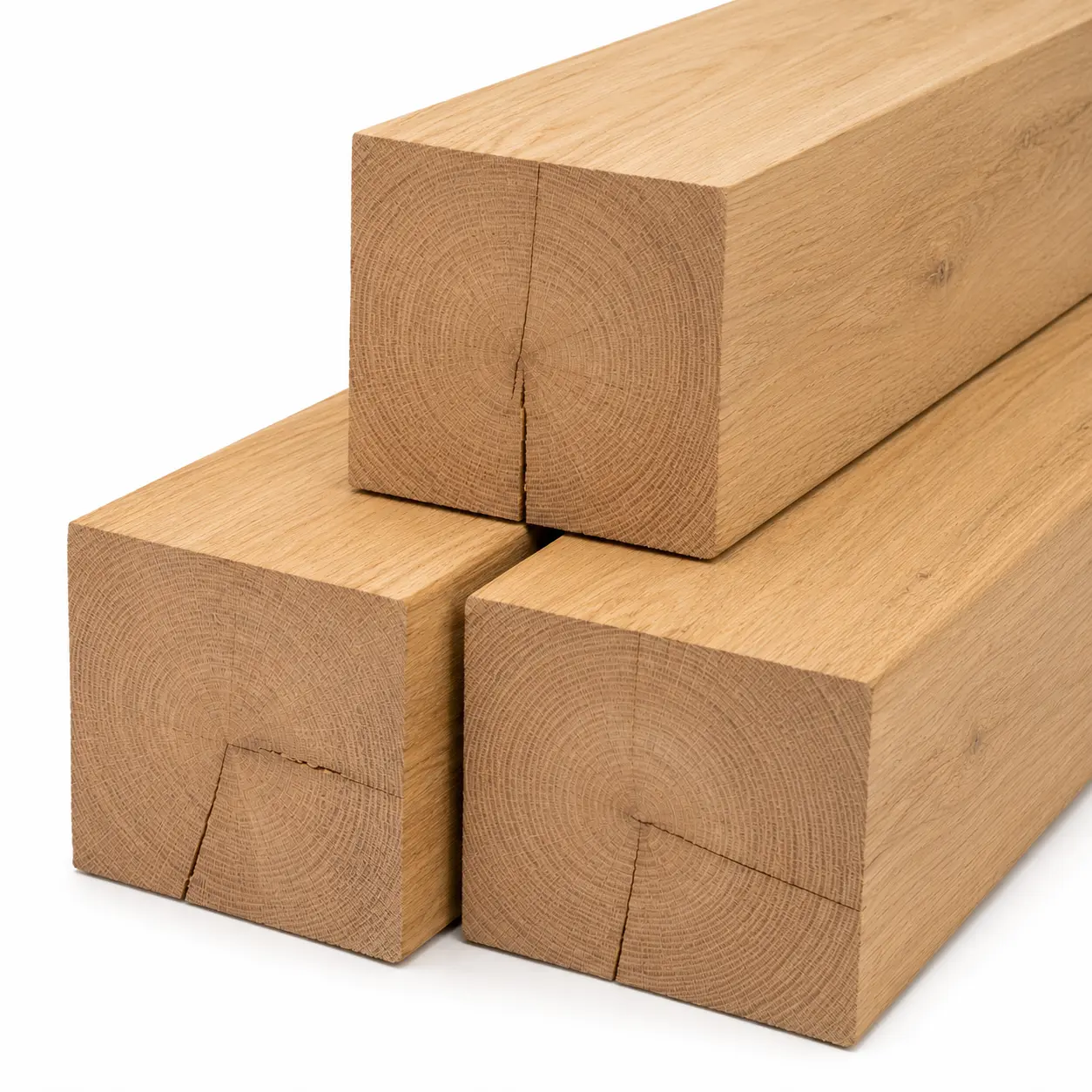
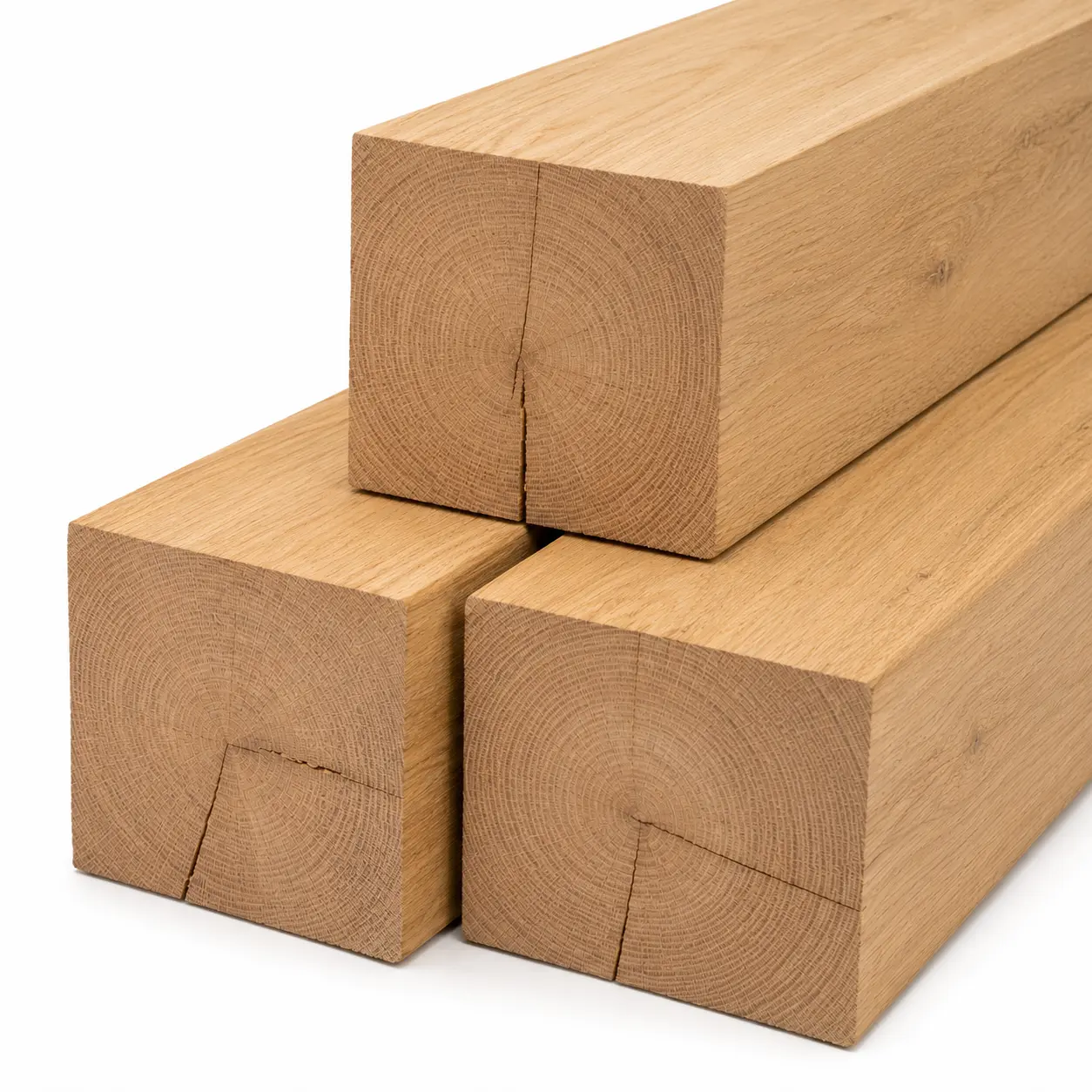
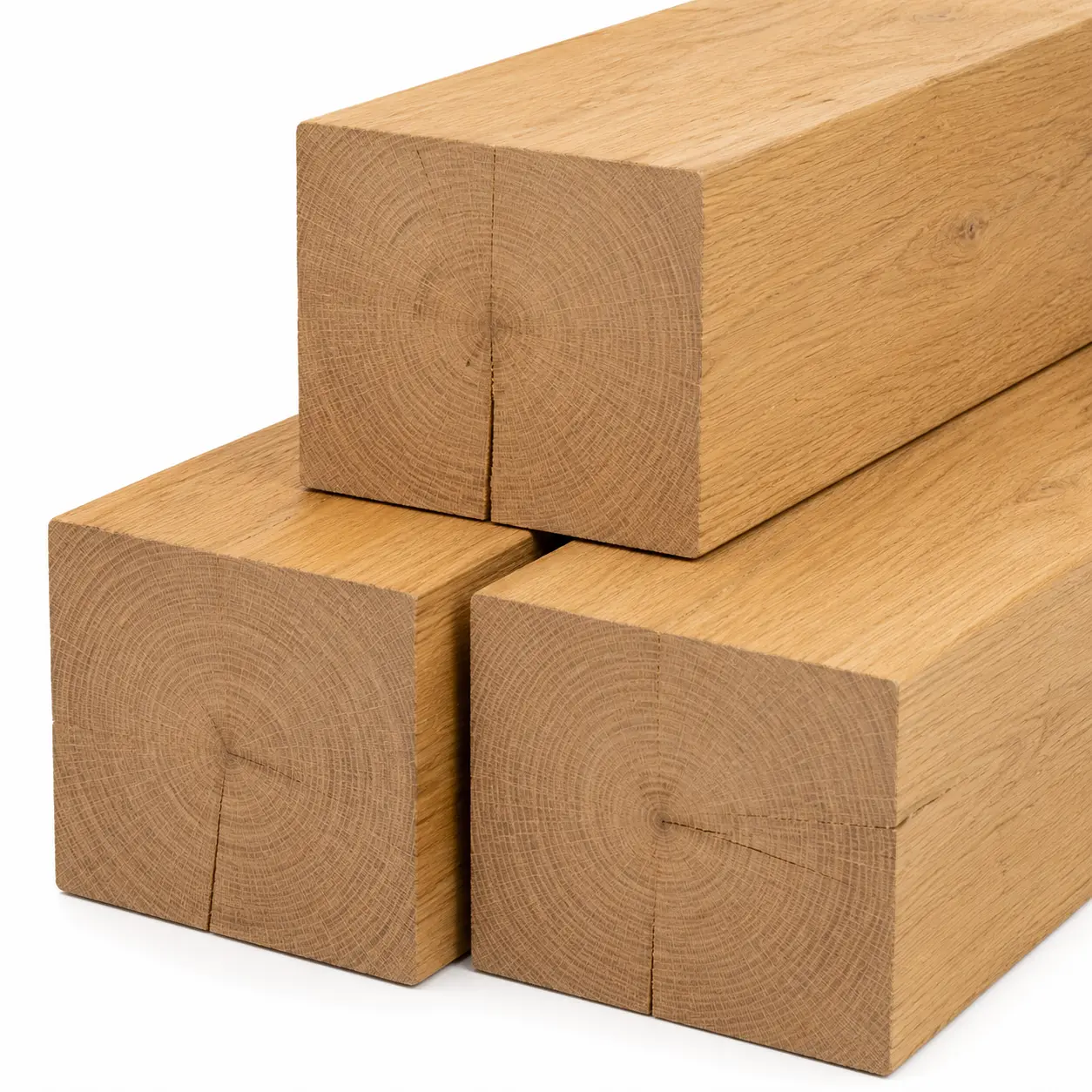
- Oak beams and posts: European oak in 100×100 mm, 150×150 mm and 200×200 mm, Durability Class 2, the traditional choice for a structure that is built to be seen and to last.
- Yellow Balau post: a 90×90 mm tropical hardwood, Durability Class 1, for fence and gate posts, small pergolas and balustrades on a hardwood deck.
- Douglas Fir beams and posts: sawn sections from 90×90 mm to 200×200 mm in one of the strongest softwoods, with a warm reddish pink tone, for exposed beams and pergolas.
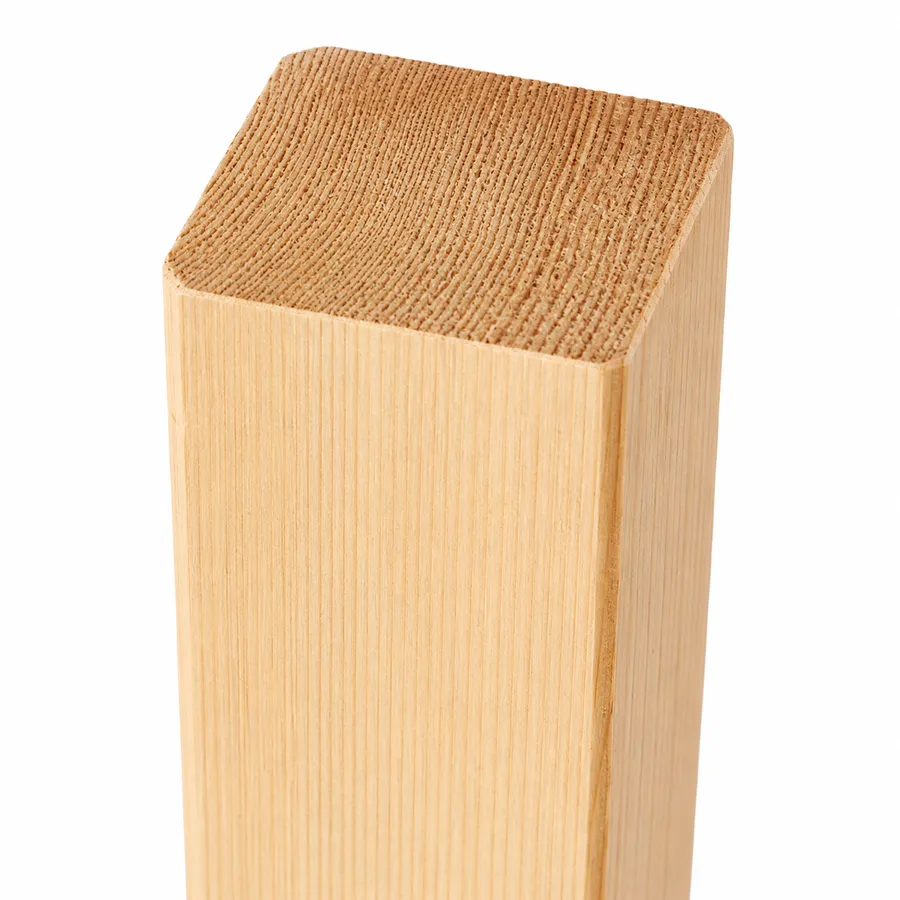
- Cedar posts: 90×90 mm Western Red Cedar with an ease edge, light, Durability Class 2 and needing no chemical treatment to resist rot, for pergola uprights, screens and gates.
- Ecowood beams: kiln dried softwood in 120×120 mm, 140×140 mm and 200×200 mm, for pergolas, carports and garden frames.
- MicroShades posts: factory finished softwood at 69×69 mm, for deck balustrades and handrail posts.
- Spruce post: a black stained 90×90 mm softwood, for fence and gate posts and small frames in contemporary gardens.
Timber beam and post sizes
Sizes are square sections, width by depth, in millimetres. The old imperial name is often used too, so a 6×6 is roughly 6 inches square and arrives as 150×150 mm. Pick by the job:
- Light posts, from 69×69 mm to 100×100 mm (3×3 and 4×4), suit fence and gate posts, handrail posts, and light pergolas and screens.
- Mid sections, from 120×120 mm to 150×150 mm (6×6), are the usual pergola, porch and carport post, and beams over modest spans.
- Heavy sections at 200×200 mm (8×8) make feature beams and posts for larger structures, in oak, Douglas Fir and Ecowood.
Choose the length on the product page; one piece across the span means no joint to support. The load a beam can carry depends on its species, size and span, so always have an engineer or a span table confirm the size of any structural beam before you build.
How much do timber beams cost?
The price of a timber beam depends on the species, the section and the length. Oak costs more than softwood, and a 200×200 mm beam holds almost twice the timber of a 150×150 mm one. Compare beams by cost per metre rather than per piece, because each species comes in different lengths. The calculator on each product page helps you work out quantities, and the cart adds the matching fixings and extras for you.
Fixing timber beams and posts
Keep the timber out of the ground and the water out of the joints:
- Stand posts on a post anchor or concrete post base rather than burying them, or use post holders.
- Join beams to posts with timber connectors rated for the load.
- Use stainless steel on oak and cedar, because their tannins stain galvanised and mild steel. Pre drill all fixings.
- Seal cut ends on any species below Durability Class 1.
For the frame between the posts, see our timber joists, and for heavy landscaping sections, railway sleepers.
Looking after timber beams and posts
Oak, cedar and Douglas Fir don’t need treating to last, but left bare they weather to silver grey, and large sections develop fine surface checks as they settle, which is normal. Most customers oil their posts and beams within the first few months to keep the colour, and refresh the oil every two or three years. See our exterior wood oils.
Browse the rest of our outdoor timber range for boards, battens and handrails.
Frequently Asked Questions About Timber Beams & Posts
What is the best timber for a pergola?
European Oak and Douglas Fir are strong, durable choices for structural posts and beams, and Cedar is naturally rot resistant for exposed spots. Both Oak and Douglas Fir come in 150×150 mm, which suits our pergola corner connectors made for 150 mm posts.
What sizes do posts and beams come in?
Posts start at 69×69 mm (MicroShades) and 90×90 mm (Cedar, Douglas Fir, Yellow Balau and spruce), then 100×100 mm oak, 120×120 mm and 140×140 mm Ecowood, 150×150 mm oak and Douglas Fir, and 200×200 mm in oak, Douglas Fir and Ecowood. Each comes in a choice of lengths to suit the post height or span.
Can I put a timber post straight into the ground?
Better not: direct ground contact shortens the life of any softwood significantly. Set the post on a post anchor above ground, such as our concrete post bases, and treat any cut ends on species below Class 1.
What fixings should I use on posts and beams?
Galvanised or stainless hardware rated for the load suits Douglas Fir, Ecowood and Spruce. For Oak and Cedar use stainless only, because their tannins stain galvanised and mild steel. Pre-drill all fixings.
Is it normal for large posts to develop small cracks?
Yes. Fine surface checking is normal as the timber settles to outdoor conditions and does nothing to its strength.